






 Portuguese
  Spanish
  2 min of reading
  0 comments


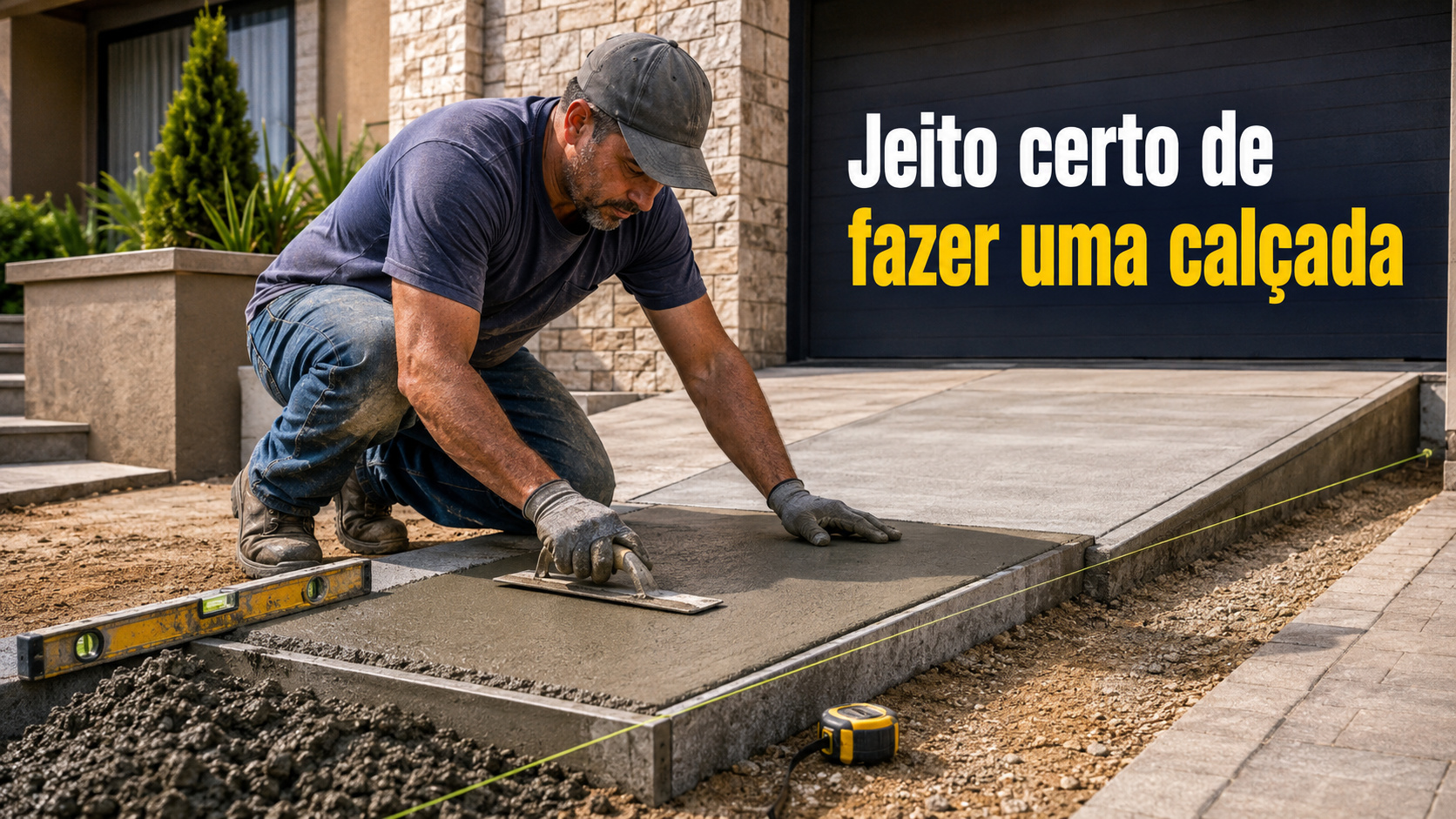
Technique guides the construction of sidewalk and ramp with alignment, level, compaction, and concrete, highlighting precautions to avoid sinking, coating loss, and rework in residential projects, focusing on more durable execution and planning before finishing.
Residential sidewalk requires alignment, level, and firm base to avoid cracks, sinking, and coating loss. The step-by-step shows how the correct execution of the ramp starts before the concrete, with marking, squaring, and measurement checking.
On the KAKÁ PEDREIRO Channel, the initial guidance is to pull the alignment from the neighboring sidewalk, fix stakes, and keep the line well stretched. The marking serves as a guide to open the trench, level the area, and start the structure.
Plastics do not replace a well-compacted base
The execution shown prioritizes concrete, bricks, blocks, and compaction, without relying on fragile improvisations. The central point is to avoid filling only with leftover debris, a practice that may give way under the weight of larger vehicles.
-
Largest bridge in São Paulo reaches 75% completion and is expected to strengthen strategic connection in the interior of São Paulo.

-
Without her own home and pressured by rent, a 25-year-old bought a small 15-meter boat, gradually renovated the interior by herself, transformed the interior with paint, new flooring, a larger bathroom, and started living on the canals, paying much less per month.

-
Tired of seeing families sleeping on the street, São Paulo delivered 18 m² furnished microhouses and took 888 people off the streets: Vila Reencontro became the model social housing for the homeless population.
-
The hydroelectric plants on the Madeira River, like Jirau, came for the energy, but now the drought wave has reduced artisanal fishing by 39% and emptied the tables of the riverside communities in the Amazon.


To reinforce the ramp, the base receives pure concrete and reused masonry pieces, always with wetting of the site. The recommendation is to leave spaces for the concrete to penetrate between the bricks and form a firmer set.

Measurements, squaring, and level reduce rework
The construction starts with checking the width, using tape measure and square. In the example, the repeated measurement was 3.55 meters on both sides, in addition to a three-centimeter offset to compensate for plaster and coating on the sides.
The house level is also transferred to the ramp, using a hose level. The top line and the intermediate line help control the height, avoiding concreting out of alignment.
Concrete and compaction increase durability
The recommended mix includes sand, 50-kilogram cement, and zero gravel. After filling, the guidance is to compact slowly, wet well, and keep the base firm before the subfloor.
The care aims to prevent the ramp from giving way after completion. The logic presented is simple: spending more on the structure can avoid loss with coating that is quickly lost.








Be the first to react!