Portuguese
  Spanish


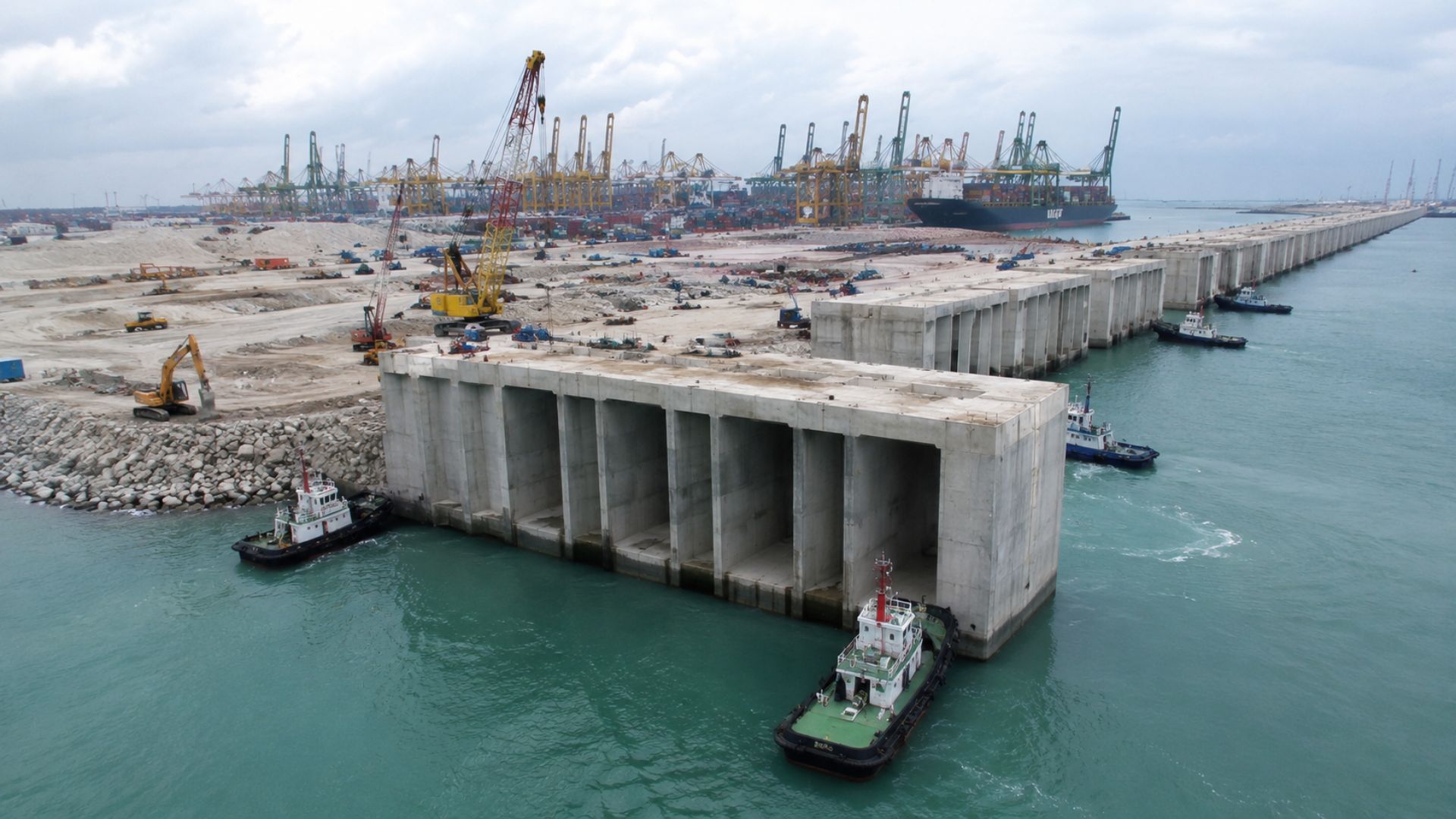


Giant structures sunk in the ocean, automation with artificial intelligence, and territorial expansion at sea place Singapore at the center of one of the largest port projects on the planet, in a project that promises to concentrate the country’s entire container logistics in a single terminal by the 2040s.
Singapore accelerates the expansion of Tuas Port, a complex planned to centralize the country’s container operations and reach a capacity of 65 million TEUs per year when all stages are completed, something expected to occur throughout the 2040s.
In addition to territorial advancement over the sea, the project brings together automation, artificial intelligence, and remotely operated equipment in a structure that is expected to consolidate as the largest fully automated port on the planet.
Tuas Port centralizes Singapore’s maritime operations
Spread across Tanjong Pagar, Keppel, Brani, and Pasir Panjang, Singapore’s historic facilities began to face operational limitations and expansion difficulties in the face of the constant growth of Asian maritime trade.
-
Twin Earthquakes of Magnitude 7.2 and 7.5 Strike Venezuela, Leaving Over 1,400 Dead and Affecting Millions, Potential Losses Estimated at $6.7 Billion

-
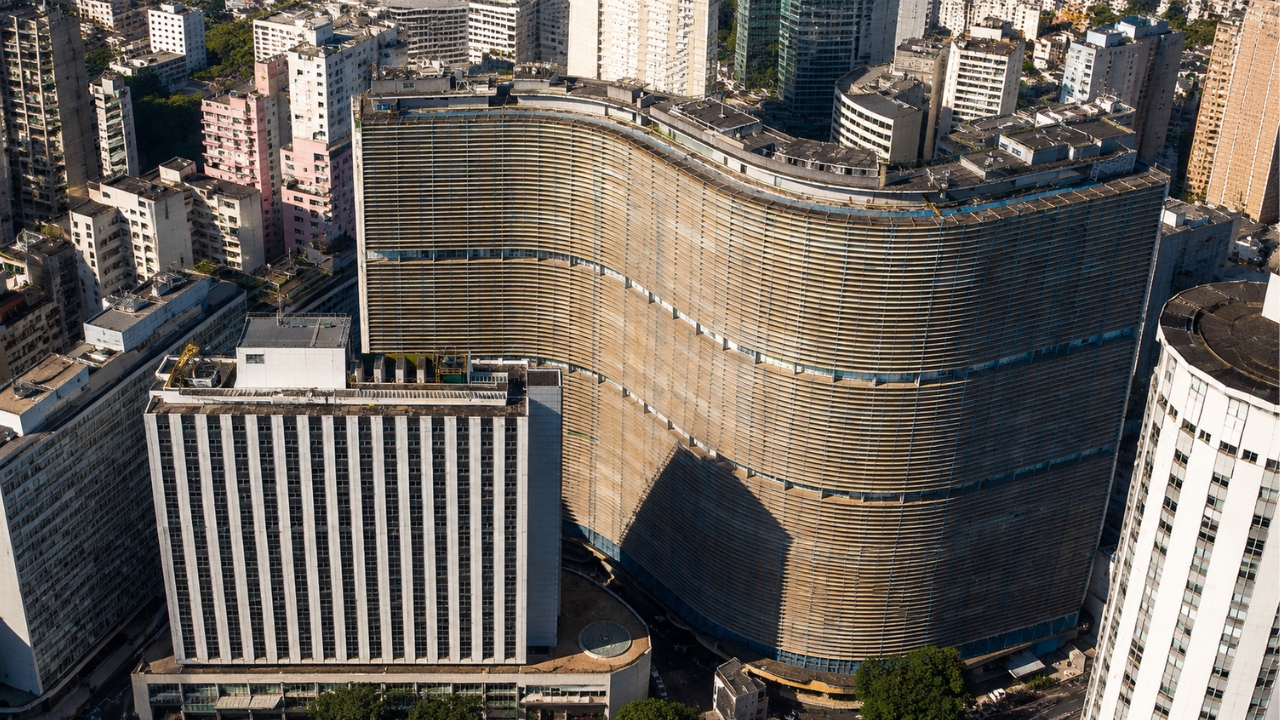
Latin America’s Largest Residential Complex Located in São Paulo Boasts 1,160 Apartments, 72 Shops, 22 Elevators, and 104 Staff Members

-
Rare 1747 Lutheran Bible from Germany, Preserved in Southern Brazil, Showcases Unique Engravings and Handcrafted Techniques
-
Before Japan Became a Football Powerhouse, Zico Transformed the Amateur League, Boosted the J.League, and Was Honored with a Statue at Kashima Antlers



To reduce internal displacements and modernize national logistics, the government decided to transfer these activities to a single complex in the west of the island, prepared for larger ships and increasingly digitized operations.
The first operations at Tuas began in December 2021, with the activation of two berths of the initial phase, while the official inauguration of the terminal took place on September 1, 2022.
When the first stage is fully completed in 2027, the port is expected to operate 21 deep-water berths and reach an annual capacity of 20 million TEUs.
Submarine caissons create new land area at sea
Among the most impressive elements of the construction is the formation of the coastal barrier that allowed maritime areas to be transformed into solid ground to accommodate yards, berths, and port equipment.
In the first phase of the project, the Maritime and Port Authority of Singapore manufactured and installed 221 concrete caissons, structures equivalent to ten-story buildings and weighing approximately 15,000 tons each.
Once positioned in the ocean, these blocks began to form a maritime wall of 8.6 kilometers, a stage that also included soil improvements in 414 hectares and the creation of 294 hectares of new reclaimed areas.
The second phase, started in March 2018, added another 227 caissons to the project to extend the coastal wall by another 9.1 kilometers, with manufacturing officially completed in April 2022.
In total, the two stages add up to 448 underwater concrete structures and create 681 hectares of land reclaimed from the sea, a dimension considered one of the largest coastal interventions ever carried out in Singapore.
Artificial intelligence and automation change the port’s routine
From the beginning, Tuas Port was conceived as a highly digitized terminal, with automated vehicles, electrified cranes, and integrated systems to coordinate cargo circulation in real-time.
In practice, containers are expected to be transported by autonomous vehicles between the berths and the yards, while the cranes will be operated remotely from the complex’s control center.
To support this operational model, the infrastructure includes a private 5G network, connected sensors, and platforms capable of gathering logistical, operational, and maritime information in a single digital environment.
According to local authorities, the aim of automation is to increase productivity, reduce emissions, and direct workers to activities of greater technical specialization within the port sector.
Megaport will have 66 berths and more than 1,300 hectares
When all four phases are completed, Tuas Port is expected to occupy about 1,337 hectares, an area equivalent to approximately 3,300 football fields, according to estimates released by local authorities.
The plan includes 66 berths distributed along 26 kilometers, prepared to receive some of the largest container ships currently used on global maritime trade routes.
Although the structure has been designed for large vessels, there is no official confirmation in the consulted documents about specific operations with ships 450 meters in length.
The projection of 65 million TEUs annually far exceeds the current volume handled by Singapore, which recorded 44.66 million TEUs in 2025, according to data released by the country’s port authority.
Old port areas will make way for new neighborhoods
The move to Tuas also changes Singapore’s urban planning, as it frees up coastal areas occupied for decades by port operations near the center.
The activities of Tanjong Pagar, Keppel, and Brani are expected to be transferred to Tuas by 2027.
Meanwhile, the operations of Pasir Panjang will be consolidated at the new port in the 2040s.
With this reorganization, strategic land in the south of the island can integrate the Greater Southern Waterfront, an urban redevelopment plan aimed at housing, commerce, services, and leisure.
The logic is to concentrate heavy logistics in an area more suitable for port expansion and, at the same time, return valued spaces to urban development.
Maritime strategy broadens Singapore’s global importance
Singapore relies on its strategic position between trade routes of Asia, Europe, and the Middle East to maintain relevance in global maritime transport.
The Tuas Port integrates this strategy by combining physical capacity, digitalization, and connection with nearby industrial districts, such as Jurong Lake District, Jurong Innovation District, and Tuas Industrial District.
The port is also part of a broader sustainability agenda, with electrified equipment, buildings with lower energy consumption, and a goal of net-zero emissions for PSA’s operation in Tuas by 2050.
With four planned phases and total completion expected by the 2040s, the megaport transforms a coastal engineering project into a centerpiece of Singapore’s maritime economy.