





 Portuguese
  English
  Spanish
  4 min of reading
  0 comments


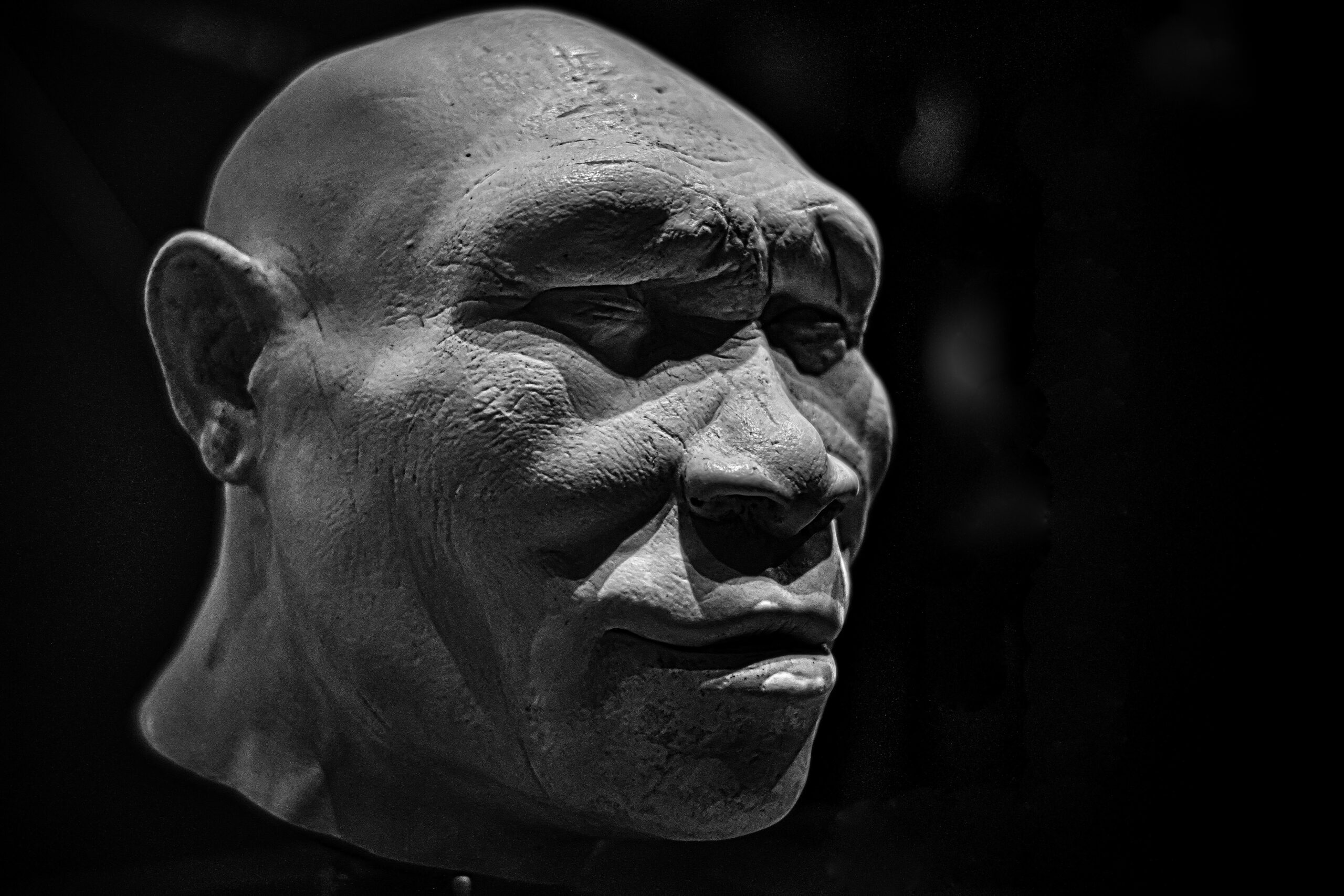
Six fossilized teeth of Homo erectus about 400,000 years old, excavated from three sites in China, held in their enamel a protein signature once believed to belong only to the Denisovans, and this tiny clue is rewriting who crossed with whom in the prehistory of our species.
The finding was published in May in the journal Nature by a team led by paleoanthropologist Qiaomei Fu, from the Institute of Vertebrate Paleontology and Paleoanthropology of the Chinese Academy of Sciences. Instead of looking for DNA, which practically does not survive after a few hundred thousand years in a warm climate, the researchers went after something more stubborn: the proteins trapped inside the enamel of the teeth.
What six Homo erectus teeth hid for 400,000 years
The teeth came from three well-known Chinese archaeological sites: Zhoukoudian, near Beijing, where the famous Peking Man fossils appeared in the 1920s, as well as Hexian in Anhui province, and Sunjiadong in Henan. From each sample, the team extracted 11 proteins and compared hundreds of amino acid positions. It was a fine reading, made possible by an acid corrosion method so delicate that it preserves the external shape of the tooth intact.

To understand why this is a game-changer, it’s worth remembering the limit of DNA. The oldest genetic material ever recovered hardly exceeds one or two million years, and even then only in frozen places; in the humid heat of South Asia, it disintegrates in a few tens of thousands of years. Proteins are much tougher molecules and remain shielded within the enamel, the most resistant tissue in the human body. It’s a bit like swapping a cassette tape that melted in the sun for an inscription carved in stone: it holds less information, but it crosses time in a way that DNA never could.
-
Why are people parking hundreds of telescopes worth more than $10,000 in the middle of nowhere?

-
New Xiaomi device heats water in 3 seconds, automatically makes ice cubes, and also allows temperature adjustment via smartphone between 40°C and 90°C.

-
American donated US$ 5,000 to a Chinese farmer to plant trees in the desert, and decades later the money turned into a forest with more than 50,000 trees.
-
Carnivorous dinosaur in China left footprints at just 1 km/h and surprised researchers in the field with more than 5,000 tracks preserved for over 100 million years.



The protein that should only belong to the Denisovans
Two variants caught attention. The first, named AMBN-A253G, appeared in all six teeth and seems to be exclusive to these East Asian populations, like a mark of a unique Homo erectus lineage. The second is what changes everything. The variant AMBN-M273V, until now considered a kind of genetic stamp of the Denisovans, was also there, present in all six erectus fossils.
The Denisovans are that extinct relative identified only in 2010, from a finger bone found in Siberia, and known almost only by fragments and genetics, without even a complete skull to call their own. Finding their signature inside Homo erectus teeth 400,000 years older suggests something difficult to prove until then: that the two lineages crossed. As the authors themselves summarized, shared habitats create opportunities for interaction.

Why these teeth still matter to you
The story doesn’t end in prehistory. The researchers’ hypothesis is that this mutation originated in populations linked to Homo erectus, flowed into the Denisovan lineage through interbreeding, and later reached some groups of modern humans in Southeast Asia and Oceania. In other words, a small piece of a mixture that occurred hundreds of millennia ago still travels in the genomes of people who are alive now.
We grew up with that image of an evolutionary line, the bent-over ape that straightens up to become human, but each of these discoveries shows a much more tangled tree, full of branches that touched each other. It’s not the first time genetics has shuffled this script. A recent study on the origin of Homo sapiens from the DNA of living populations had already shaken the idea of a single cradle of humanity.
I confess that what impresses me most here is not even the kinship, but the tool. When DNA disappears, silence remained. Now the enamel protein has become a kind of black box capable of holding genetic clues for almost half a million years, opening a window where there was once only mute bone. I imagine how many secret relationships between human species are still locked in museum drawers waiting for someone to read the right tooth.
If even our teeth hold the secret of who our ancestors loved, what else do we not yet know about the human family itself?





Be the first to react!