






 Portuguese
  Spanish
  4 min of reading
  0 comments


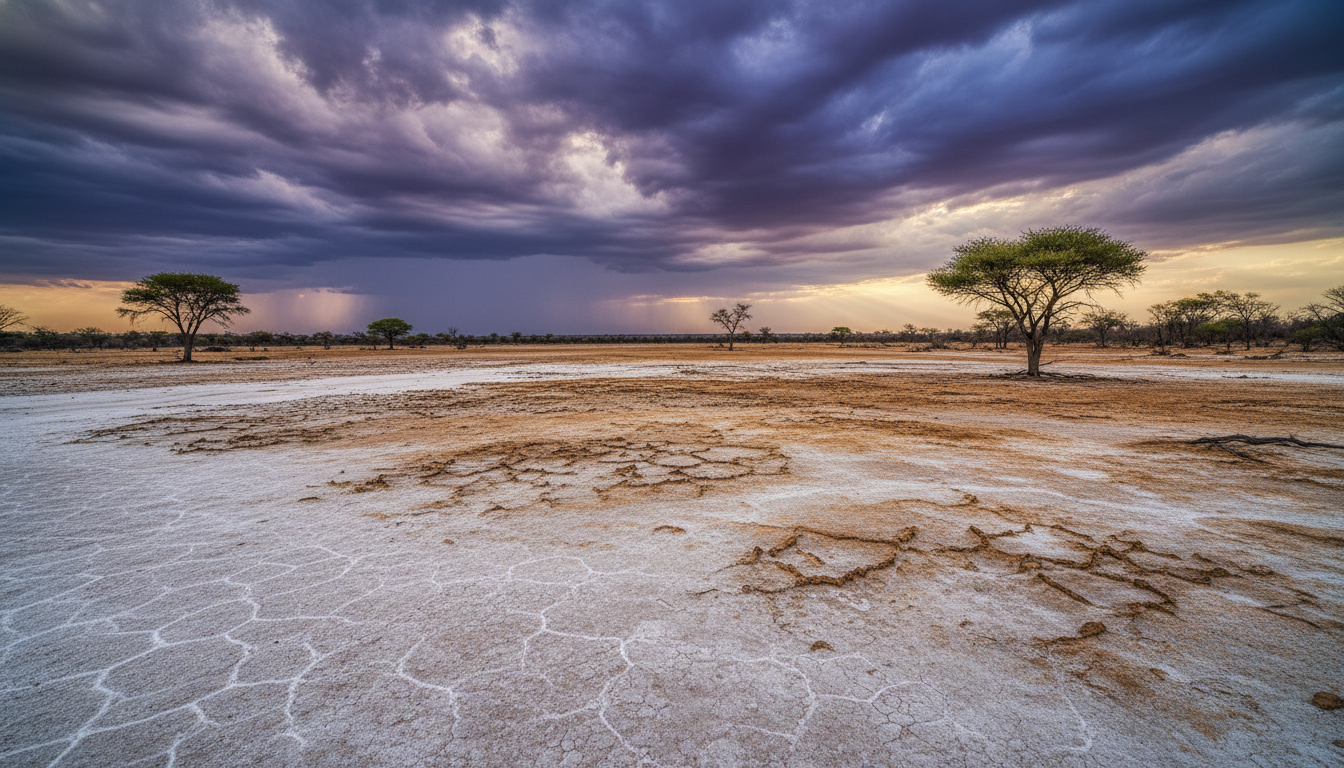
Scientists traced the DNA of 1,200 living people and concluded that Homo sapiens was born in northern Botswana 200,000 years ago, in a lake that is now a desert
The question of where humanity originated is one of the oldest in science. In October 2019, a study published in the journal Nature offered a surprising answer.
According to the research, the first Homo sapiens from Botswana emerged 200,000 years ago in the region of the ancient Makgadikgadi Lake, in the north of the African country.
The conclusion came from the analysis of mitochondrial DNA from over 1,200 living individuals from Khoisan peoples of southern Africa.
-
Federal Police involved in the case to identify the person responsible for hacking the Civil Defense system, which sent ten false alerts, frightened residents of different capitals, and turned messages about real risks into notifications with “misanthropy” and even alien attacks.

-
Extreme drought causes ghost village to reappear at the bottom of the reservoir that supplies Athens, revealing houses, a school, and ruins swallowed since the 1980s as the lake shrinks and exposes the water crisis threatening the capital of Greece.

-
Space technology used to search for water on Mars is now hunting for invisible leaks under the streets of São Paulo, using satellites, AI, and chlorine signals to help Sabesp recover up to 6.7 billion liters of water.
-
Japan sends ship to extract mud rich in rare earths at nearly 6,000 meters deep in the Pacific, attempts to lift 350 tons per day from the seabed, and transforms sediments near Minamitori Island into a strategic weapon to reduce dependence on China.



This region, which is now dominated by the Kalahari Desert and salt pans, was a wet and fertile area 200,000 years ago.
The lake was twice the area of the current Lake Victoria, about 130,000 square kilometers.
The L0 lineage found in the DNA of Homo sapiens from Botswana is the ancestral trunk of all living humanity
The study identified the mitochondrial lineage L0, also known as “lineage zero.”
This genetic marker is transmitted exclusively from mother to child and acts as a map of biological time.
All 7.7 billion living humans today descend from this lineage, traced back to northern Botswana.
The research identified about 200 rare sub-branches of this lineage among the Khoisan peoples.
Vanessa Hayes, a geneticist at the Garvan Institute of Medical Research in Sydney and the leader of the study, stated that “it is now clear that our ancestors must have dispersed from a region south of the Zambezi River.”

The Homo sapiens from Botswana lived for 70,000 years in the same region before splitting into three waves of migration that populated the planet
Genetic data reveals that the ancestral population thrived for 70,000 years in the swampy region of Makgadikgadi-Okavango.
Between 200,000 and 130,000 years ago, the first humans lived as hunter-gatherers sustained by the fertile climate.
130,000 years ago, changes in the Earth’s orbit and axis caused droughts that opened “green corridors” of fertile land.
The first wave of migration moved northeast into Africa, originating populations that eventually became agricultural.
A second wave, between 130,000 and 110,000 years ago, moved southwest, forming coastal hunter-gatherer communities.
The third dispersal populated the rest of Africa and eventually the entire planet.
“Everything went crazy. All these new human lineages just start to appear,” Hayes described about the migration period.
Axel Timmermann, a co-author responsible for climate modeling, described the region as “a massive extension of the current Okavango Delta.”

The study of Homo sapiens from Botswana is controversial and not all scientists agree with the conclusions
Despite being published in Nature, the study generated significant controversy in the scientific community.
Critics point out that the exclusive use of modern mitochondrial DNA from living people has limitations.
There are no Homo sapiens fossils dated to 200,000 years in the region of Botswana to confirm the thesis.
The African heat degrades ancient DNA, preventing direct analyses of fossil material.
Additionally, current Khoisan populations may not accurately represent the ancestors from 200,000 years ago.
- In favor: analysis of 1,200 samples, 200 rare sub-branches, consistent climate modeling
- Against: no fossils in the region, mitochondrial DNA only tracks maternal lineage, possible selection bias
- Consensus: African origin is unanimous, but the exact location remains debated
Comparative fossils exist in other parts of Africa: Jebel Irhoud in Morocco is 315,000 years old, Florisbad in South Africa is 260,000 years old, and Omo in Ethiopia is 195,000 years old.
Other discoveries about our past, such as giant structures hidden deep within the Earth, show that science continues to reveal secrets about the planet and about ourselves.

From Botswana to the world: what it means to know that all humanity descends from a single African lake
Regardless of the controversies, the study reinforces a scientifically accepted fact: all humanity originated in Africa.
The research adds a layer of geographical precision by pointing to northern Botswana as a specific cradle candidate.
The idea that 7.7 billion people descend from a group that lived on the shores of a now-disappeared lake connects all humanity to a common origin.
According to Superinteressante, the study expanded the human genetic tree but still needs archaeological validation.
National Geographic contextualized the controversy and methodological limitations.
What remains is the central message: migration and mixing are fundamental traits of what it means to be human.




Be the first to react!