






 Portuguese
  Spanish
  3 min of reading
  0 comments


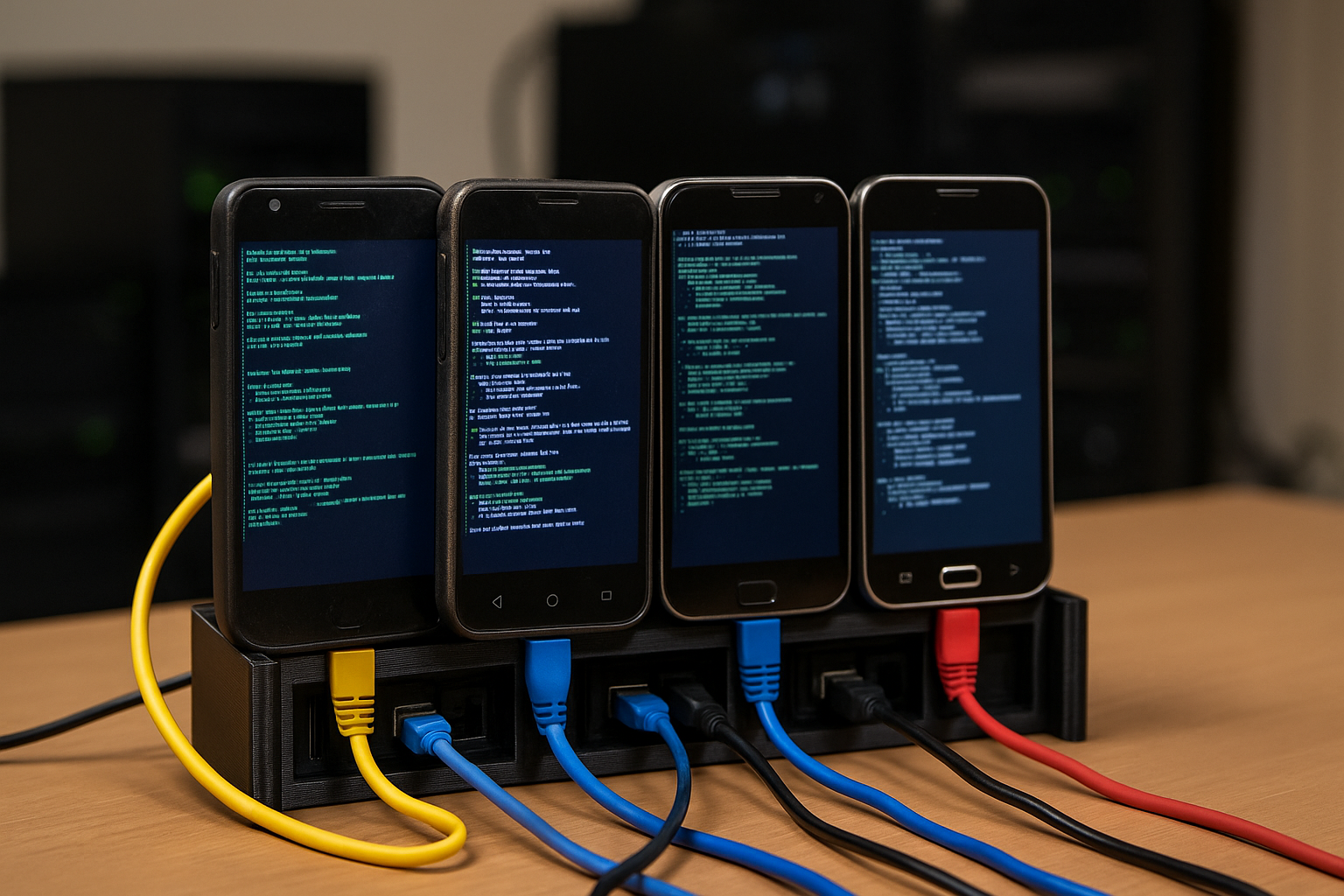
Researchers Transform Old Smartphones Into Small Data Centers, Offering a Sustainable Alternative to Reduce Electronic Waste and Resource Waste.
Every year, billions of smartphones are produced, used, and rapidly discarded. The constant cycle of replacing these devices has raised growing concerns about the environmental impact of electronic waste.
Now, an innovative study proposes a new utility for these old devices, transforming them into small data centers.
The Challenge of Smartphone Disposal
Globally, over 1.2 billion smartphones are manufactured annually. The production process of these devices requires large amounts of energy and natural resources, in addition to releasing significant volumes of CO₂ into the atmosphere.
-
Invisible Induction Technology Enables Wireless Power for Blenders, Coffee Makers, and Air Fryers, Reducing Countertop Cables

-
Smart Outdoor Lighting Transforms Gardens into Living Spaces with Weather Resistance and App-Controlled Scenes

-
Green dot on top of smartphone intrigues users, signals privacy alert in Android 12 that experts say shouldn’t be ignored.
-
Humanoid Robot Climbs 6,263-Meter Volcano in Ecuador, Sets Sights on Everest Challenge




Even while functioning, many devices are replaced by newer models every two to three years, further contributing to the increase of electronic waste.
While the best solution would be to reduce consumption and extend the use of devices, this behavioral change is hard to implement.
The rapid advancement of technology renders older models quickly obsolete. In this scenario, creative alternatives become necessary to reduce environmental impact.
The Proposal From the Researchers in Tartu
Seeking a practical solution, researchers from the Institute of Computer Science at the University of Tartu in Estonia presented an innovative approach.
Led by Huber Flores, Ulrich Norbisrath, and Zhigang Yin, in collaboration with Perseverance Ngoy and international colleagues, the group developed a way to repurpose old smartphones as small data centers.
The research, published in the IEEE Pervasive Computing journal, demonstrated that old devices can be adapted to store and process data efficiently. Additionally, the cost to build these small data centers is relatively low: approximately 8 euros per device.
Practical Applications for the New Data Centers
The researchers highlighted various possibilities for using these repurposed data centers. One example is urban environments.
At bus stops, for instance, the devices can be used to gather real-time data on passenger flow.
This information allows for the optimization of public transit routes and schedules, improving service and reducing energy consumption.
The first prototype was assembled by connecting four old smartphones, without batteries, replaced by external power sources.
The structure was built with 3D printed cases and supports, creating a functional and safe system. The removal of batteries minimized the risk of leaking harmful chemicals into the environment.
Subaquatic Tests Show the Potential of the Idea
To test the robustness of the system, the prototype underwent an unusual challenge: operating underwater. In this scenario, the small data center monitored marine life, identifying and counting submerged species.
Traditionally, this task would require divers filming and bringing the footage to the surface for analysis. With the new system, processing was done automatically, in real-time, in the underwater environment.
Reducing Electronic Waste with Creativity
The results obtained by the researchers show that technologies considered obsolete can still play an important role. With simple adaptations, discarded devices can continue to be used, fulfilling useful and sustainable functions.
“Sustainability means not just preserving the future, but reinventing the present, where yesterday’s devices become tomorrow’s opportunities,” emphasized Ulrich Norbisrath, associate professor of Software Engineering.
The research offers a promising path for repurposing electronic equipment and may inspire new solutions to the growing problem of electronic waste.







Be the first to react!