






 Portuguese
  Spanish
  4 min of reading
  0 comments


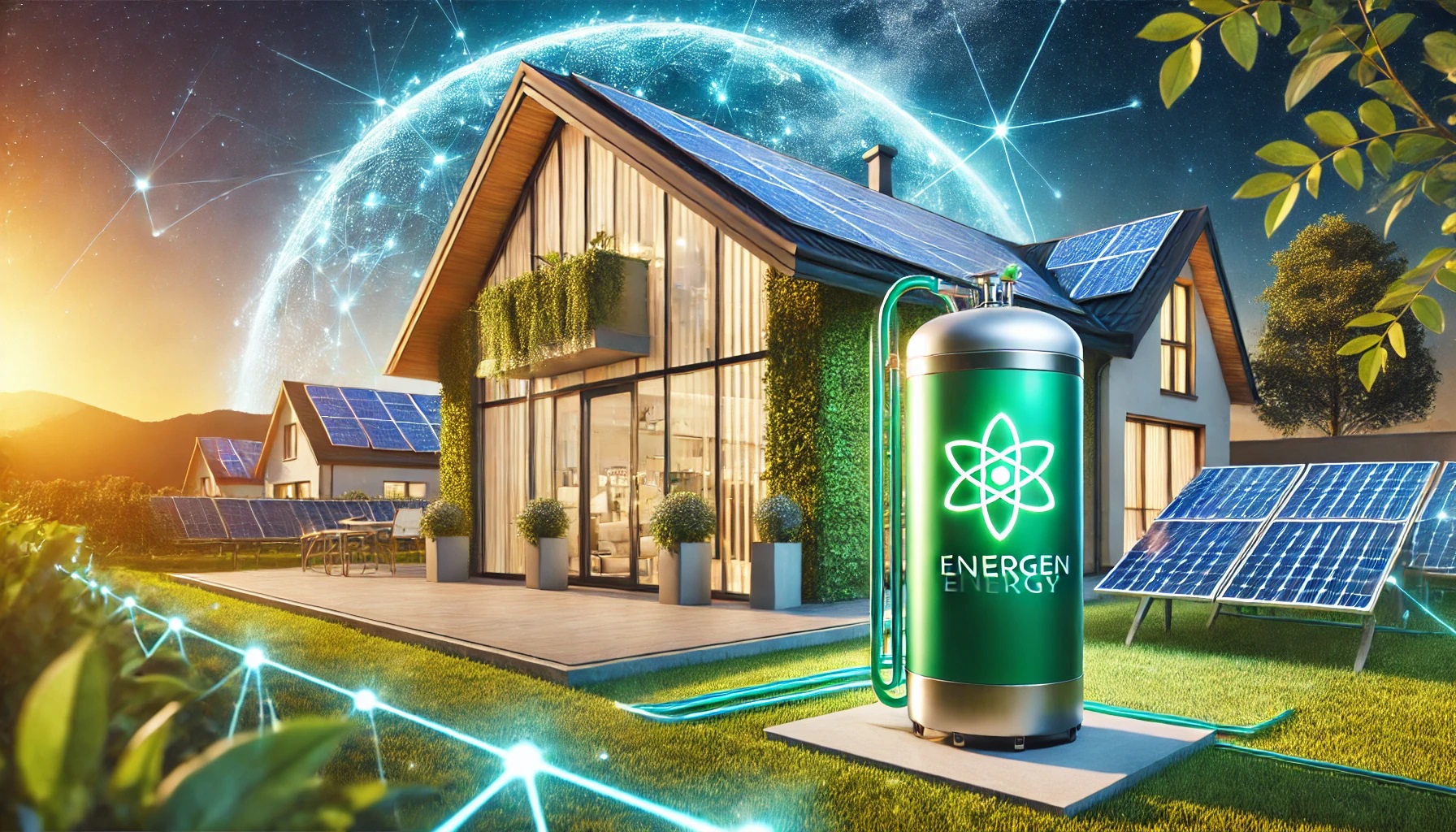
Italian Startup Develops Residential Hydrogen System That Promises to Revolutionize Energy Generation and Storage in Homes and Buildings. Learn All About This Innovative Technology.
Can you imagine having an energy system in your home that generates clean and sustainable electricity? This is increasingly becoming a reality, thanks to green hydrogen and the innovation of the Italian company Hybitat Srl. The startup has launched a green hydrogen system for homes that promises to revolutionize the way we use and store energy in our homes and small buildings. Let’s understand how this residential hydrogen system works and why it is being widely discussed.
What Is Green Hydrogen and How Does Hybitat’s Residential Hydrogen System Work?
Before we talk about the system itself, it is worth understanding what the famous green hydrogen is. This type of hydrogen is produced from renewable energy sources, such as solar or wind energy, and does not emit CO2 during its production. In other words, green hydrogen is one of the most sustainable options for energy generation, being considered essential for a clean energy transition.
The Italian startup Hybitat created a system specifically aimed at homes and small buildings that transforms solar energy into green hydrogen. Here’s how it works: the system utilizes the solar energy generated by photovoltaic panels on the roof of the house. With this energy, an electrolyzer splits the water molecules, separating the hydrogen, which is then stored for future use. When the house needs energy, the system converts the stored hydrogen back into electricity through a fuel cell.
-
American company drills a 1,830-meter hole in Kansas using oil well technology, places a nuclear reactor inside, and claims it will generate electricity without any cooling tower.

-
Canada invests more than 2 billion dollars to upgrade an old nuclear laboratory and try to rival the world’s major atomic energy powers.
-
Nuclear company backed by Bill Gates partners with Hyundai for next-generation 345 MW nuclear reactor

-
Russia is sailing all 8 nuclear icebreakers of its fleet simultaneously for the first time in history, as the Arctic freezes two weeks earlier than expected.





This residential hydrogen system was designed for those who want energy autonomy while also being part of a sustainable movement. The stored hydrogen can be used for other purposes, such as providing gas for some household activities. This versatility is one of the strongest points of this technology.
Understand the Technology Behind the System
The Hybitat system is a true innovation in terms of hydrogen generation and storage. It comes with an internal main unit, which houses the most advanced technologies, such as the electrolyzer and the fuel cell. The system also includes a storage tank known as hydrik, made of metal and designed to safely store hydrogen.
Let’s get into the technical details: the main unit has compact dimensions and houses components such as a DC/DC converter, a DC/AC inverter, a fuel cell, and even a lithium battery to serve as “backup.” This means that even on days with little sunlight, the house can still rely on energy.
Another essential part is the anion exchange membrane (AEM) technology used in the electrolyzer, which ensures efficient hydrogen separation and high-quality energy production. The fuel cell uses a technology called PEM, which stands for Polymer Electrolyte Membrane, that helps convert hydrogen back into electricity safely and efficiently.
How Much Space and Energy Does the Green Hydrogen System for Homes Require?
The green hydrogen system for homes was developed to fit in a relatively small area. The main unit, which handles the entire hydrogen generation and storage process, is approximately 1.15 meters tall, while the storage unit measures about 1.1 meters. In other words, it can be installed in a reduced space, whether indoors or in an outdoor area.
This system was launched with a storage capacity of up to 3 kg of hydrogen, which is equivalent to about 100 kWh of energy. For larger homes or even small buildings, Hybitat offers more robust versions that can store and generate even more energy. This is the type of innovation that truly positions green hydrogen as a practical and viable solution for energy generation and storage in homes and buildings.
Why Is the Residential Hydrogen System a Revolution?
With the residential hydrogen system, the concept of a “self-sufficient home” becomes much more accessible. People will have control over the energy generation of their own home, which means more savings and, of course, sustainability. Imagine never worrying about power outages or rising electricity rates since you produce the energy you consume.
Another positive point is that this system reduces carbon footprints, as it uses renewable energy and does not generate polluting emissions. With the advancement of green hydrogen technology, homes can not only save money but also help protect the environment.
Where and When Will the System Be Available?
The first residential hydrogen system by Hybitat has already been sold and will be installed in early 2025 in a private residence in Italy. This installation, in addition to being a milestone for the company, also represents an important step toward making green hydrogen accessible to the general public.
In the future, the expectation is that this system will expand to other regions, including Brazil, where solar energy is already on the rise. This means that soon we could see green hydrogen for homes becoming a real option for those seeking energy independence and sustainability.







Be the first to react!