Portuguese
  Spanish


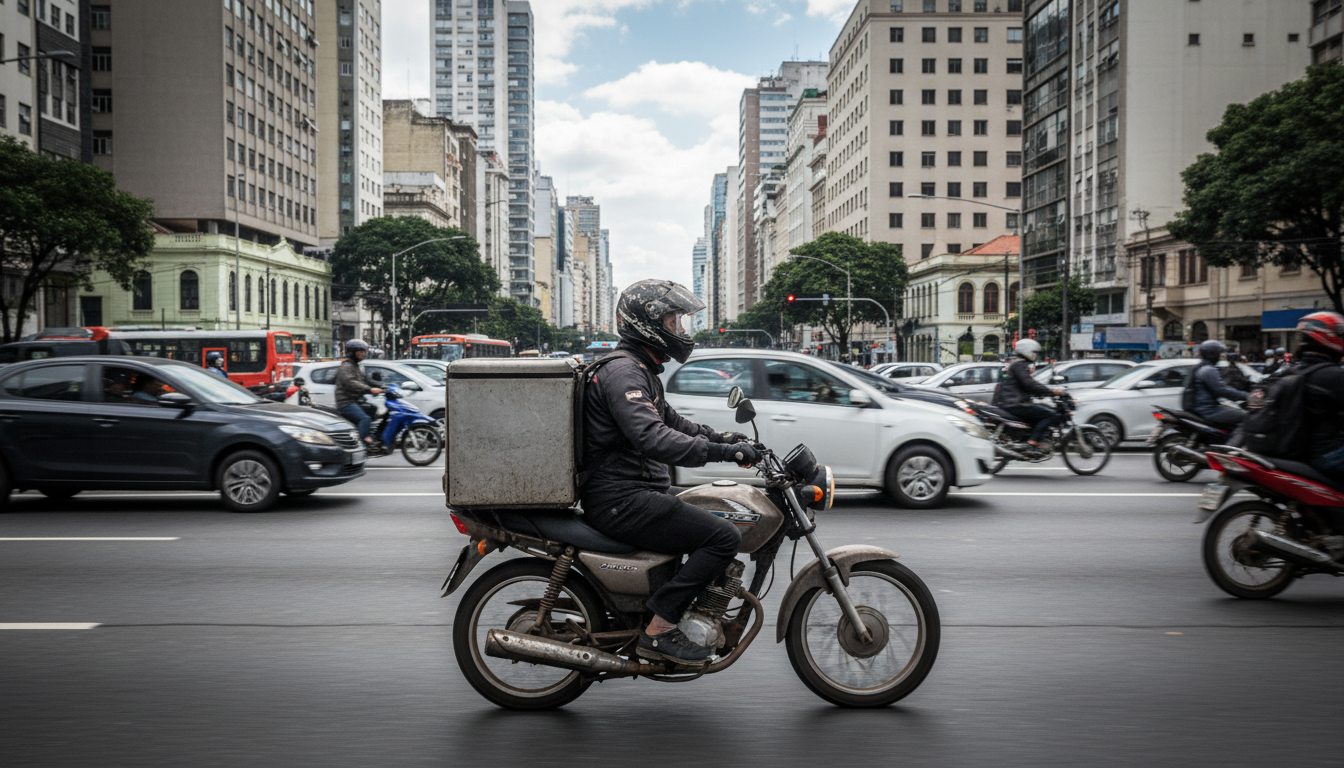

The motorcycle hazard pay of 30% over the base salary came into effect on April 3, 2026, and applies to all CLT workers who use motorcycles on public roads
Portaria MTE No. 2,021, published on December 4, 2025, in the Official Gazette of the Union, finally regulated what millions of motorcyclists had been waiting for over a decade.
Since April 3, 2026, all formally employed workers who regularly use motorcycles on public roads are entitled to a motorcycle hazard pay of 30% over their base salary.
The regulation approves Annex V of Regulatory Norm No. 16 (NR-16), officially characterizing work activities with motorcycles in traffic as hazardous.
-
Norwegian Fans Turn Stadium into “Viking Ship” with Collective Rowing at World Cup, Leaving Everyone Curious About the Unique Scene

-
Nepal’s Flag: The World’s Only Non-Rectangular National Flag Preserved by Tradition and Constitution

-
Archaeologists Discover 1,600-Year-Old Church with Colorful Mosaics and Ancient Christian Worship Site in Italy
-
Humanoid Robots and AI Take Over Texas Park in Apptronik’s Apollo 2 Training for Factory and Logistics Work



Motorcycle delivery drivers, motorcycle taxi drivers, contracted delivery personnel, external salespeople, and meter readers are among the categories benefited.
Who is entitled to the motorcycle hazard pay and who is excluded from the regulation
The rule is clear: the 30% additional pay applies to CLT workers who habitually use motorcycles on public roads open to traffic.
According to Juliana Mendonça, a master in law and partner at Lara Martins Advogados, “all CLT workers who regularly use motorcycles on public roads, including categories such as motorcycle delivery drivers, motorcycle taxi drivers, delivery personnel, and external technicians, will be entitled to the 30% additional pay.”
However, there are express exceptions that exclude specific situations:
- Exclusive commuting between home and work
- Circulation only in private areas
- Occasional use or for extremely short periods
- Drivers of unregistered vehicles or without a driver’s license
App-based delivery drivers without CLT ties—self-employed or contracted by platforms—are not entitled to the additional pay.

The motorcycle hazard pay reflects on vacation, 13th salary, FGTS, and can raise the real cost above 30%
The financial impact goes beyond the nominal 30% on the base salary.
As the additional pay is part of the remuneration, it automatically reflects on other labor benefits.
Vacation, 13th salary, FGTS, overtime, 40% fine on termination, notice period, and social security charges will now be calculated on the already increased amount.
Companies with teams of motorcyclists need to immediately review their payroll, personnel budget, and financial planning.
Non-compliance exposes employers to administrative fines, inspections, and retroactive labor lawsuits with interest and monetary correction.

From 2014 to 2026: how the motorcycle hazard pay took 12 years to be implemented
The right to hazard pay for motorcyclists has been provided for in the CLT since 2014.
Law No. 12,997/2014 introduced Article 193, §4, establishing the benefit.
However, a previous MTE regulation was invalidated by the 5th Panel of the Federal Regional Court of the 1st Region (TRF1).
The invalidation created legal uncertainty and an increase in judicial disputes on the subject.
Only in 2023 did the Permanent Tripartite Commission (CTPP) resume the regulatory process.
With participation from the government, employers, and unions, according to Decree No. 11,779/2023, the regulation was finally completed.
Juliana Mendonça highlighted that the regulation changes the nature of technical reports: “From now on, the reports cease to be mere internal documents restricted to HR and constitute an element of compliance, auditable and subject to immediate verification by regulatory bodies.”
Just as changes impact the pockets of workers in other countries, the regulation of motorcycle hazard pay in Brazil closes a gap of over a decade.

Companies need a technical report signed by an engineer or occupational physician to prove the hazard
The regulation requires employers to prepare a technical report to formally characterize the hazard.
The document must be signed by an occupational physician or safety engineer.
The report must be available to workers, unions, and labor inspection, according to item 16.3.1 of NR-16.
Without this report, the company is legally vulnerable in any inspection or labor action.
The official MTE page details the requirements of the regulation, while G1 explains who is entitled and how the calculation works in practice.
The central question now is whether companies will comply with the regulation voluntarily or if the Ministry of Labor will need to intensify inspections to ensure payment.