Portuguese
  Spanish


Selective Tax begins in 2027 and will affect cigarettes, alcoholic beverages, and soft drinks. Rates still depend on Congress approval.
Starting from January 1, 2027, Brazil is expected to begin a new phase of tax reform with the implementation of the Selective Tax (IS), a tax created to discourage the consumption of products considered harmful to health or the environment. Among the items already included in the approved rules are cigarettes, alcoholic beverages, and sugary drinks, such as soft drinks.
Although the creation of the tax is already foreseen in the tax reform, an important point remains open: the specific rates still need to be defined by the National Congress through complementary legislation. This means that the market already knows which sectors will be affected, but still does not know exactly how much each product may increase in price.
The new Selective Tax was created to reduce the consumption of harmful products
The Selective Tax emerged as one of the main innovations of the tax reform approved by Congress.
-
“Man with Bipolar Disorder Claims ChatGPT Exacerbated Delusions, Leading to Suicide Attempt”

-
U.S. House Approves Bill to Protect Children on Social Media, Limit Addictive Features, and Demand New Measures from Platforms, But Senate Differences Could Stall Progress
-
78-Year-Old Brazilian Farmer Wins Legal Battle for Ownership of 108,000 m² of Land After Decades of Dispute with Federal Government

-
Brazilian Supreme Court Pauses Fines for Workplace Regulation Violations for 90 Days, but Companies Must Still Address Harassment and Overwork



According to the federal government, the purpose of the tax is to act as a mechanism to discourage the consumption of goods and services considered harmful to public health or the environment. Unlike traditional taxes primarily aimed at revenue collection, the new tax has a regulatory function.
The logic is similar to that adopted in several countries that apply additional taxation on cigarettes, alcoholic beverages, or products associated with higher costs for health systems.
Alcoholic beverages, soft drinks, and cigarettes are among the main targets of the new taxation
Among the products already identified in the tax reform rules are cigarettes and other smoking products, alcoholic beverages, and sugary drinks.
In practice, this includes beers, wines, spirits, soft drinks, and other products that may receive an additional tax burden when the Selective Tax comes into effect.
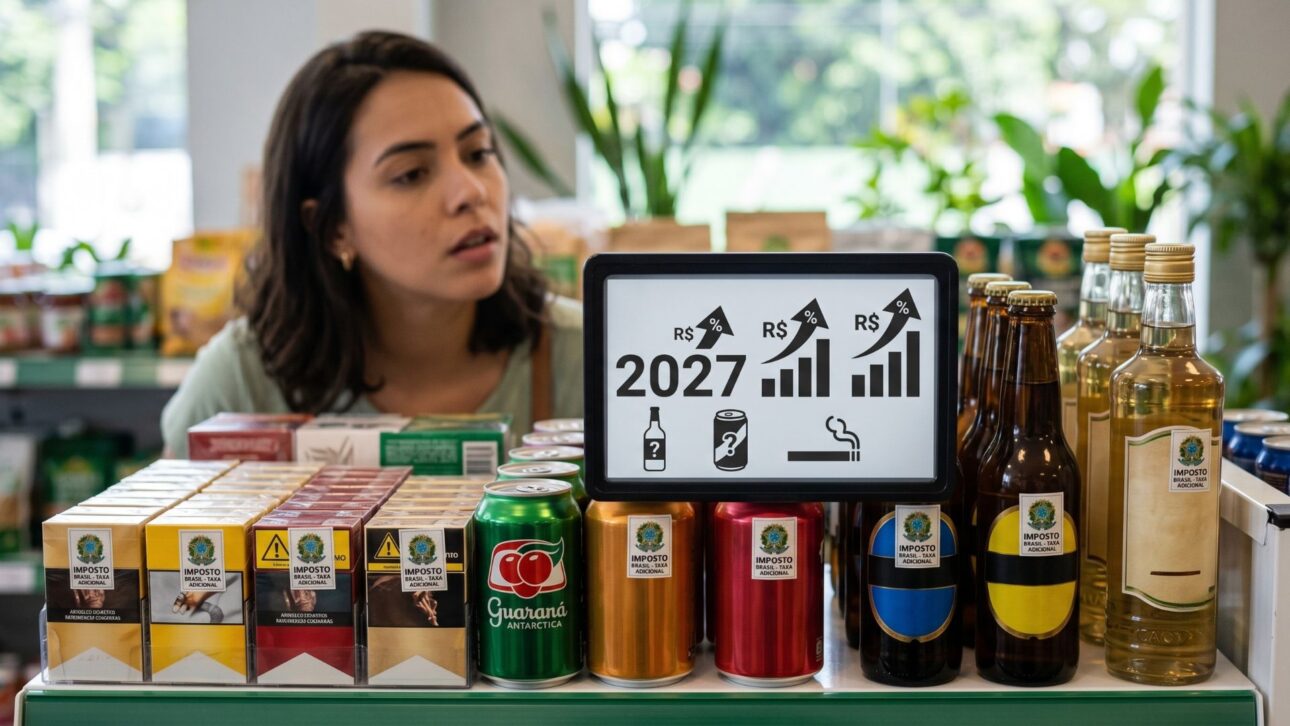
In addition to these items, the legislation also provides for incidence on other segments, including gambling, certain vehicles, boats, aircraft, and activities related to mineral extraction.
Congress still needs to define how much each product will pay
Despite the confirmation of its entry into force in 2027, one of the biggest doubts remains the percentage that will be applied to each category.
The Ministry of Finance reported that the specific rates will still be sent for analysis by the National Congress. Without this approval, the new tax cannot be charged according to the planned schedule.
According to official documents of the tax reform, the exact definition of the percentages depends on complementary regulation and specific ordinary laws.
This means that consumers, manufacturers, and merchants are still awaiting the final numbers that will determine the real impact on prices.
Some estimates indicate significant increases in certain products
Although the official rates do not yet exist, studies and simulations released by tax experts point to possible scenarios.


Surveys released by industry consultancies indicate that cigarettes may face quite high taxation, while alcoholic beverages and soft drinks may also receive significant increases in tax burden. These projections, however, do not represent definitive values approved by the government or Congress.
Therefore, it is still not possible to accurately state how much more expensive each product will become.
The new tax will replace part of the function performed by the IPI
Another important change is related to the transition process of the tax reform. Starting in 2027, various rates of the Tax on Industrialized Products (IPI) will be reduced to zero, while the Selective Tax will start to apply to specific products defined by legislation.
According to the Ministry of Finance, this change is part of the reorganization of the Brazilian tax system, which will also create the CBS and the IBS as substitutes for various current taxes.
Government claims the measure seeks benefits for public health
The main argument used by the government to justify the new tax is the reduction in the consumption of products associated with diseases and environmental impacts.
International experience shows that tax increases can reduce the consumption of cigarettes and alcoholic beverages in certain population groups, especially when final prices rise significantly.
Supporters of the measure argue that the policy can help reduce future health treatment costs and encourage healthier habits.
Economic sectors closely monitor the regulation
Beverage manufacturers, tobacco sector companies, distributors, and retailers are closely following the discussions on future rates.

The definition of the percentages will be crucial for pricing strategies, industrial planning, and consumption projections for the coming years.
Furthermore, experts emphasize that the final impact will depend not only on the Selective Tax rate but also on the interaction between the new tax and other taxes created by the tax reform.
The consumer’s wallet will be the main testing ground for the new tax policy
The Selective Tax is already included in the tax reform and is scheduled to come into effect in January 2027.
The government states that the goal is to reduce the consumption of products considered harmful to health and the environment, while Congress still needs to decide what rates will be applied to each category.
Until this definition occurs, the main question remains for millions of Brazilians: when cigarettes, alcoholic beverages, and soft drinks start to be subject to the new tax, what will be the real impact on the final price that reaches the consumer?