Portuguese
  Spanish


A technology created for cattle management promises to change the way producers monitor herds in extensive areas, using AI drones to observe animals, plan pasture routes, and transform traditional tasks into digital operations via the app.
Imagine opening an app, selecting the pasture on the map, and sending a drone to fetch the herd as if it were an invisible cowboy in the sky. This is the promise of “robot cowboys”, a technology that uses autonomous drones with artificial intelligence to move cattle, monitor pastures, and transform an old livestock routine into a digital operation.
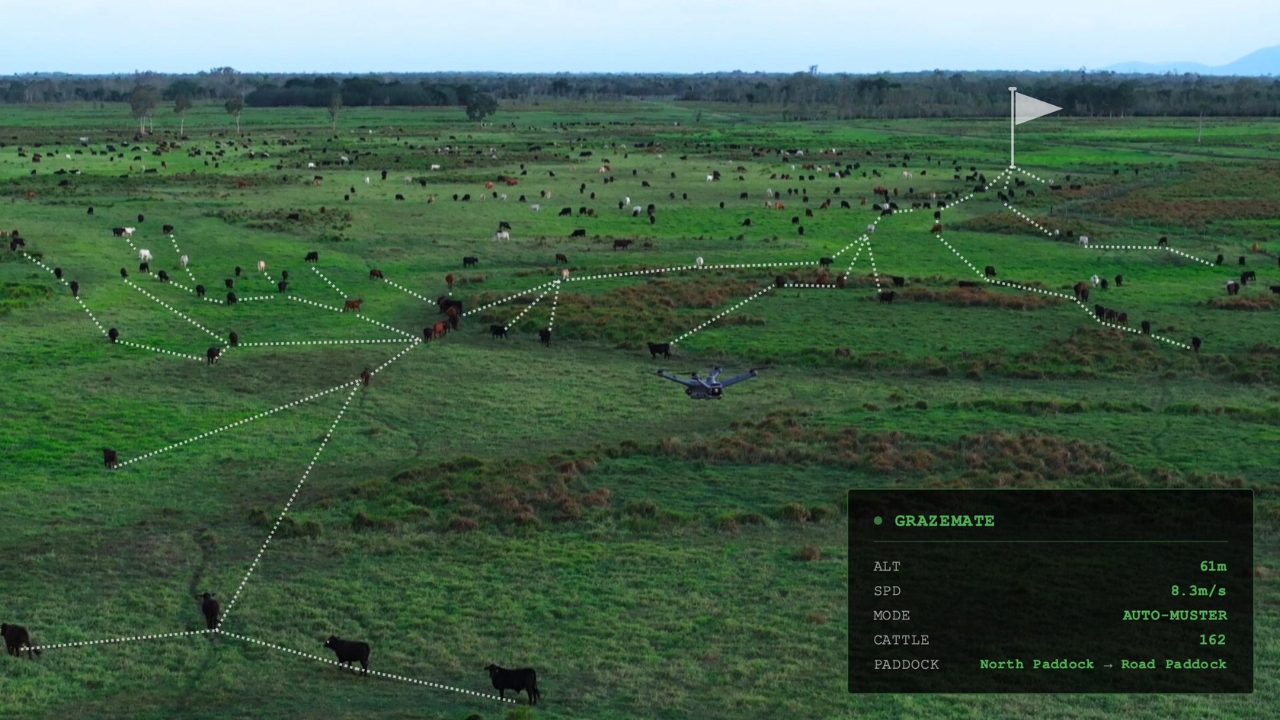
GrazeMate, a startup created by Sam Rogers, bets on drones that not only fly over the field. They try to understand animal behavior, adjust the pressure on the herd, and guide the cattle to another paddock with a few commands on the cell phone.
The cowboy can now be inside an app
In traditional livestock farming, moving cattle in large areas may require motorcycles, horses, trucks, entire teams, and even helicopters. It is an expensive, tiring, risky job and increasingly difficult.
-
Ancient Stone City in the Desert, Once Home to 30,000, Puzzles Scientists with Nabateans’ Water Mastery 2,000 Years Ago

-
Ancient Creature Thought Extinct Since Dinosaur Era Reappears, Baffling Scientists

-
India Deploys Giant Fabric Tubes Filled with Sand to Combat Coastal Erosion and Rebuild Disappearing Beaches

-
China Unveils Most Human-Like Humanoid Robot for Public Sale, Featuring Silicone Skin and 88 Joints, Priced from $17,600




Y Combinator presents the technology as a system capable of performing in three clicks on the phone a task that, on large properties, could take an entire day. The promise is to take some of the physical effort out of the field and put the management inside an app.
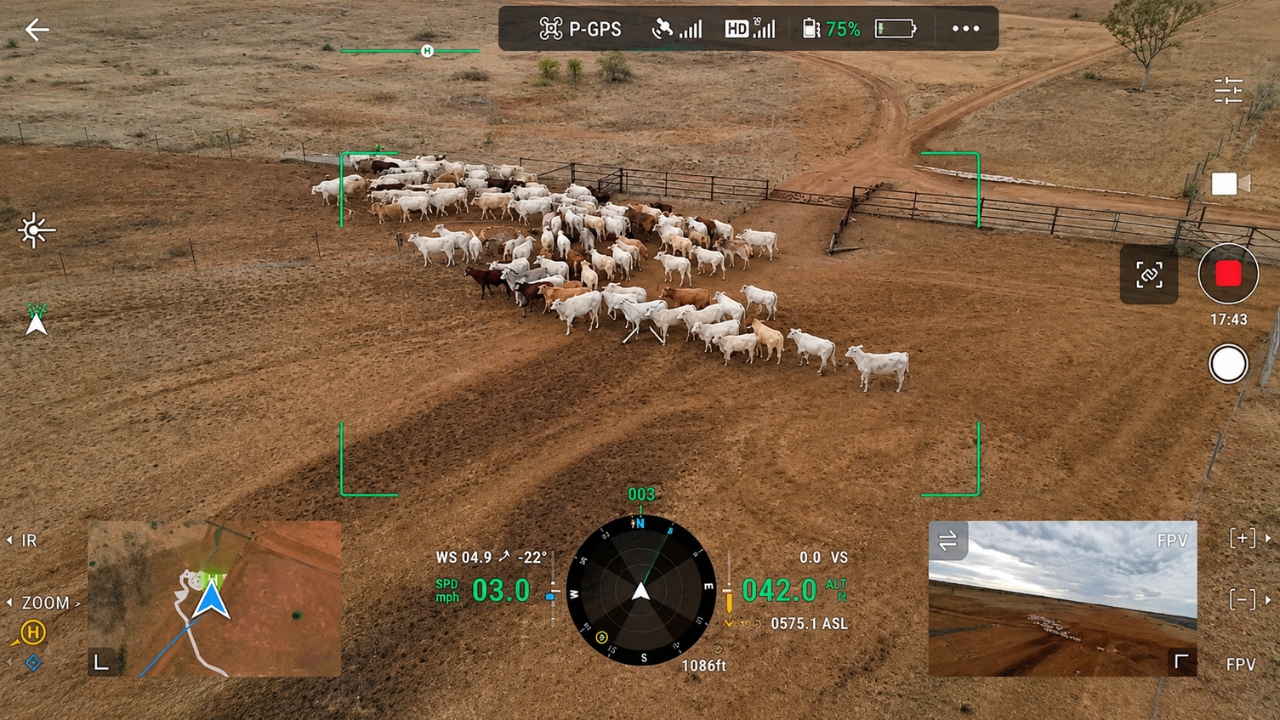
The system flies to the paddock, locates the herd, and guides the group with movements. Instead of an operator manually piloting, the proposal is for the AI to read the cattle’s reaction in real-time.
The founder grew up watching cattle being herded the hard way
The story also draws attention because of who is behind the idea. Forbes Australia reported that Rogers is 19 years old, grew up on a farm in northern Queensland, Australia, and watched his father manage 6,000 head of cattle with horses and motorcycles.
The startup was formalized in 2025 and raised US$ 1.2 million in an initial round with support from technology investors. Less than a year later, it was already associated with pilots and commitments in areas totaling 1.7 million acres between Queensland and New South Wales, as well as expansion to California.
It is not just a laboratory invention far from rural reality. It is an attempt to automate a pain experienced by those who grew up in the countryside and saw firsthand the cost of moving animals for hours.
The drone also wants to read the farm
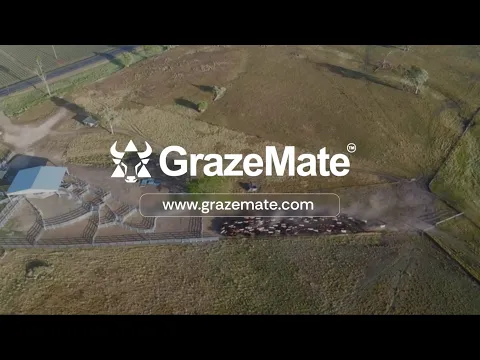

The most interesting point is that the drones were not designed just to push cattle from one side to the other. While managing, they can also collect data on estimated animal weight, pasture biomass, water, fences, and possible signs of sick animals.
The platform describes a simple process: the producer sets the pasture boundaries in the app, creates a kind of digital twin of the farm, schedules flights, monitors the mission live, and receives reports after the operation.
For large properties, this can mean less daily commuting, more control over the herd, and faster decisions on pasture rotation.
The numbers that make the technology hard to ignore
The company claims that each unit can cover up to 10 km per charge, recharge in about 30 minutes, and control herds of up to 2,000 animals with a single drone, although it acknowledges that very large groups make precision more difficult.
The system should not yet be treated as a technology spread massively around the world. The operation is linked to tests, demonstrations, and pilot programs. Some of the more advanced analyses, such as estimated weight and dry matter availability, appear as a beta feature.
Even so, the logic is powerful. If the producer can move the cattle more frequently and with less effort, they can improve pasture use and reduce long commutes.
Why this speaks directly to Brazil
In Brazil, the potential impact of any innovation in cattle management is enormous. The IBGE recorded 238.2 million head of cattle in 2024, the second largest number in the historical series, and reported 42.94 million cattle slaughtered in 2025, a record for the survey and an increase of 8.2% compared to the previous year.
These numbers help explain why technologies like agriculture with drones, digital livestock, and artificial intelligence in the field are shifting from curiosity to economic competition. In a country with herds spread over vast areas, reducing management time can mean savings, safety, and productivity.
Autonomous drones still depend on aviation rules, connectivity, operational safety, and adaptation to the reality of each farm. The promise is enormous, but large-scale use still needs to overcome technical and regulatory steps.
The field is entering the era of discreet robots
The most impressive thing is not just seeing a drone herding cattle. It is realizing that livestock farming is beginning to gain machines capable of observing, deciding, and acting on tasks that, for generations, depended almost exclusively on human experience.
The robot cowboys do not mean the immediate end of the cowboy, the ranch hand, or the producer. But they show that a new phase has begun: rural management assisted by AI, where the cellphone can become a digital corral and the drone can become a field assistant.