






 Portuguese
  Spanish


A Warning About The Economic And Political Risks Of This Hypothesis That Haunts The Market In Case Dino And Moraes Fail To Retaliate Trump.
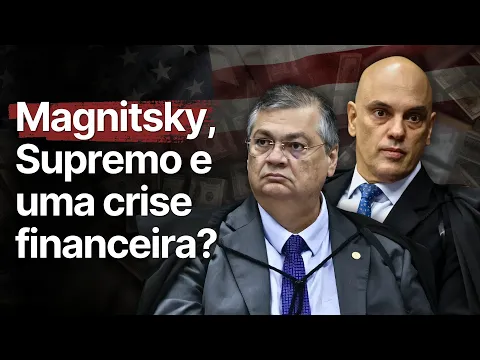
The diplomatic crisis between Brazil and the United States reached new chapters on August 18, 2025, when Minister Flávio Dino of the Supreme Federal Court (STF) determined that foreign laws, such as the Magnitsky Act, cannot be automatically applied in Brazil. The decision, confirmed by the STF itself in an official statement, was seen as an attempt to shield Minister Alexandre de Moraes, sanctioned by the Donald Trump administration.
According to Agência Brasil, the minister’s decision reflects a long-standing understanding of the Court: Brazilian legislation only allows the application of foreign norms through judicial homologation or valid international treaties. However, critics point out that the STF may take an even more serious step — the blocking of assets and accounts of American companies in Brazilian territory.
Consequences Of A Possible Blockade
According to BBC News Brasil, the sanctions of the Magnitsky Act against Moraes include a travel ban to the U.S., freezing of assets, and blocking of financial transactions on American soil. In Brazil, Dino warned that financial institutions and the Central Bank have been notified to respect his decision.
-
China Tightens Control on Antimony, Driving Prices from $22,000 to Nearly $40,000 per Ton as U.S. Rushes to Bolster Strategic Reserves

-
BlackRock Freezes $1 Billion in Brazilian Renewable Energy, Impacting 1.5 GW of Planned Projects and Highlighting Investor Concerns Over Infrastructure Bottlenecks Cutting Up to 25% of Solar and Wind Generation
-
Labor Shortage: Despite Record Average Salary, 90% of Brazilian Bar and Restaurant Owners Struggle to Hire Key Roles Like Sushi Chefs and Head Cooks

-
Supermarket Deli Counter Attendants in Brazil Could Earn Over $2,100 Monthly by 2026, Plus Benefits Package


The problem is that Brazilian or multinational companies would be caught in a dilemma: obey the American law and risk punishment in Brazil, or follow the STF’s decision and face sanctions in the United States.
A possible blockade of American companies’ assets here could trigger a domino effect, such as: capital flight, rise of the dollar, inflation, and retraction of investments, directly affecting the lives of more than 200 million Brazilians.
The Clash Between Sovereignty And Economy
In the decision, Dino stated that Brazil cannot “ratify unilateral impositions” and that it is up to the STF to guarantee national sovereignty. However, critics remind us that an extreme act, such as asset blocking, could turn into a self-inflicted economic wound, fueling instability.
The U.S. State Department reacted on the same day, August 18, 2025, stating in an official note that “no foreign court can nullify the sanctions imposed by the U.S. or protect anyone from the severe consequences of violating them.” The message, also shared on its official account on the social media platform X, made it clear that Washington does not recognize the STF’s decision.
This scenario recalls a recent history: in October 2024, when the STF decided to block international actions regarding the Mariana disaster (2015), involving mining company Vale and BHP, the Court had already signaled resistance against foreign judgments. Now, however, the target is not just a multinational, but the direct relationship with the United States, the largest economy in the world.
A Real Danger Within Brazil
Experts remind us that STF decisions have efficacy only in Brazil. However, if the court determines the blocking of American assets, the impact could be devastating: loss of international confidence, retraction of investments, and instability in the financial market.
Thus, the greatest risk may not come from outside, but from within. As economic analysts point out, Brazil could plunge into a crisis caused not by international sanctions, but by erroneous internal decisions, made in the name of sovereignty that jeopardize the stability of the entire nation.
What is at stake is not only the autonomy of the STF, but the economic future of Brazil. The question that remains is: Would the STF have the courage to go this far in exchange for the long-desired national sovereignty?


Que matéria mais tendenciosa. O ministro Dino apenas bloqueou os efeitos da Lei Magnitsky no Brasil. Agora bloquear ativos de empresas Americanas no Brasil, é algo que ninguém nunca falou isso. O Supremo nunca faria isso. Lembrando que o Supremo não toma decisões sem ser provocado. Teria que haver um pedido do governo, por exemplo, para que o Supremo determinasse isso. O Governo nunca vai fazer isso, seria muito ruim para o país.