






 Portuguese
  Spanish


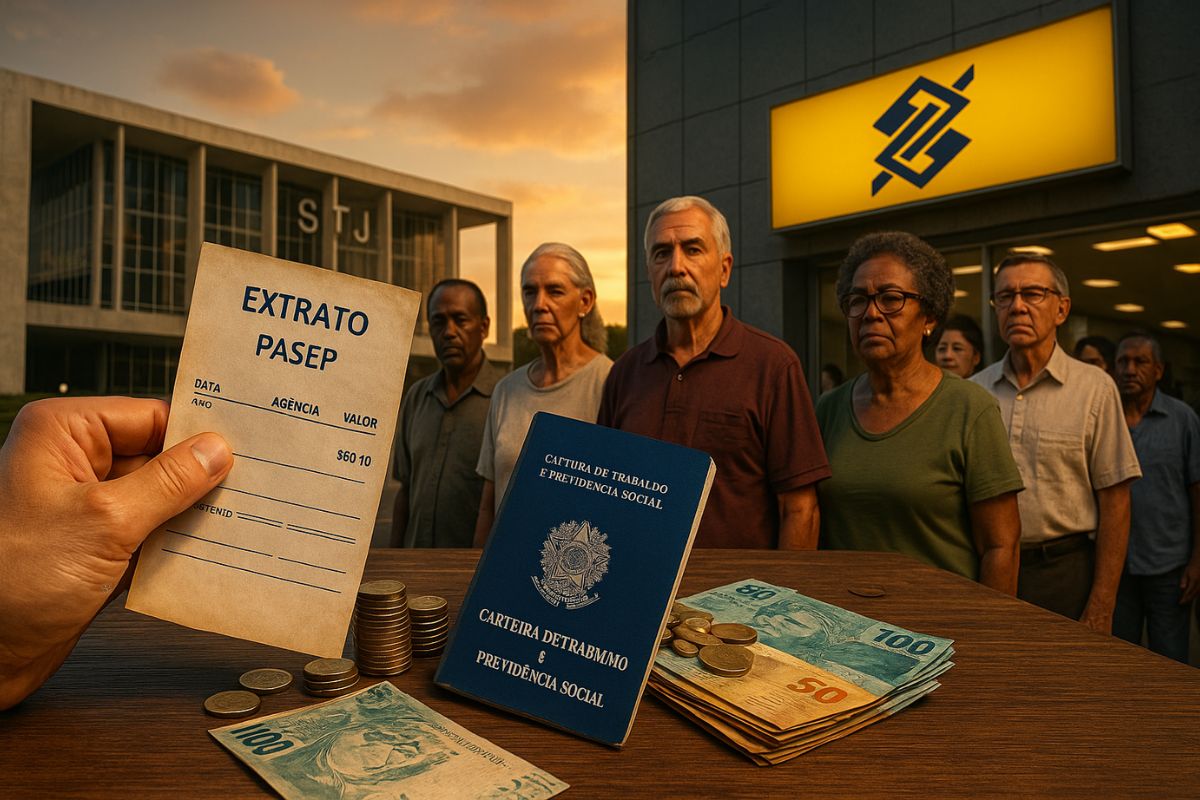


The STJ Decision in 2025 Established That Banco do Brasil Must Prove PASEP Withdrawals Made at Agencies, Altering the Burden of Proof in Cases Involving Over 5 Million Workers Who Joined Public Service Before 1988.
On September 10, 2025, the Superior Court of Justice (STJ) published a ruling in Theme 1300, consolidating an important change in the legal dispute over PASEP (Public Server Heritage Formation Program).
From this decision, Banco do Brasil must prove PASEP withdrawals made at its agencies, and not the worker anymore. This means that, in cases where amounts were withdrawn in person at the counter, the financial institution must present documents and records that confirm the regularity of the operation. Until then, it was up to the beneficiary to demonstrate that they had not made the withdrawal or that they suffered losses due to administrative failure.
The History of PASEP and Legal Disputes
Created in 1970 and unified with PIS in 1975, PASEP aimed to build a wealth for public servants.
-
Are Companies Required to Release Employees During Brazil’s World Cup Matches? Understanding Workers’ Rights

-
Brazilian Family’s Homeschooling Success Sparks International Debate: Daughters Read 30 Books Annually and Speak Multiple Languages

-
Piauí Governor Enacts Law Requiring State Contractors to Reserve Jobs for Former Inmates with Minimum Wage and Verification Before Payment
-
Providing Your Tax ID at Supermarkets: A Routine Step That Can Unlock Discounts and Rewards but Also Reveals Your Shopping Habits



The 1988 Constitution eliminated new entries into the program but preserved the rights of those who were already participating.
Since then, thousands of workers claim to have never received the amounts due.
Frequent reports point to issues such as improper withdrawals, incorrectly credited earnings, and even the disappearance of balances.
The centralized management by Banco do Brasil has always faced criticism, and the difficulty in accessing microfiche and old statements has led many policyholders to court.
How Many Workers Can Be Benefited
According to estimates cited by Professor Valter dos Santos, an expert on the topic, over 5 million people who started working before 1988 may be impacted by the decision.
The actions discuss average amounts between R$ 30 thousand and R$ 50 thousand per worker, but, when adjusted, these amounts can exceed much higher figures.
This makes the decision a landmark for labor rights and for the complementary social security of the public sector.
The Direct Impact on Banco do Brasil
With the new procedural rule, Banco do Brasil assumes the burden of proof in in-person withdrawals.
Minister Maria Teresa de Assis Moura, the rapporteur of the case, highlighted in her vote that there are three forms of PASEP transactions: account credit, payroll payment, and agency withdrawal.
Only in the latter case is the bank required to prove the delivery of the money.
This change opens the possibility of a billion-dollar liability for the institution, which may be required to return adjusted amounts in thousands of cases.
Beyond compensations, there is a risk of overload on the Judiciary, with new actions being filed.
Practical Effects for Workers
In practice, the decision facilitates access to rights for thousands of people who, until now, were disadvantaged by the difficulty of gathering documents from decades ago.
The worker will no longer need to prove the absence of a withdrawal at the agency: the responsibility lies entirely with the bank.
However, when payments occurred through payroll credit or in accounts of other institutions, the burden remains on the beneficiary, as in those cases Banco do Brasil did not have direct control over the operation.
Gaps and Open Points
Despite the advancement, relevant doubts remain.
There are no official data on the total financial impact that Banco do Brasil may face, nor on how many cases are awaiting a decision based on Theme 1300.
It is also unclear whether the federal government intends to adopt measures to mitigate the liability or renegotiate amounts in cases of mass convictions.
For workers, the message from the STJ is clear: those who have pending amounts from PASEP need to seek their rights.
The decision creates a solid precedent and provides more security for ongoing actions.
The determination that Banco do Brasil must prove PASEP withdrawals at agencies changes the balance of power in legal disputes and may result in billions in compensations.
And you, do you believe that this decision corrects a historical injustice against workers, or do you fear that the financial impact on the bank and the government may be greater than imagined? Leave your opinion in the comments — we want to hear from those who live this reality up close.





Estou func pública federal do INSS e adiv sindicado disse que não temos direito,assim foi improcedente a decisão STJ,iniciei trab 1975,porque não teria direito?como fica minha situacao
Sou professora aposentada do estado de MT,fui ao Banco do Brasil para verificar se havia saldo do meu PASEP e me disseram que não tenho nada,e depois fui de novo e me apresentaram um papel lá que não consta nada, eu não entendi pq eu trabalhei desde 1980 fui nomeada em 1985 e pq não tem nenhum saldo do PASEP?
Justiça será feita 🙌🏽