





 Portuguese
  English
  Spanish
  4 min of reading
  0 comments


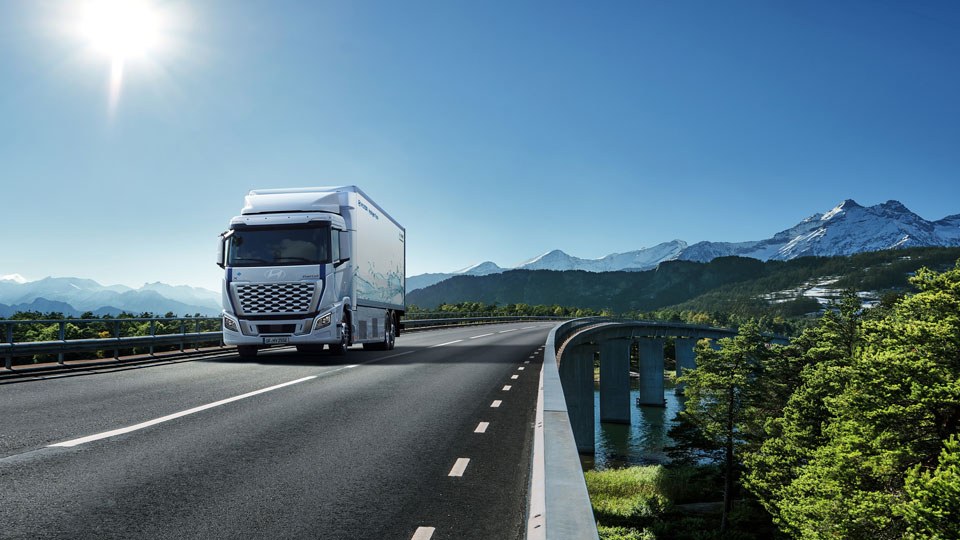
Saudi Arabia has launched the country’s first heavy-duty hydrogen-powered truck that also drives itself, a zero-emission machine capable of traveling about 1,500 kilometers on a single tank and has already begun operating by transporting products for one of the world’s largest consumer goods multinationals.
The game-changing detail is the combination of three things in one machine: hydrogen as fuel, factory-installed autonomous driving, and a global brand backing real freight, not a showcase test for photos. It’s the difference between a prototype circulating in a closed yard and a truck that truly enters the logistics chain of a giant company.
There’s a delicious irony in this story. The country that built its fortune on oil is the same one now putting on the road a vehicle powered by the fuel that promises, one day, to retire diesel. Those who live off oil are buying a seat at the table of what might replace it.
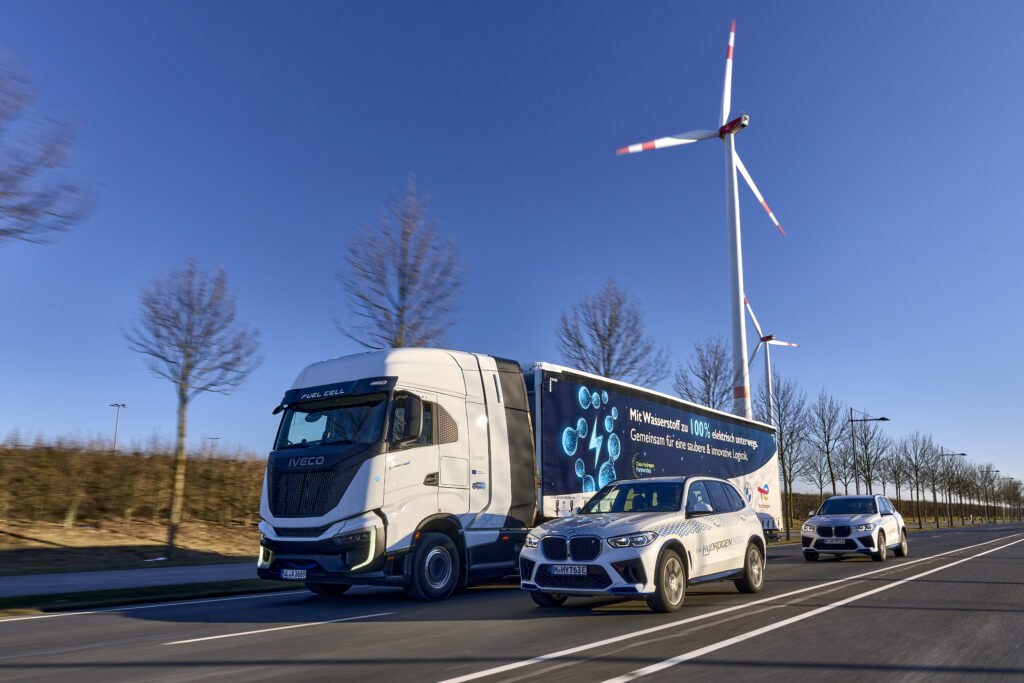
Hydrogen and battery are not the same race
It’s worth separating two technologies that are often lumped together. The electric car most people know stores energy in a battery and recharges at an outlet. Meanwhile, the hydrogen truck carries the gas in a tank and has, on board, a fuel cell, a device that combines hydrogen with oxygen from the air and generates electricity on the spot, releasing only water vapor through the exhaust.
-
A dredge pulled from the river mud in the United States 19 giant cannons weighing over 450 kilograms that had been forgotten at the bottom for almost 250 years and had once fired in the American War of Independence.

-
Mercury, Venus, and Jupiter will come together in a mini alignment of planets that reaches its peak this Friday (06/12) and can be seen with the naked eye shortly after sunset in Brazil, depending on the weather forecast.
-
China sends ship to the bottom of the Pacific, finds rare minerals on the ocean floor, extracts 90 kg of basalt from the depths, and tests an unprecedented 10,000-meter system that performs a kind of “tomography” of the Earth beneath the sea.

-
CO₂ from ethanol still escapes into the atmosphere, but São Paulo is preparing a R$ 30 million project to create the first Brazilian unit dedicated to sugarcane capable of storing carbon underground.



For a heavy truck, this difference matters a lot. A battery sufficient to move dozens of tons over long distances is heavy and expensive, and takes hours to recharge. Hydrogen solves both points: it refuels in minutes, like diesel, and delivers long autonomy without stealing cargo capacity. That’s why many believe the future of long-distance transport lies in the fuel cell, even with passenger cars moving towards batteries.
The Saudi truck announces precisely this kind of number that makes sense in freight: close to 1,500 kilometers per tank, enough to cross much of the desert between cities without a long stop. Add to that autonomous driving, and you have a machine designed for the safe monotony of straight and empty highways, where autopilot shines and human drivers tire.
The Gulf’s economic bet on the post-oil era
Looking at the wallet, the move is strategic. Gulf countries know that oil will not forever be the center of the global economy, and they are rushing to position themselves in the chain of what comes next. Hydrogen is one of these bets, and Saudi Arabia has already announced megaprojects to produce the gas on an industrial scale using the abundant desert sun.
Putting a hydrogen truck on the road for a well-known multinational is, in this context, more than logistics: it’s living propaganda that the technology works in real and harsh conditions, with extreme heat and long distances. Those who supply the fuel, the vehicle, and the refueling infrastructure for this new market can earn as much as they did with oil, and the Gulf wants that seat secured.
Why autonomous driving fits the desert
The choice to combine hydrogen with autopilot is no coincidence. Autonomous driving shines precisely where human work is most monotonous and tiring: long, straight, and empty highways, with few surprises and lots of mileage. The Saudi desert, with its roads cutting through nothingness for hours, is almost an ideal laboratory for a machine that doesn’t sleep, doesn’t get distracted, and doesn’t lose reflexes in the fifth hour of travel.
There is a built-in gain of safety and cost in this logic. Truck accidents on highways are often caused by human factors, such as sleep, haste, or inattention, and a system that maintains speed, distance, and lane consistently reduces this risk. For the company paying the freight, there’s also the savings of not relying on a driver for each shift on a route that requires driving day and night.
Of course, completely removing humans from the cabin is still a delicate subject, surrounded by regulations, insurance, and distrust. That’s why these projects usually start on controlled routes, known inch by inch, with remote supervision and a team on standby. The Saudi truck fits this cautious pilot mold, where autonomy advances through well-mapped sections before dreaming of the open road.
Between promise and real road
It’s wise to keep one’s feet on the ground. Hydrogen still faces known obstacles: producing the gas cleanly is expensive, refueling stations are lacking in most parts of the world, and transporting the fuel has its own challenges. An impeccable truck solves nothing alone if there isn’t a network to refuel it along the route.
But that’s how all transportation technology begins, with a pioneering vehicle, a controlled route, and a client willing to foot the bill for novelty. We’ve seen this movie with the electric car, which went from a trade show curiosity to a garage reality in just over a decade. The Saudi truck might be the first frame of this same storyline in heavy transport.
I imagine the scene in the desert: a truck with no one at the wheel, releasing only water vapor, crossing the kingdom the world has learned to associate with oil wells and pipelines. If this image becomes routine, and not a controlled exception, it’s a sign that the transition many discuss in the abstract has begun to happen on the asphalt, far from the spotlight, in the tedious and decisive part of heavy logistics.
Would you bet on hydrogen or batteries to power the trucks of the future, or do you think both will share the road for a long time?





Be the first to react!