






 Portuguese
  Spanish


Developed by the University of Amsterdam, the solvothermal liquefaction process transforms mixed plastic into oil without needing to separate the types. The pilot reactor has reached maturity level 6/7, but the real test with urban waste in Spain is yet to come, this European summer.
A 25-liter pilot reactor managed, in just 30 minutes, to cook mixed plastic and transform it into oil capable of recreating new plastic. The technology was developed by the University of Amsterdam and promises to close the recycling loop, generating a material identical to plastic made from fossil fuel. The decisive test, with real urban waste, begins this summer in Spain.
According to the report by journalist Mrigakshi Dixit, the process is called solvothermal liquefaction and combines solvent, heat, catalysts, and high pressure. The result is a dark brown oil, rich in the monomers necessary to manufacture high-quality plastic. The mobile plant, mounted on steel structures, will be hosted by the public waste company COGERSA, in northern Spain.
A pilot reactor that cooks plastic without needing to separate
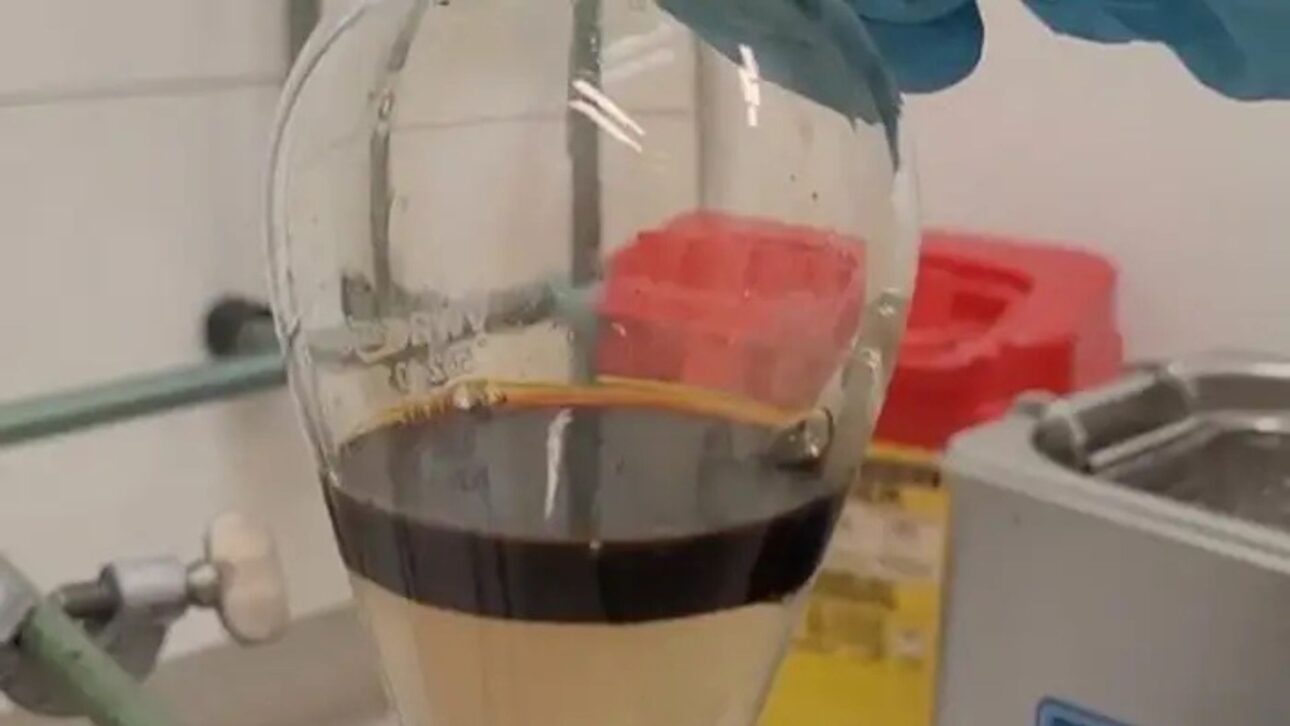
Developed by the Catalysis Engineering Group at the University of Amsterdam, the solvothermal liquefaction process accepts the mixed plastic stream as it arrives, without requiring workers or optical sensors to separate, for example, polyethylene from polypropylene.
-
Esperanza’s Bamboo Barrier in Oaxaca Redirects River and Reduces Erosion by 85% in Five Years

-
Family Builds Homemade Wind Turbine to Power Off-Grid Home, Video Reaches 555,000 Views on Ngô Thị Huyền’s Channel
-
Indian Brand Creates Sneakers from Recycled PET Bottles and Discarded Tires, Repurposing Over 1 Million Bottles and Raising $4 Million for Expansion

-
Brazilian Innovator Uses 3D-Printed Device to Cool Two Rooms with One Air Conditioner





The waste is placed directly into the 25-liter pilot reactor.
Inside, the transformation happens in a few minutes.
The waste is sprayed with solvent, subjected to high temperatures, and exposed to high pressure, with the help of solid nanostructured catalysts developed by the team.
According to the report, these microscopic structures accelerate the chemical breakdown without being consumed, and in just 30 minutes the molecular bonds of the plastic break.
From waste to oil that becomes new plastic
The pilot reactor does not generate just one product, but three.
According to the report, the process separates the waste into gas, which is reused to fuel the system itself, charcoal, filtered as a solid byproduct, and a dark brown oil.
This oil is where the value of the technology lies, as it is rich in the pure monomers used to manufacture new plastic.
This is where the promise of closing the recycling loop comes in.
According to the researchers, the plastic obtained from this oil is identical to the material made from fossil fuels, overcoming the degradation that usually occurs in mechanical recycling, when the plastic is simply melted.
It is worth mentioning that this performance was demonstrated in the laboratory and at the pilot reactor scale, and still needs to be confirmed outside of it.
From the bench to industry, the most difficult leap
Taking a laboratory discovery to the real world is where many projects fail.
The report itself reminds us that academic innovations die in laboratories every day because reproducing them on a large scale is very difficult.
To try to break through this barrier, the technology received more than 1.5 million euros, about R$ 8 million, as part of the European project PLASTICE, worth 20 million euros, approximately R$ 110 million.
With this support, the pilot reactor came off the drawing board.
According to the publication, the technology reached technology readiness level 6/7, a stage where, in engineering, it is considered ready for practical application.
Researchers from Amsterdam teamed up with an industrial engineering company in India to manufacture a robust and transportable plant, with storage tanks, remote control software, and safety mechanisms, mounted on steel structures called skids.
The decisive test in real waste from Spain

The acid test, however, is yet to come.
According to the report, in Spain, the public waste management company COGERSA will host the pilot plant, which, for the first time, will operate with raw flows of urban solid waste, rather than controlled laboratory samples.
It is the difference between the predictable environment of the lab bench and the chaos of real household waste.
The scientists themselves acknowledge that there will be surprises.
Associate Professor Shiju Raveendran states that the laboratory tests have already included real plastic, but the team is expected to encounter challenges that are difficult to predict, and that is precisely the purpose of the scaling phase, to bring the technology “to genuine industrial relevance.”
If the pilot reactor withstands the chaotic composition of Spanish waste this summer, the path may open for modular and decentralized recycling plants around the world.
The 25-liter pilot reactor points to a promising route for one of the planet’s biggest environmental problems, the fate of plastic.
Instead of landfill or incineration, the waste could become new plastic again, in a truly closed cycle.
For now, however, it is a technology in the pilot phase, whose most important test, with real urban waste, is only just beginning in Spain.
And you, do you believe that transforming plastic waste into oil and then into new plastic can become a large-scale reality? Do you think solutions like this could help Brazil deal with its waste? Leave your opinion in the comments, respecting different views, and share this article with those interested in innovation and the environment.




I’m waiting for the final test so that I can launch it in my local government, in Ekiti state, Nigeria
I am ready to lunch the project in industrial scale in Iran.