






 Portuguese
  Spanish


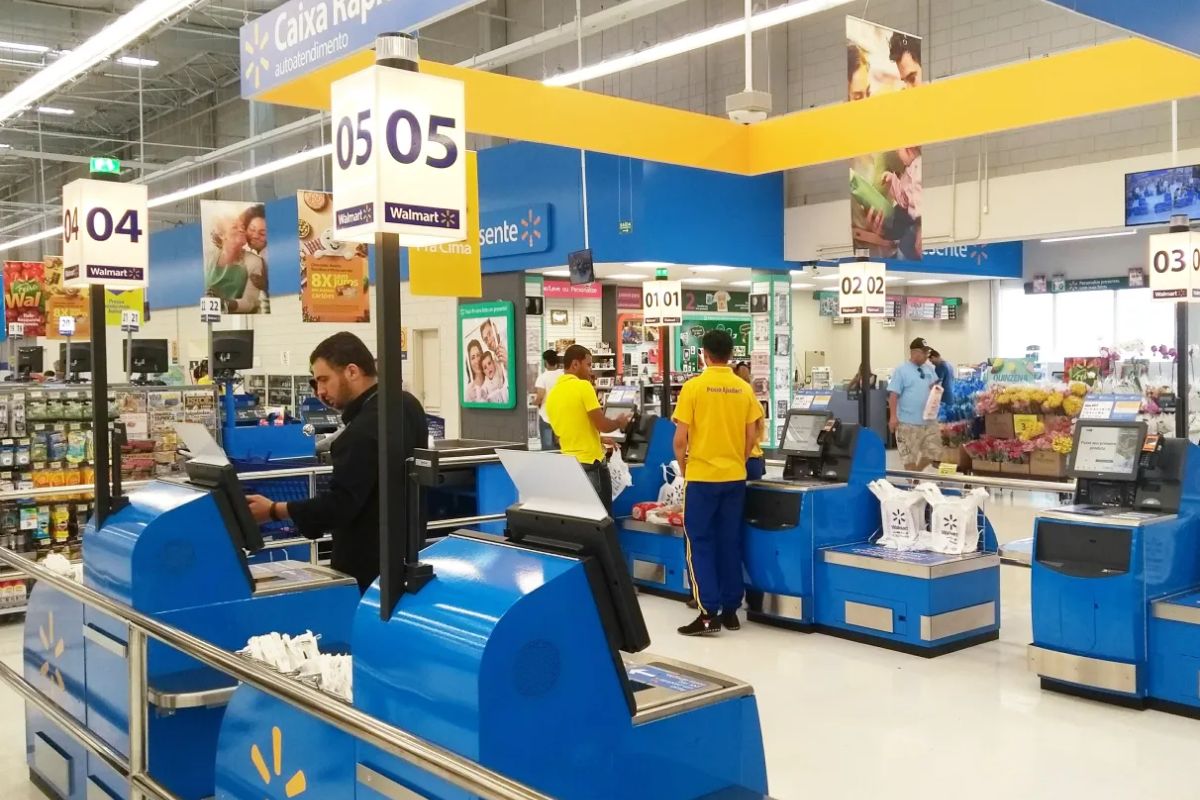


With The Most Valuable Supermarket In The World At US$ 1 Trillion, Walmart Accelerates Artificial Intelligence, Automated Logistics, And E-Commerce To Keep Shelves Stocked, Deliver Quickly, And Expand Services Such As Advertising And Marketplace, While Rumors Of Crisis Hide Fine-Tuning Amid Persistent Inflation In The U.S. In 2026.
The most valuable supermarket in the world has ceased to be just a chain of stores and is now treated as economic infrastructure in the United States, with reflections in other markets where it operates, including units in Brazil. On February 3, 2026, Walmart reached US$ 1 trillion in market value, about R$ 5.2 trillion, and the milestone became fuel for debate about technology, prices, and distribution power.
This movement did not come from a single quarter or a specific product. Walmart anchored growth in digital transformation, e-commerce expansion, and a growing layer of artificial intelligence and automated logistics, combining operational efficiency with quick deliveries and stocked shelves, even in sensitive categories such as fresh produce.
What Changes When A Supermarket Reaches R$ 5.2 Trillion
When a retail group approaches R$ 5.2 trillion, the reading changes from just “who sells more” to “who organizes entire chains.”
-
China Tightens Control on Antimony, Driving Prices from $22,000 to Nearly $40,000 per Ton as U.S. Rushes to Bolster Strategic Reserves

-
BlackRock Freezes $1 Billion in Brazilian Renewable Energy, Impacting 1.5 GW of Planned Projects and Highlighting Investor Concerns Over Infrastructure Bottlenecks Cutting Up to 25% of Solar and Wind Generation
-
Labor Shortage: Despite Record Average Salary, 90% of Brazilian Bar and Restaurant Owners Struggle to Hire Key Roles Like Sushi Chefs and Head Cooks

-
Supermarket Deli Counter Attendants in Brazil Could Earn Over $2,100 Monthly by 2026, Plus Benefits Package


The most valuable supermarket in the world gains leverage to negotiate terms, require supplier standards, and redistribute costs throughout logistics, influencing everything from wholesale prices to item availability in retail.
At the same time, size creates a political side effect. In times of inflation and uncertainty, consumers and governments tend to look at companies like Walmart as a thermometer for the cost of living, even when the company is merely responding to external pressures.
The market prices Walmart not only for its current cash but for its ability to operate as a platform on a global scale.
Artificial Intelligence As A Decision-Making And Efficiency Engine
Artificial intelligence entered retail as a forecasting tool but has turned into the nervous system of operations.
At Walmart, the integration of artificial intelligence has been presented as part of the effort to increase efficiency, reduce stockouts, and respond to the demand for quick deliveries without losing control of supply in physical stores.
In practice, artificial intelligence is applied in replenishment routines, demand reading, and assortment prioritization, with decisions that previously depended on local experience now going through models that analyze sales history and buying behavior.
This informational automation explains why the most valuable supermarket in the world is compared to a technology company, even while selling everyday items.
Automated Logistics And The Race For Speed With Full Shelves
Automated logistics has become a differential because it solves a problem that consumers perceive in minutes: delivery delays and product shortages.
Walmart’s bet on automation is tied to the idea of keeping shelves stocked with fresh products while sustaining the pace of quick deliveries, a difficult balance when demand fluctuates.
In large supply chains, automated logistics also reduces internal friction, such as unnecessary travel, inefficient routing, and picking errors.
In a scenario of persistent inflation and a cooler job market in the U.S., operational efficiency becomes a margin defense and price protection, which helps explain why investors closely monitor Walmart’s logistics engineering.
E-Commerce, Marketplace, And Advertising As New Margin Sources
E-commerce appears as the most visible face of transformation because it changes the point of contact with the customer and shortens the time between intent and purchase.
Walmart’s e-commerce expansion has been described as one of the engines of the US$ 1 trillion milestone, alongside the digitalization of processes and the combination with physical stores.
But the most strategic change lies in layers beyond direct sales. Walmart has diversified with services such as advertising and third-party marketplace, a format that expands offerings without carrying all inventory on the balance sheet.
The thesis is that the most valuable supermarket in the world can monetize traffic, data, and logistics, not just products, and therefore also attracts higher-income consumers seeking convenience.
Crises, Inflation, And The Labor Market: Why Walmart Continued To Grow
The leap in market value occurred in an environment described as persistent inflation and a cooling labor market in the United States.
Rather than deny the context, Walmart adjusted its operations to remain competitive, calibrating costs, inventory, and sales channels to protect volumes and price reputation.
This kind of resilience is part of what attracts investors in difficult economic cycles.
The reading is pragmatic: when low and middle-income families feel pressure, large, efficient networks tend to capture demand out of necessity while trying to maintain convenience for higher segments via e-commerce.
In this game, artificial intelligence and automated logistics serve as shock absorbers.
Nasdaq-100, Trillion Club, And The Corporate Identity Change
Walmart’s entry into the Nasdaq-100 index was cited as a symbol of repositioning, as the index is associated with technology companies.
The message to the market is clear: Walmart wants to be valued as an innovation platform, not just as traditional retail, and this helps sustain higher multiples in periods of optimism about technology.
With US$ 1 trillion, Walmart became part of the group of companies valued at that level, mentioned alongside Nvidia, Alphabet, Apple, and Microsoft.
The recent appointment of John Furner as CEO was presented as a reinforcement of the commitment to innovation and digital expansion, at a time when the most valuable supermarket in the world is trying to consolidate its own identity: store, platform, logistics, and technology in the same package.
The case of Walmart shows that the most valuable supermarket in the world is not measured only by cash and stores but by its ability to operate artificial intelligence, automated logistics, and e-commerce as an integrated ecosystem.
The lingering debate is not just financial, it is social: when a network becomes infrastructure, the boundary between market and everyday life narrows.
In your experience, what weighs most when you choose where to buy: final price, fast delivery, variety in e-commerce, or the feeling that the physical store “never runs out of stock”? And to what extent do you think it is acceptable for Walmart to be treated as a technology company, with data and advertising at the center, and not just as retail?


