






 Portuguese
  Spanish
  4 min of reading
  0 comments


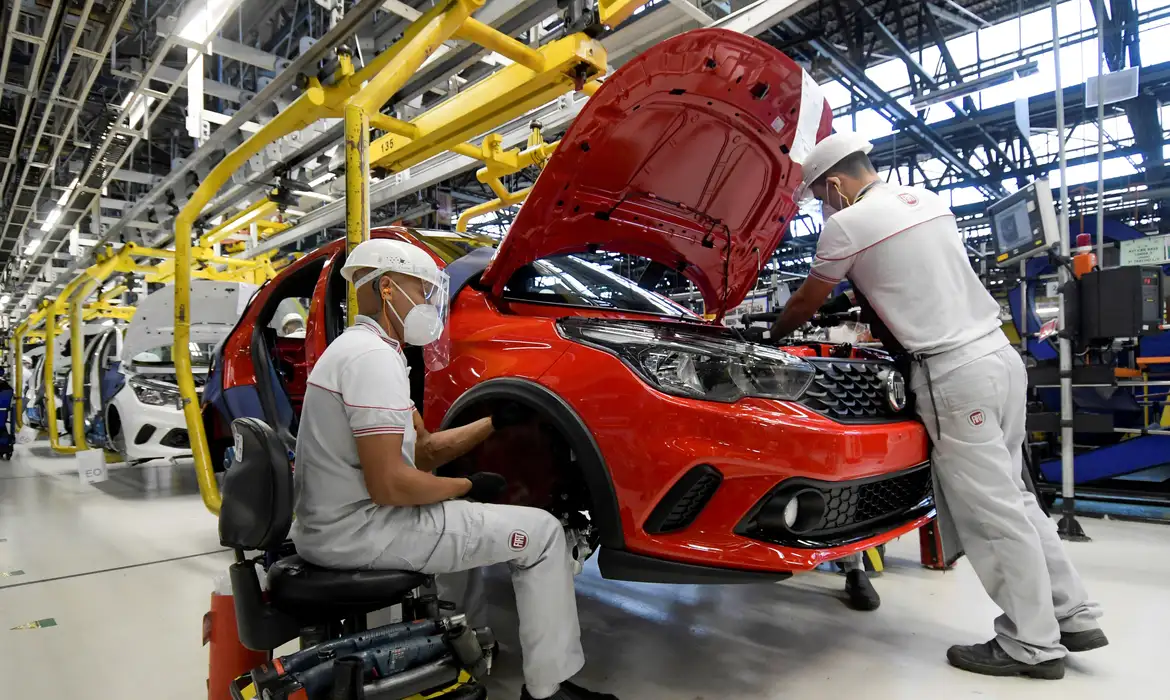
Driven Growth: Automotive Sector Registers 12% Expansion in July and Contributes to Historic 6.1% Increase in Industry Over One Year
The Brazilian industry showed significant growth in July 2024, highlighted by the automotive sector, which recorded a 12% increase. According to data from the Monthly Industrial Survey (PIM – Brazil), released by the IBGE, the industry as a whole grew by 6.1% compared to the same month in 2023. Year-to-date, the industrial sector shows a rise of 3.2%, and over the last 12 months, an expansion of 2.2%.
These figures place the Brazilian industry 1.4% above the pre-pandemic level reached in February 2020. However, the sector is still 15.5% below the historical peak recorded in May 2011. The survey included 18 industrial activities that showed growth, with the motor vehicles, trailers, and bodies segment being the most impactful.
The Positive Impact of the Automotive Sector
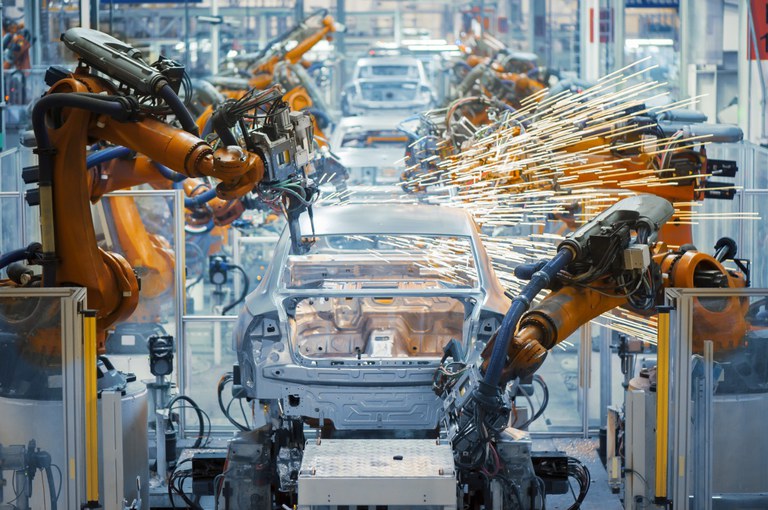
The motor vehicles sector had a remarkable performance in July, with an increase of 12.0%. This accelerated growth was greater than the 4.8% recorded in June. According to André Macedo, manager of PIM Brazil, automobiles were fundamental to the positive outcome, with auto parts also contributing, although to a lesser extent.
-
Drivers with licenses nearing expiration received an unexpected reprieve on the calendar, but the Contran extension only applies to those within specific dates.

-
Fiat’s forgotten family SUV offers 7 seats, a 2.4 engine with 172 hp, automatic transmission, trunk space of up to 580 liters, and the presence of a large utility vehicle for a price below many new compacts: meet the Fiat Freemont Precision 2015.

-
German sedan with rear-wheel drive flaunts a 1.6 turbo engine with 156 hp, automatic transmission, 480-liter trunk, premium status, and executive cabin in the range of fully equipped compact zero km: meet the Mercedes-Benz C180 Avantgarde 2015.
-
Suzuki launches “hybrid family van” with 8 seats, sliding rear door, Toyota Noah-like design, 1.8 electrified engine, and a price equivalent to about R$ 124,000 without taxes, below 7-seater SUVs sold in Brazil: meet the Landy in Japan.





Other industrial sectors also showed significant advancements, such as metal products (8.4%), miscellaneous products (18.8%), and chemical products (2.7%). The machinery and equipment sector also registered a growth of 4.2%, while leather goods and footwear increased by 12.1%. The printing and record reproduction sector was one of the fastest-growing, with a rise of 23.4%.
In comparison to July 2023, the industrial growth of 6.1% was seen in 21 of the 25 sectors surveyed, 60 of the 80 groups, and 67.3% of the 789 products included in the research. Motor vehicles, trailers, and bodies remained the key highlights, with a growth of 26.8%, followed by the chemical products sector, which recorded a 10.5% increase.
Expressive Results in Other Sectors
In addition to the automotive sector, several other industrial branches also positively contributed to the July results. The metal products sector grew by 13.9%, while the information technology, electronics, and optical products sector registered a 24.4% increase. The rubber and plastics sector grew by 11.6%, and machinery and equipment advanced by 10.8%.
Other notable sectors included furniture, which saw a growth of 26.9%, and the metallurgy sector, which recorded an increase of 4.8%. The beverages sector grew by 8.4%, while the food products sector had a more modest increase of 1.3%. The most expressive growth was observed in the miscellaneous products sector, with a rise of 19.4%.
Challenges for Some Sectors
Despite the positive results in many sectors of the economy, there were some significant declines that impacted the average of the Brazilian industry. The coke, petroleum derivatives, and biofuels sector was the main contributor to this impact, with a decline of 0.6%. This reduction was due to lower production of items such as diesel oil, naphthas, liquefied petroleum gas (LPG), and ethanol.
The Brazilian industrial production as a whole recorded a decrease of 1.4% from June to July 2024, interrupting the growth observed in the previous month when there was an increase of 4.3%. This setback was partly a result of the significant increase in June, driven by the resumption of production in units affected by the rains in Rio Grande do Sul in May 2024.
Sectors with Negative Performance
Among the sectors that registered production declines, the food products sector had the most significant negative impact, with a reduction of 3.8%. This drop eliminated the 2.6% increase recorded in June.
The sector was affected by the lower production of sugar due to drought in the Central-South region of the country, as well as the decline in cattle and soybean-derived products.
The coke, petroleum derivatives, and biofuels sector also showed negative performance in July, with a 3.9% drop, interrupting two consecutive months of growth. The same occurred with the extractive industries, which recorded a 2.4% decline, influenced by lower production of iron ore and oil.
Outlook
Regarding major economic categories, the capital goods and durable consumer goods sectors continued to show positive results in July, with increases of 2.5% and 9.1%, respectively. These advances intensified the growth already observed in June when the sectors recorded increases of 0.8% and 5.9%.
On the other hand, the semi and non-durable consumer goods sector saw a significant drop of 3.1% after a 4.5% increase in the previous month. The intermediate goods segment also recorded a slight decline of 0.3%.
Despite the slowdown in July, the Brazilian industry remains on an upward trajectory, with a cumulative growth of 1.2% since December 2023, indicating a recovery and stability scenario for the coming months.





Be the first to react!