Portuguese
  Spanish


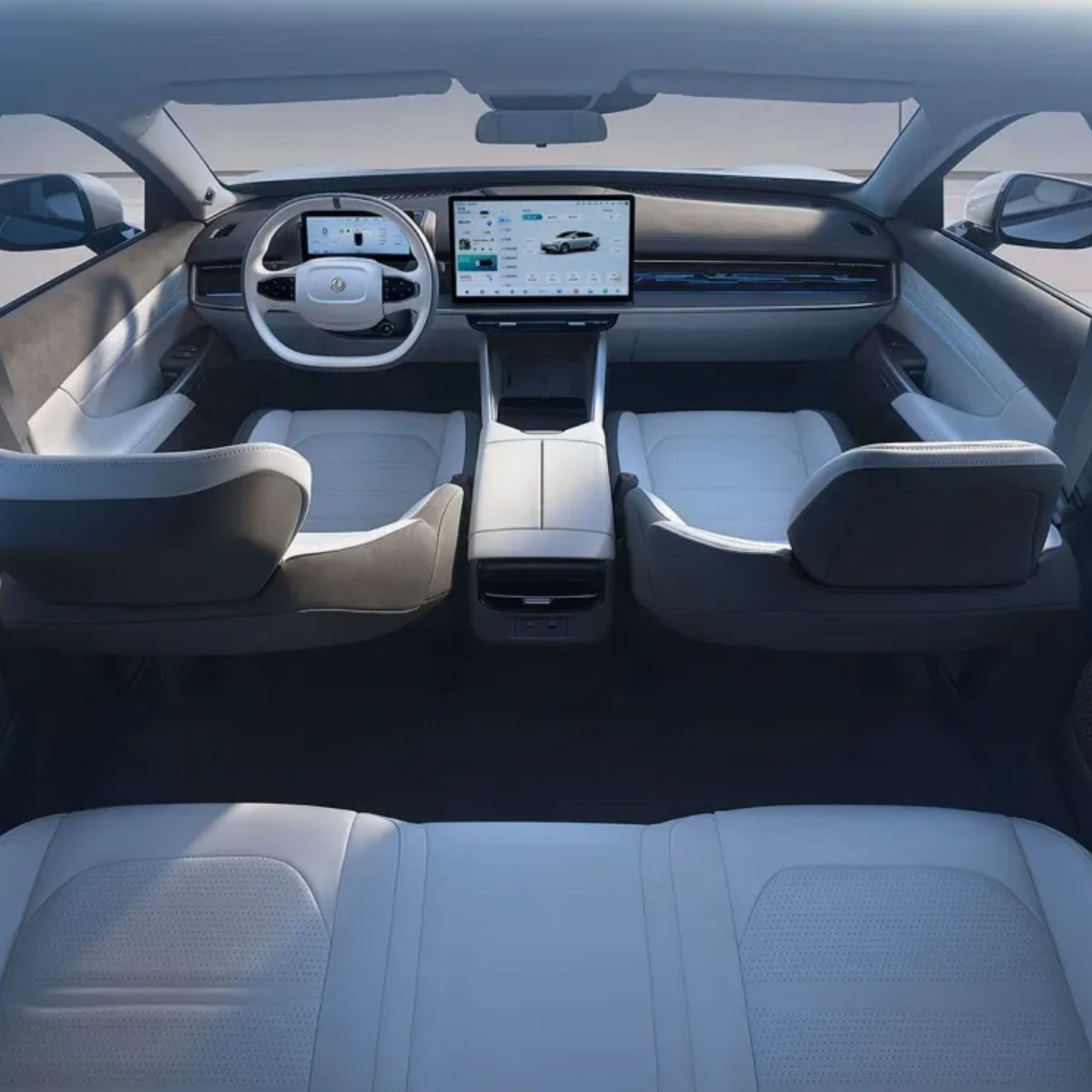

Dongfeng’s electric vehicles arrive in Brazil in August with the promise of opening a new front for the Chinese brand in the country, starting operations with the Box hatch and the Vigo SUV, and placing possible national production in Resende at the center of the strategy to grow in the Brazilian market by 2027
The Dongfeng electric vehicles will mark the official entry of the Chinese automaker into the Brazilian market starting in August. The operation, which had already been signaled before, now gains clearer contours with the definition of the two first models, the compact Box and the SUV Vigo, and with the advancement of the plan to structure a national production using Nissan’s factory in Resende, Rio de Janeiro.
The move draws attention because the brand is not arriving just with imports and market testing. The strategy is already linked to a greater industrial and commercial ambition, with the possibility of local manufacturing and an expansion agenda that foresees four more launches by 2027. In a market that accelerates the competition for entry-level electric vehicles and SUVs, Dongfeng is trying to enter with speed, scale, and future factory presence in Brazil.
What the arrival of Dongfeng’s electric vehicles changes in the Brazilian market

The entry of Dongfeng reinforces the pressure in the electric vehicle segment at a time when Chinese automakers are expanding their presence in Brazil. The brand chose two products with different profiles to start its offensive, a compact hatch aimed at urban use and an electric SUV to compete in a highly visible market segment.
-
Banco do Brasil and Uber Launch Cashback Program Offering Up to 3.5 Loan Installments Back, Drivers Gain Access to New Cars Worth Up to $30,000 Through Move Brasil Initiative

-
Looking for a Car for Dirt Roads? Fiat Uno, Strada, and Volkswagen Gol Offer Durability and Affordability

-
MG Motor to Produce Two Electric Cars in Brazil with $75 Million Investment, Creating 600 Jobs
-
Nissan Kicks S Direct 2018: Affordable Used SUV with Over 13 km/l Fuel Efficiency, 432-Liter Trunk, and CVT Automatic Transmission


This choice shows an operation designed to cover two important fronts right from the start. On one side, the Box enters as an access option in the electric vehicle universe. On the other, the Vigo expands the brand’s presence in a body style that concentrates strong demand and greater consumer attention.
The Resende factory appears as a central piece of the strategy
The Nissan factory in Resende emerges as the strongest path for a future national production of Dongfeng. According to the provided information, the partnership between Dongfeng and Nissan in China, where the companies share the base of the Frontier pickup, should indicate the route to bring manufacturing of the models to Brazil.
This point is decisive because it changes the weight of the operation. When a brand arrives already studying to use a factory installed in the country, the project stops seeming like a simple import phase and starts to have a clearer signal of continuity. The industrial structure in Resende can give Dongfeng a concrete base to increase volume, reduce external dependence, and consolidate presence in the Brazilian market.
Box and Vigo will be the two first electric vehicles of the brand in the country
The Box and the Vigo have been defined as the two first models of DFM in Brazil. They will kick off the manufacturer’s commercial strategy and open the space for the planned expansion by 2027.
The Box is the compact electric hatch of the initial offensive. The Vigo will be the electric SUV that completes the debut duo. Together, the two cars outline an entry focused on a broad audience, with one model more urban and the other more aligned with the sporty utility segment.
The numbers that explain the positioning of the Box
The Dongfeng Box, compact electric hatch, has been described as an urban product with simple yet refined finishing, driver’s seat with electric adjustments, two screens, induction charger, and good interior space. The model adopts a global proposal for the segment and is expected to be priced around R$ 130,000, between the BYD Dolphin Mini and the Geely EX2.
In China, the car is called Nammi 01 and serves as the basis for the Brazilian model. It uses a 70 kW front electric motor, equivalent to 95 hp, with 160 Nm of torque. The LFP batteries can be 31.45 kWh or 42.3 kWh. The range reaches 430 km in the CLTC cycle, with fast charging from 30% to 80% in 30 minutes and a maximum speed of 140 km/h.
The Vigo expands its offensive in the electric SUV segment

The Vigo will be the second flagship of the Brazilian operation. Although it was not displayed at the brand’s booth, it has already been positioned as a central piece of Dongfeng’s entry into the country.
The available data shows an electric SUV with about 130 hp and 230 Nm, equipped with a 51.87 kWh battery and a range that can approach 470 km. This positions the model as an important step for the brand to compete in a space that currently attracts a large part of commercial attention in the automotive sector.
What Dongfeng is preparing beyond the debut in August
The debut in August does not conclude the plan. It merely initiates a broader agenda. According to the base, the manufacturer forecasts four more launches by 2027, indicating an accelerated expansion of the portfolio in a short timeframe.
This timeline shows that the Brazilian operation was designed to grow rapidly. The brand wants to enter with two electric vehicles, gain traction, and then expand its presence with new products, reinforcing competition in different market segments.
The local operation has been expedited and shows urgency to gain space
The first dealerships were scheduled for October, but this planning is likely to be accelerated. The change in schedule suggests that Dongfeng has decided to speed up its entry and try to occupy space sooner than initially expected.
This acceleration is significant because it signals commercial urgency. In a market that frequently welcomes new brands and electric vehicles, arriving early can be decisive for gaining visibility, forming a network, and building brand presence.
The visit to other plants shows that the industrial decision is still strategic
Dongfeng also recently had its field engineering team visiting Stellantis plants in Porto Real, Rio de Janeiro. This move shows that the automaker analyzed more than one possibility to structure its production operation in Brazil.
Even so, the current assessment is that the alternative linked to Nissan in Resende seems stronger. This reinforces the understanding that the existing relationship between the companies in China weighs heavily in the choice of the Brazilian industrial path.
Why the brand arrives with greater ambition than it seems
Dongfeng already operates internationally with sub-brands and models ranging from urban vehicles to pickups, premium SUVs, off-road vehicles, and heavy trucks. This reveals that the brand is not entering Brazil without experience or a broad portfolio.
The entry with Box and Vigo, therefore, should be seen as a first step and not as a limit to the operation. The initial focus is on electric vehicles with greater commercial potential, but the brand’s global structure indicates room for a broader offensive in the future.
What the possible national production could change in practice
If production in Resende advances, Dongfeng could significantly transform its operations in Brazil. A local factory is likely to strengthen the operation, provide more predictability to the strategy, and increase the brand’s weight in the competition for electric vehicles in the country.
In practice, this can mean a more stable operation, with greater market responsiveness and a more solid structure to sustain growth. For a brand arriving in August and already talking about **four more launches until 2027**, the factory ceases to be a detail and becomes an **essential part of the plan**.
An entry that combines a quick debut, factory under study, and expansion until 2027
Dongfeng arrives in Brazil at a time when the **electric vehicle market** is experiencing more intense competition. The brand’s differential lies in combining an **already defined commercial entry**, **two models with strategic profiles**, and a **possible industrial base linked to Nissan’s factory in Resende**.
This sum of factors makes the debut more relevant. **It’s not just the arrival of two new cars.** It’s the setup of an operation that tries to unite **product, network, and industry** to gain space in one of the most observed segments of the Brazilian automotive market.
In your view, does Dongfeng have a chance to gain real space with these electric vehicles in Brazil, or has the competition between compact hatchbacks and electric SUVs already become too strong for new brands?