Portuguese
  Spanish


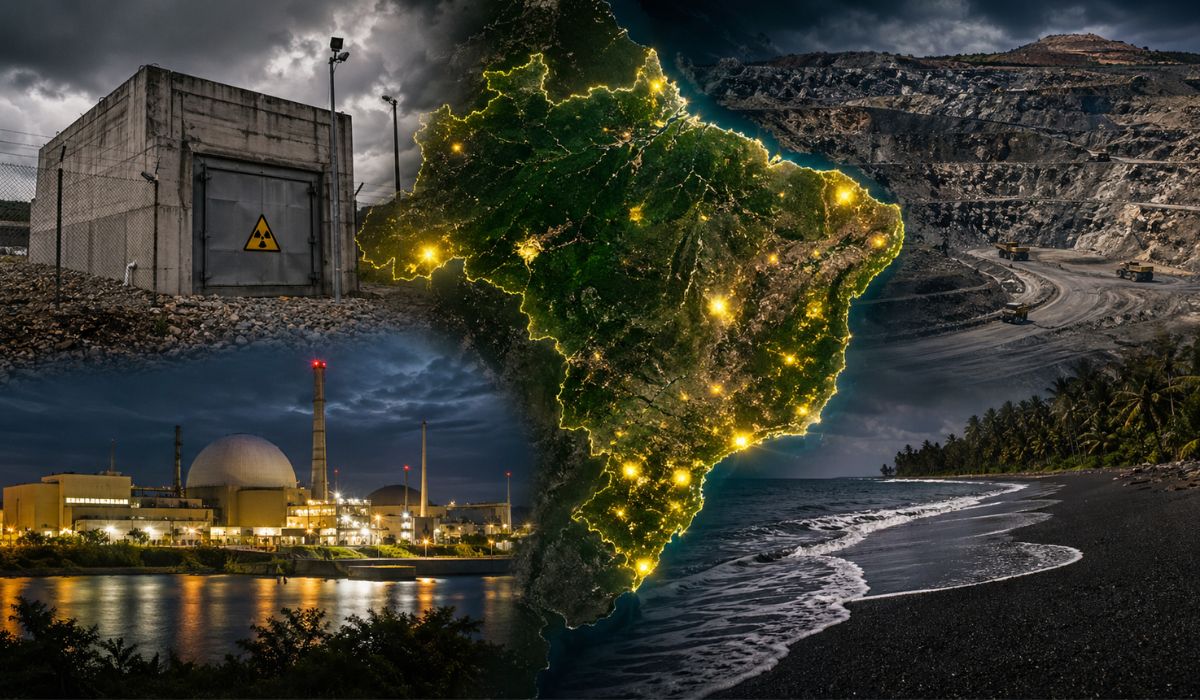

Tailings deposits, uranium mining, nuclear facilities, and natural sands with radioactivity form a little-known map in the country, where science, safety, and monitoring help explain different risks.
The presence of areas with radioactive material in Brazil is not limited to the cesium-137 accident, which occurred in Goiânia in September 1987.
The country has tailings deposits, industrial units of the nuclear fuel cycle, uranium mining areas, and beaches where radioactivity appears due to the natural composition of the sands.
In each case, the origin, level of control, and type of risk are different, according to public bodies and institutions linked to the nuclear sector.
-
Elderly Man in His 70s Spends Nearly 30 Years Digging 3 km Canal to Transform Arid Land into Farmland in Rural India

-
Submerged Town Reemerges in São Paulo as Reservoir Levels Drop, Revealing Ruins and Memories of Displaced Families
-
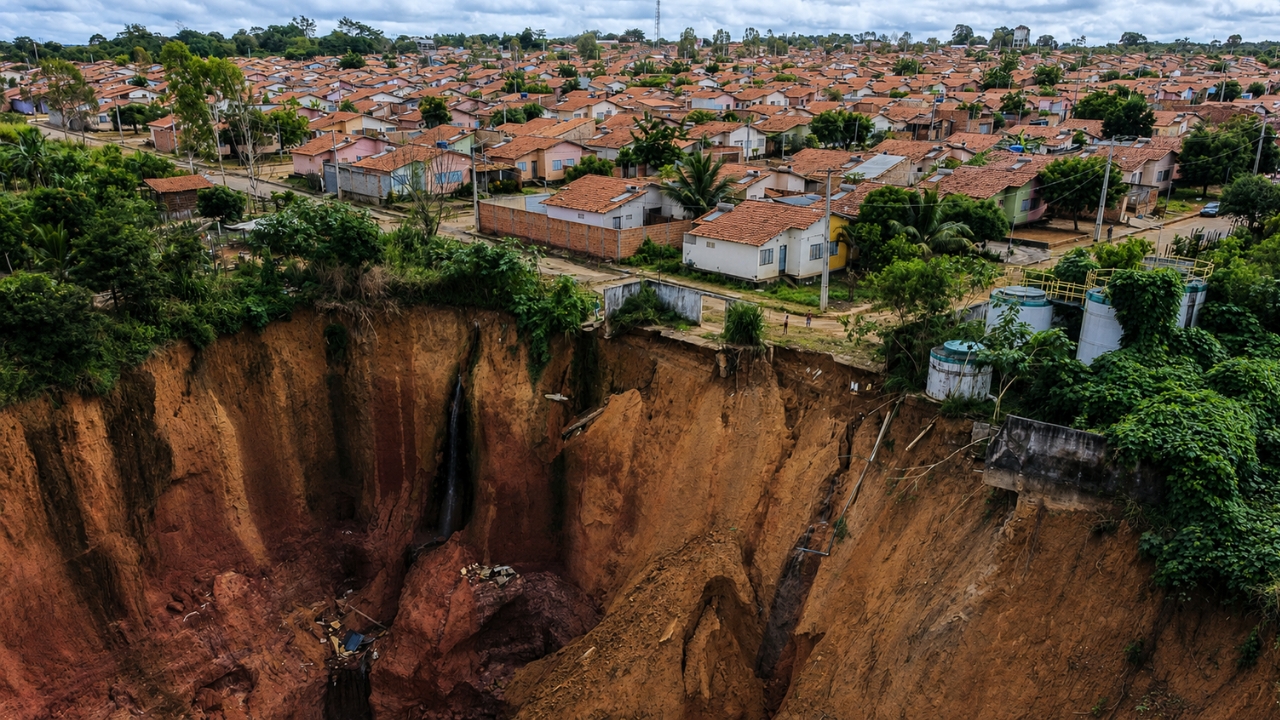
In Northeastern Brazil, 1,200 Residents Face a Silent Nightmare as Giant Sinkholes Threaten Entire Neighborhoods
-
Astronauts Returning from Space Show Altered Gut Bacteria and Loss of Protective Microbes, Highlighting Potential Risks for Mars Missions



The topic gained new circulation with the Brazilian miniseries Emergência Radioativa (Radioactive Emergency), launched by Netflix on March 18, 2026, and inspired by the radiological accident in Goiânia.
The episode involved a cesium-137 source removed from an abandoned radiotherapy device, causing contamination of people, properties, objects, and areas of the Goianian capital.
Radiation, however, does not always appear in the same way.
In some places, the material is stored in controlled deposits.
In others, it is part of mining, beneficiation, or nuclear fuel manufacturing activities.
There are also situations where radioactivity is associated with the geological formation of the terrain itself, unrelated to accidents or industrial disposal.
Abadia de Goiás holds cesium-137 waste
Abadia de Goiás, a municipality near Goiânia, houses the final deposit for the waste generated by the cesium-137 accident.

The materials are located in Telma Ortegal State Park, in a structure intended for long-term storage under the responsibility of the National Nuclear Energy Commission.
The stored volume is estimated at approximately 6,000 tons of waste.
Contaminated items include soil, rubble, personal objects, parts of properties, and materials collected during the decontamination carried out after the accident.
The radioactive source was also sent to the storage area.
The existence of the deposit does not mean direct exposure of the population to the material.
According to CNEN, such deposits must remain under institutional control and radiological surveillance.
The structure’s function is to keep the waste isolated and monitor environmental conditions in the surroundings.
The 1987 accident began after an abandoned radiotherapy equipment was breached.
The radioactive material, in the form of cesium chloride, was handled without knowledge of the risk and spread to different parts of Goiânia.
The case became a reference for radiological safety in Brazil.
Interlagos has radioactive waste from the old Santo Amaro Plant
In the south zone of São Paulo, the São Paulo Decommissioning Unit, linked to INB, stores materials from the old Santo Amaro Plant, deactivated in the early 1990s.
The unit is located in the Jurubatuba region, near Avenida Miguel Yunes.
According to INB, the site contains 1,179 tons of materials under the company’s responsibility.
The collection includes Torta II, equipment, parts, tools, and materials contaminated during the decommissioning process of the old factory.
Torta II is a residue generated in the chemical processing of monazite, a mineral associated with the presence of thorium, uranium in low concentration, and rare earths.
Also according to INB, this material has low radioactivity and remains packaged in appropriate industrial containers.
The presence of the deposit in an urban area means that the topic is monitored by public agencies, residents, and environmental safety specialists.
The company states that the materials remain in industrial warehouses, with monitoring and control measures to prevent dispersion into the environment.
Itu stores Torta II in concrete silos
In inland São Paulo, Itu also appears on the Brazilian map of areas with stored radioactive material.
Sítio São Bento, in Botuxim, houses the Botuxim Storage Unit, linked to INB.
According to the company, there are 3,500 tons of Torta II stored in seven concrete silos.

These silos occupy an isolated area within a property of approximately 300,000 square meters, with fences, walls, and signage.
The material has the same origin as the waste kept in São Paulo: the processing of monazite at the former Santo Amaro Plant.
Because it contains natural radioactive elements, such as thorium and uranium in low concentration, Torta II requires controlled storage and technical monitoring.
The definitive disposal of this waste still depends on an institutional solution.
While there is no transfer to another structure, the material remains stored on site, under the responsibility of INB and within the applicable standards for the sector.
Caetité concentrates uranium mining in Brazil
In Bahia, Caetité has a different situation from the deposit areas.
The municipality houses INB’s Uranium Concentration Unit, where the mining and processing of ore used in uranium concentrate production takes place.
The unit is presented by INB as the only uranium mining in activity in Brazil.
There, the first stages of the nuclear fuel cycle are carried out, resulting in the concentrate internationally known as yellowcake.
The region is part of a mineral province with natural uranium occurrence.
Therefore, the analysis of groundwater, rivers, and wells is a central point in environmental monitoring.
INB reports that it has been monitoring water resources in the area since 1990, a period prior to the start of mining operations.
The Caetité case involves the coexistence of a regulated economic activity, the natural presence of the ore, and the need for permanent environmental control.
Local communities, regulatory bodies, and the company itself monitor indicators related to water, soil, and industrial operations.
Caldas undergoes uranium mine decommissioning
In Minas Gerais, Caldas houses the Caldas Decommissioning Unit, the first Brazilian unit for ore extraction and processing for uranium concentrate production.
The facility was inaugurated on May 6, 1982, and ceased production in 1995.
Since then, the area has been undergoing decommissioning stages.
This process includes actions to reduce environmental impacts, treat mining liabilities, and prepare the area for future uses, in accordance with technical standards and regulatory requirements.
INB reports that the unit involves acid water treatment, solid waste and tailings management, dam safety, vegetation restoration, and radiological and environmental monitoring.
There are also structures linked to the former operation, such as mine pits, waste piles, and remaining industrial areas.
Caldas illustrates a later phase of the nuclear chain: the period after the cessation of production.
Even without active extraction, the area requires continuous monitoring to control tailings, effluents, and structures associated with the former mining activity.

Resende manufactures nuclear fuel for Angra
In Rio de Janeiro, Resende houses INB’s Nuclear Fuel Factory.
The unit processes stages of the fuel cycle used in Brazilian nuclear power plant reactors, including uranium isotopic enrichment, reconversion, pellet production, and fuel element assembly.
In practice, uranium undergoes industrial processes until it becomes uranium dioxide pellets.
These pellets are placed in metallic rods, which are then organized into structures called fuel elements.
This assembly supplies the Angra 1 and Angra 2 reactors.
Resende is not an area associated with radiological accidents or abandoned waste.
It is a licensed nuclear industrial facility, subject to safety controls, inspection, and safeguards.
In 2025, the National Nuclear Safety Authority initiated a nuclear physical security inspection at the unit.
By dealing with nuclear material and enrichment technology, the factory is part of a strategic sector.
The operation involves specific rules for physical protection, access control, and monitoring by national authorities and bodies linked to the international safeguards regime.
Guarapari has natural radiation in monazitic sands
In Espírito Santo, Guarapari is known for beaches with dark sands, such as Praia da Areia Preta.
In this case, radioactivity is associated with the natural composition of the sand, and not with accidents, active mining, or waste deposits.
The monazitic sands contain minerals that can concentrate thorium.
The Federal University of Espírito Santo reports that the radioactivity observed in Guarapari is based on thorium, not uranium, and that this composition was formed by natural processes.
The city is also known for visitors who associate these sands with possible therapeutic effects.