






 Portuguese
  Spanish


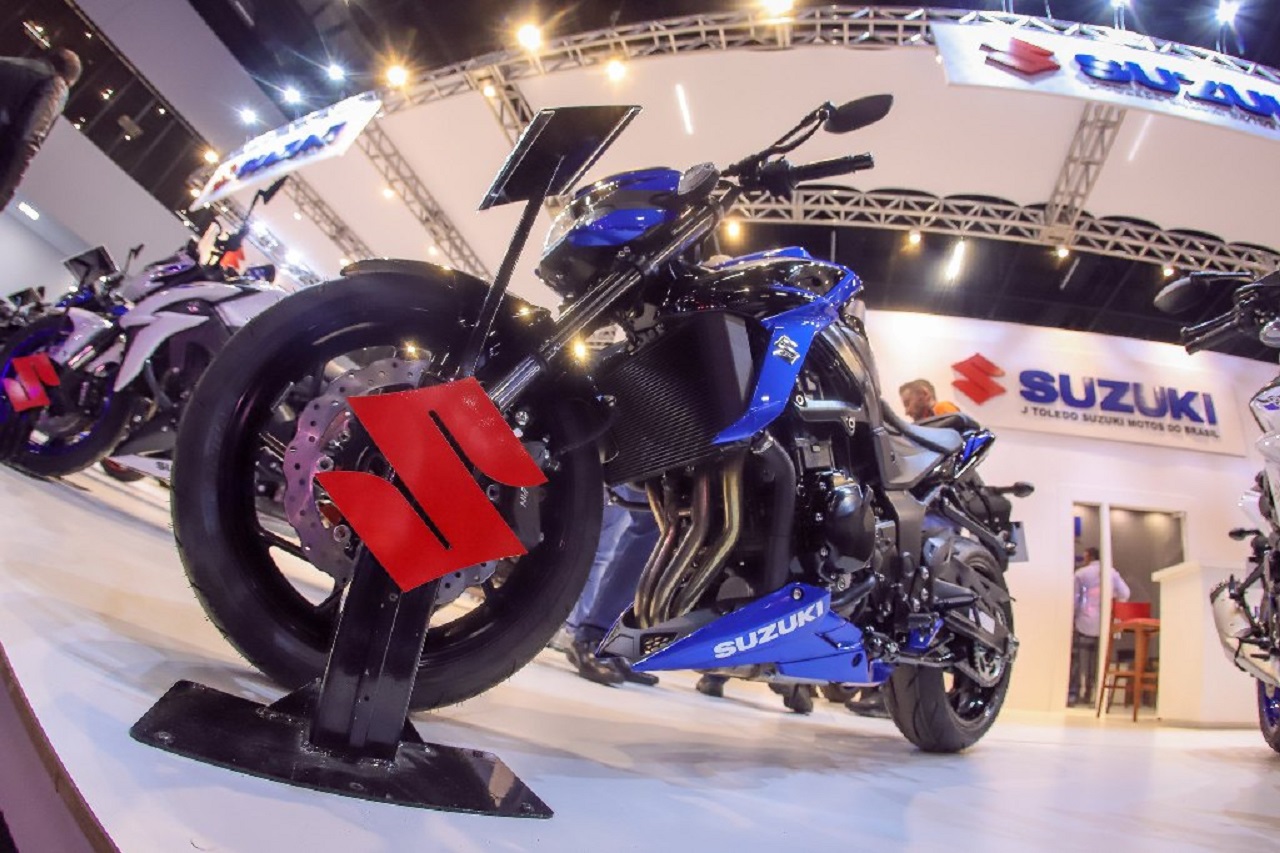

New Electric Motorcycle From Suzuki May Arrive Soon, However South American Countries Will Be Left Out. The Company Has Started Its Plans to Achieve Carbon Neutrality.
On the last Thursday of this month (26), Suzuki officially announced its strategy focused on achieving carbon neutrality in multiple regions around the world. For Japan and European countries, the automaker claims it aims to reach this goal by 2050. For India, this target is set a bit further away, in 2070. So far, the Japanese automaker has not made any statements regarding other regions, so initially, there are no electrification plans for the Brazilian market. At least not in terms of electric motorcycles.
Suzuki Announces It Will Bring Its First Electric Motorcycle in 2024
Having a global objective in mind is essential, but a company that has primarily produced models powered by polluting fuels up to this point must take many steps and make decisions to achieve neutrality. Suzuki claims it will bring to market a battery-powered electric motorcycle only in the middle of the fiscal year 2024.
It will be a medium or small-sized vehicle, but the company has not provided any details about it at this time. Generally, the Japanese automaker states that its plan is to launch 8 electric models by the fiscal year 2030, a year in which 25% of its sales should be represented by sustainable vehicles.
-
2027 Toyota Corolla Cross Unveiled: New Design, Enhanced Fuel Efficiency, Reduced Maintenance Costs, Advanced Technology, Connected Services, and Up to 10-Year Warranty

-
Fiat Cronos Precision 2018: Affordable Sedan with Spacious Trunk and Reliable Maintenance
-
Volkswagen to Cut Production by 1 Million Cars by 2030, Reducing Jobs and Platforms, Focusing on More Profitable Models

-
Toyota Launches First 100% Electric Car in Brazil: bZ4X with 343 HP, All-Wheel Drive, 361 km Range, Priced at $419,990 BRL, Limited to 99 Units



Regarding larger displacement motorcycles, which are typically used for leisure, Suzuki claims it is considering the use of fuels that are neutral in pollutant emissions, which may include hydrogen, ethanol, or even synthetic fuels.
Brazil Will Be Left Out
The electrification plan of the automaker, however, does not include regions of the South America, thus leaving Brazil out of this sustainable initiative.
In the country, there are still some aggravating factors, the first being that the brand has been controlled for many years by an independent importer, Grupo J. Toledo, which may choose to follow or not the same path as the parent company in terms of electric motorcycles. The second reason is that Suzuki in Brazil focuses only on larger displacement motorcycles, exactly the models for which the parent company still has no defined electrification plans.
It is important to mention that the Japanese automaker still operates in other areas, such as cars, for example. Thus, the company’s plans will begin to be implemented in 2023 in its home country for automobiles and, already next year, in India and Europe.
Suzuki’s strategy for carbon reduction in the Indian market also includes compressed natural gas (CNG), fuels mixed with ethanol, and biogas in some 4-wheeled vehicles.
Company Finalizes Biogas-Related Agreement in India
The automaker also outlined plans to adapt other sectors of its business so that its carbon neutrality goals are met. This includes outboard engines, manufacturing processes in general, and electric mobility. In addition, the automaker is also directly involved in the biogas business in India, which will be derived from cow dung.
The company is also looking into the use of these processes in its home country. Depending on how things unfold, Suzuki claims it may also expand its concerns regarding biogas to Africa, the Association of Southeast Asian Nations (ASEAN), and Japan.
It is worth noting that for over 100 years, the company has invested in technology and innovation to create the best cars and motorcycles for those who love to drive and ride.








