Portuguese
  Spanish


The French foundation Tara Ocean built the Tara Polar Station, a floating polar station made of aluminum hull to let itself be trapped in the Arctic ice and drift along with it during months of scientific research. Named in April 2025, it will study climate change at the top of the planet, with the first major mission scheduled for September 2026.
Imagine a ship made to be trapped by ice, not to break it. This is the proposal of the floating polar station Tara, a house-laboratory that will drift through the Arctic trapped to the ice floe, as shown in the video from the Tara Ocean Foundation channel. The goal is to study up close one of the least known regions in the world.
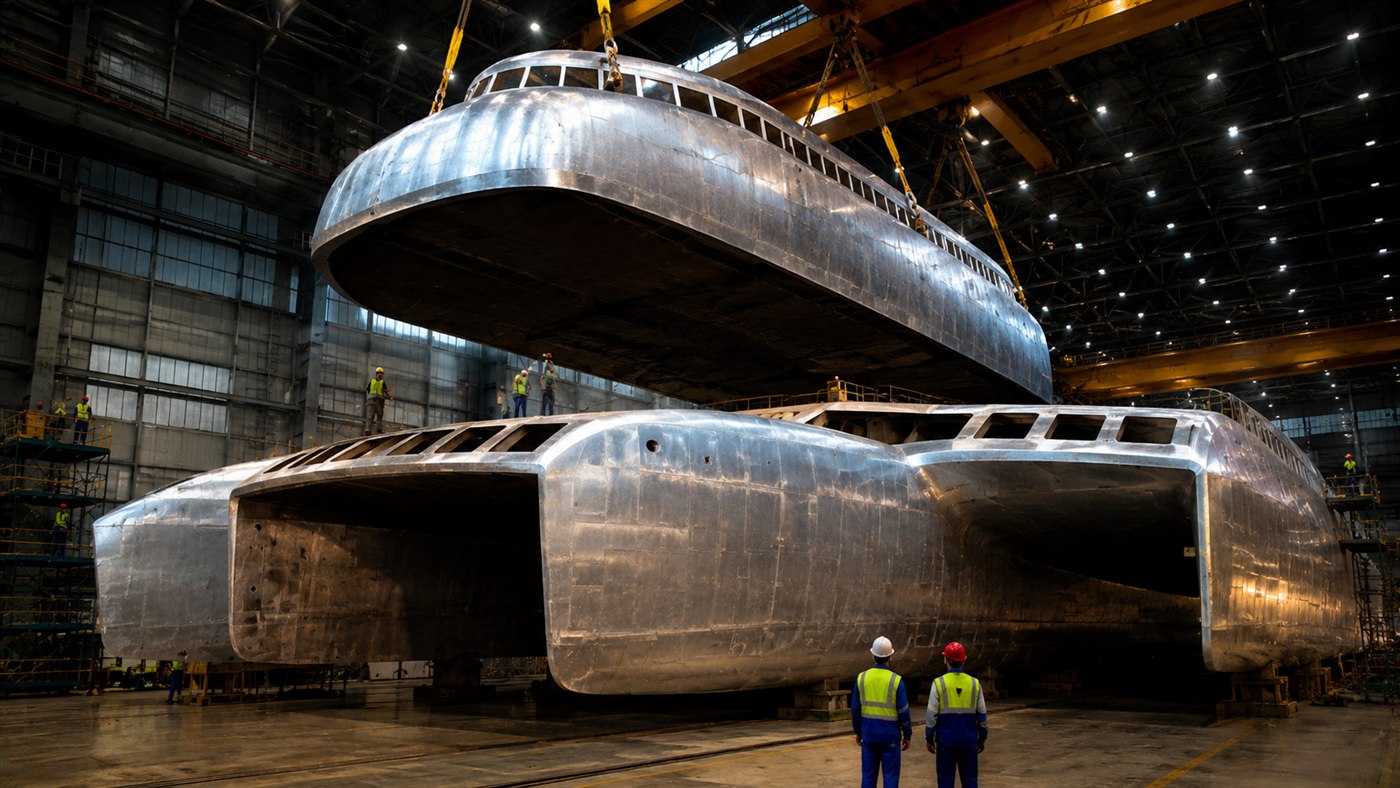
The project is an engineering feat. According to the Fondation Tara Océan website, the floating polar station has a specially shaped aluminum hull, designed so that the ice lifts it instead of crushing it, allowing months of scientific research on climate change in the Arctic.
The idea seems out of fiction, but it is real. Named in April 2025, the French floating polar station will gather scientists who will live isolated in the Arctic, conducting scientific research while drifting with the ice, in an effort to understand climate change from the heart of the North Pole.
-
San Andreas Fault Reaches “Highest Tension in 1,000 Years,” Raising Fears of the “Big One,” but New Study Identifies Key Zone Near Los Angeles Influencing Earthquake Impact

-
Dyson Introduces WashG1: A Revolutionary Floor Cleaner with Motorized Rollers and Self-Cleaning Technology

-
Australian Megafactory Austal Constructs 380-Foot, $74 Million High-Speed Ferry for Canary Islands Capable of Carrying 1,100 Passengers and 278 Cars at 38 Knots
-
Scientists Develop Battery Using Mineral Found in Bones and Chalk, Surviving 1,000 Charges While Retaining 75% Capacity, Paving the Way for a Lithium-Free Future


Next, see what the floating polar station Tara is, what it’s like inside, why the aluminum hull is not crushed by the ice, what life on board will be like, and why this scientific research in the Arctic has everything to do with Brazil.
What is the Tara floating polar station
The Tara is a scientific house on the water. Unlike an icebreaker, this floating polar station was not made to carve a path through the ice, but to let itself be trapped by it and drift along, becoming an inhabited laboratory in the middle of the Arctic.
The heritage comes from a tradition. The floating polar station continues the famous expeditions of the Tara schooner and historical methods of polar drift, now with modern technology and aluminum hull to sustain long seasons of scientific research on the ice.
The purpose is clear. The floating polar station exists to study the central Arctic, one of the most remote and least understood areas of the planet, collecting data on ice, ocean, and atmosphere that help understand global climate change.
The timing couldn’t be more urgent. With the Arctic warming rapidly and losing ice, the scientific research conducted by the floating polar station gains importance, as it is precisely there that many of the world’s climate changes begin to manifest.
For all these reasons, Tara is unique. Few structures in the world allow living and researching adrift on the ice, and the French floating polar station stands out for combining bold engineering, a resistant aluminum hull, and a long-term scientific research program in the Arctic.
Inside: laboratories, sauna, and a pool for the sea under the ice
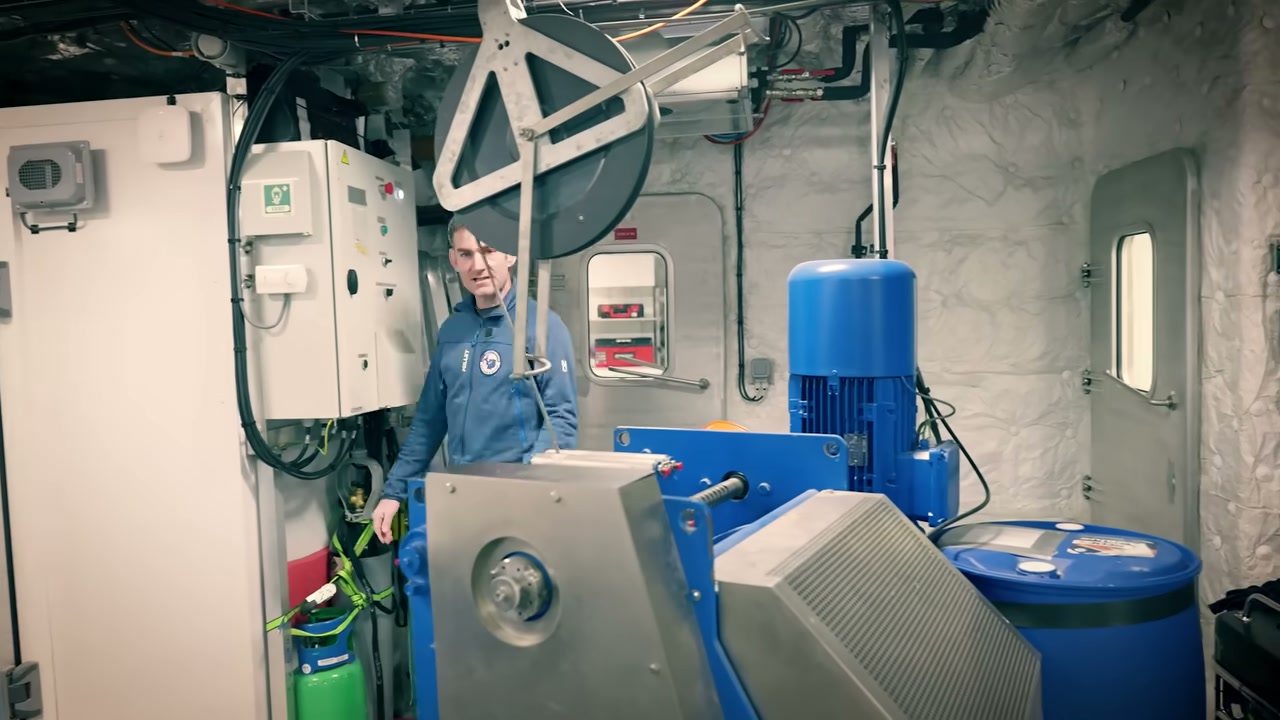
Inside, the floating polar station is a world apart. It houses dry laboratories and a wet laboratory, as well as a “moon pool”, a hull pool that provides access to the liquid water under the ice, essential for scientific research in the Arctic.
Science is at the heart of the project. The floating polar station has a cryolab maintained at five degrees below zero and freezers that reach extreme temperatures, all to preserve samples and allow detailed studies of climate change and life in the Arctic.
But it’s not all work. To endure the long months of isolation, the floating polar station has living spaces, a library, kitchen, infirmary, and even a sauna, amenities designed for the mental health of those conducting scientific research trapped in the Arctic ice.
Data collection is sophisticated. From the “moon pool” and winches with long cables, the floating polar station collects water, plankton, and samples from various depths, feeding the scientific research investigating climate change in the ice-covered ocean.
Every detail was designed for autonomy. As it remains isolated for months, the floating polar station carries food for the entire mission and its own energy systems, transforming the aluminum hull into a self-sufficient home for scientific research in the Arctic.
The “olive pit” hull that ice does not crush
Here is the engineering trick. The great challenge of any floating polar station is not to be crushed when the ice tightens, and Tara solves this with an aluminum hull in an oval shape, compared to an “olive pit.”
The physics is ingenious. When the Arctic ice compresses against the rounded aluminum hull, instead of crushing the floating polar station, it pushes it upwards, “spitting” the structure onto the ice floe, a principle that protects the scientific research on board.
The material was handpicked. The thick-walled aluminum hull flexes under pressure without breaking, which gives the floating polar station the resilience to face the brutal forces of the ice while studying climate change in the Arctic.
This concept is not new but has been perfected. The idea of letting the ice lift the ship dates back to historical polar expeditions, and the floating polar station Tara modernizes the solution with a custom-made aluminum hull for long seasons of scientific research.
It’s this engineering that makes everything possible. Without the “olive pit” aluminum hull, the floating polar station would not survive months trapped in the Arctic, and scientific research on climate change at the North Pole could not be conducted so closely.
An aluminum house adrift in the Arctic
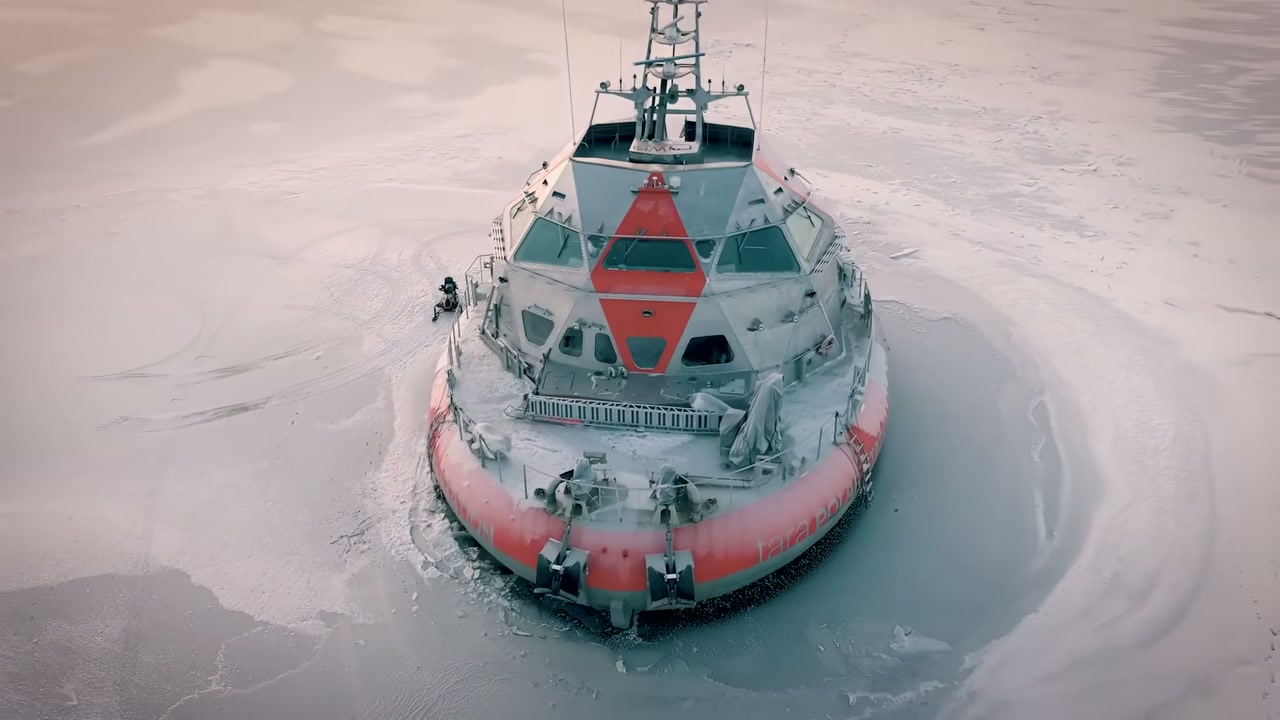
Tara is relatively compact. At about 26 meters long and 16 meters wide, the floating polar station is much smaller than other polar bases, but its aluminum hull and oval shape make it ideal for drifting through the Arctic.
It will literally float with the ice. Trapped in the ice floe, the floating polar station will move along with the Arctic ice currents, covering great distances without a motor, in a type of scientific research that follows the very rhythm of climate change.
The energy is clean. The floating polar station was designed to operate with low emissions, using wind turbines, solar panels, and renewable fuel, which reduces the impact of scientific research precisely in the Arctic region most sensitive to climate change.
The cost reflects the ambition. Estimated at around 23 million dollars by the press, the floating polar station was largely funded with French and European public resources, a significant investment in scientific research on climate change in the Arctic.
All this makes Tara a landmark. An aluminum hull home capable of drifting through the Arctic and serving as a laboratory is rare, and the French floating polar station promises years of valuable scientific research on the future of the planet’s climate.
18 people, 18 months: life on board
The crew is small. In winter, about 12 people live on the floating polar station, including scientists and support staff; in summer, the number rises to up to 18, all sharing the tight space of the aluminum hull in full scientific research in the Arctic.
The missions are long. Each expedition of the floating polar station lasts about 18 months, with most of the time spent frozen in ice, a period in which the crew needs total autonomy to sustain the scientific research far from any port.
The isolation is extreme. For months, those on the floating polar station cannot simply leave, which requires stocked food, medical care on board, and a lot of psychological preparation to face the Arctic and climate change up close.
The routine mixes science and survival. Between collections in the “moon pool” and analyses in the laboratories, the crew of the floating polar station also needs to take care of the maintenance of the aluminum hull and their own safety in the hostile environment of the Arctic.
Despite everything, there is fascination in the experience. Living “at the top of the world,” surrounded by ice and midnight sun, makes the floating polar station a rare scientific adventure, where each day of scientific research contributes to understanding global climate change.
Twenty years of missions to understand the climate
The project thinks long-term. The floating polar station was not made for a single trip: the program foresees about 20 years of activity and several consecutive missions, forming a continuous observatory of climate change in the Arctic.
Science will be collective. Dozens of institutions from various countries participate in the scientific research of the floating polar station, studying everything from plankton and biodiversity to the interactions between atmosphere, ice, and ocean in the Arctic.
The first major mission has a date. Scheduled to begin in September 2026, the inaugural expedition will take the floating polar station to high latitudes of the Arctic, effectively starting the long cycle of scientific research on climate change.
The data will be precious. By following the ice for years, the floating polar station is expected to reveal how the Arctic is changing, providing science with rare information on the speed and effects of climate change in that region.
It’s an investment in the planet’s future. Understanding the Arctic is understanding the world’s climate, and the floating polar station Tara aims to do this for decades, transforming the drifting aluminum hull into a sentinel of climate change.
Why does a station at the North Pole matter to everyone?
It may seem distant, but it’s not. What happens in the Arctic affects the planet’s climate as a whole, and that’s why the scientific research conducted by the floating polar station is of interest to everyone, even those living far from the ice and polar climate change.
The Arctic functions as a thermostat. The ice reflects sunlight and helps regulate the Earth’s temperature; when it melts, climate change accelerates, and monitoring this process is precisely the role of the floating polar station with its aluminum hull.
The melting has global effects. The loss of ice in the Arctic alters ocean currents and weather patterns that reach distant places, making the scientific research of the floating polar station essential for predicting the future of climate change.
Knowing is the first step to acting. The more data the floating polar station gathers about the Arctic, the better humanity can prepare for climate change, which gives meaning to the entire effort of keeping scientists trapped in the ice.
That’s why Tara is more than a ship. It is a bet that long-term scientific research can help the world understand and tackle climate change, using the floating polar station as a window into the frozen heart of the planet.
What does the floating polar station have to do with Brazil
Brazil is also a country of polar research. Just as France invests in the floating polar station in the Arctic, Brazil maintains the Comandante Ferraz Antarctic Station, showing that scientific research in icy regions is of direct interest to the country.
These are two complementary models. While Ferraz is fixed on land in Antarctica, the Tara floating polar station drifts through the ice of the Arctic, and comparing the two helps Brazil think about how to conduct scientific research on climate change at the poles.
The polar climate reaches the tropics. The climate changes that the floating polar station studies in the Arctic affect currents and patterns that influence Brazil’s climate, from rains to droughts, linking the distant ice to the daily life of Brazilians.
There is also scientific inspiration. Seeing an aluminum-hulled floating polar station drift through the Arctic inspires Brazil to invest more in scientific research and in its own technology to study the climate changes that threaten the planet.
Finally, there is global awareness. The floating polar station reminds us that the climate is one, and that understanding the Arctic is also about protecting Brazil’s coastline and forests, reinforcing the importance of scientific research against climate change.


The floating polar station Tara shows how far human ingenuity can go in the name of science. By creating an aluminum-hulled home that the ice lifts rather than crushes, France paved the way for years of scientific research in the Arctic.
More than the technology, what impresses is the mission. Studying climate change from within the Arctic, drifting in the ice for months, requires courage and engineering, and the floating polar station brings both together in one project.
And you, would you have the courage to live for months trapped in the ice of the Arctic aboard a floating polar station, conducting scientific research on climate change? Do you think Brazil should invest more in polar science? Tell us in the comments and share with those who love science and adventure.