Portuguese
  Spanish


Modular nuclear reactor to be installed in South Wales to supply around 20,000 homes and mark a new phase of British nuclear energy.
After nearly half a century without licensing a new site for commercial nuclear energy, the United Kingdom has decided to invest in a technology that promises to completely change the way nuclear plants are built. Instead of gigantic complexes that take more than a decade to complete, an American company intends to install small modular reactors produced in a factory, transported in modules, and assembled on-site in much less time. If the proposal works, it could inaugurate a new phase of nuclear energy, based on serial production and much smaller projects than traditional plants.
According to World Nuclear News, Last Energy has officially submitted the licensing application to build a new commercial nuclear site in Bridgend, South Wales. The project includes four PWR-20 microreactors, each capable of generating 20 megawatts of electricity, marking the first request of its kind in the UK since 1978.
The project bets on small reactors manufactured almost like industrial products
For decades, building a nuclear plant meant starting one of the most complex and expensive engineering projects on the planet. Each facility required thousands of workers, construction that lasted many years, and billion-dollar investments. Last Energy’s proposal follows exactly the opposite path.
-
San Andreas Fault Reaches “Highest Tension in 1,000 Years,” Raising Fears of the “Big One,” but New Study Identifies Key Zone Near Los Angeles Influencing Earthquake Impact

-
French Scientists Set Sail on Ice-Trapped Ship for 18-Month Arctic Climate Study

-
Dyson Introduces WashG1: A Revolutionary Floor Cleaner with Motorized Rollers and Self-Cleaning Technology
-
Australian Megafactory Austal Constructs 380-Foot, $74 Million High-Speed Ferry for Canary Islands Capable of Carrying 1,100 Passengers and 278 Cars at 38 Knots



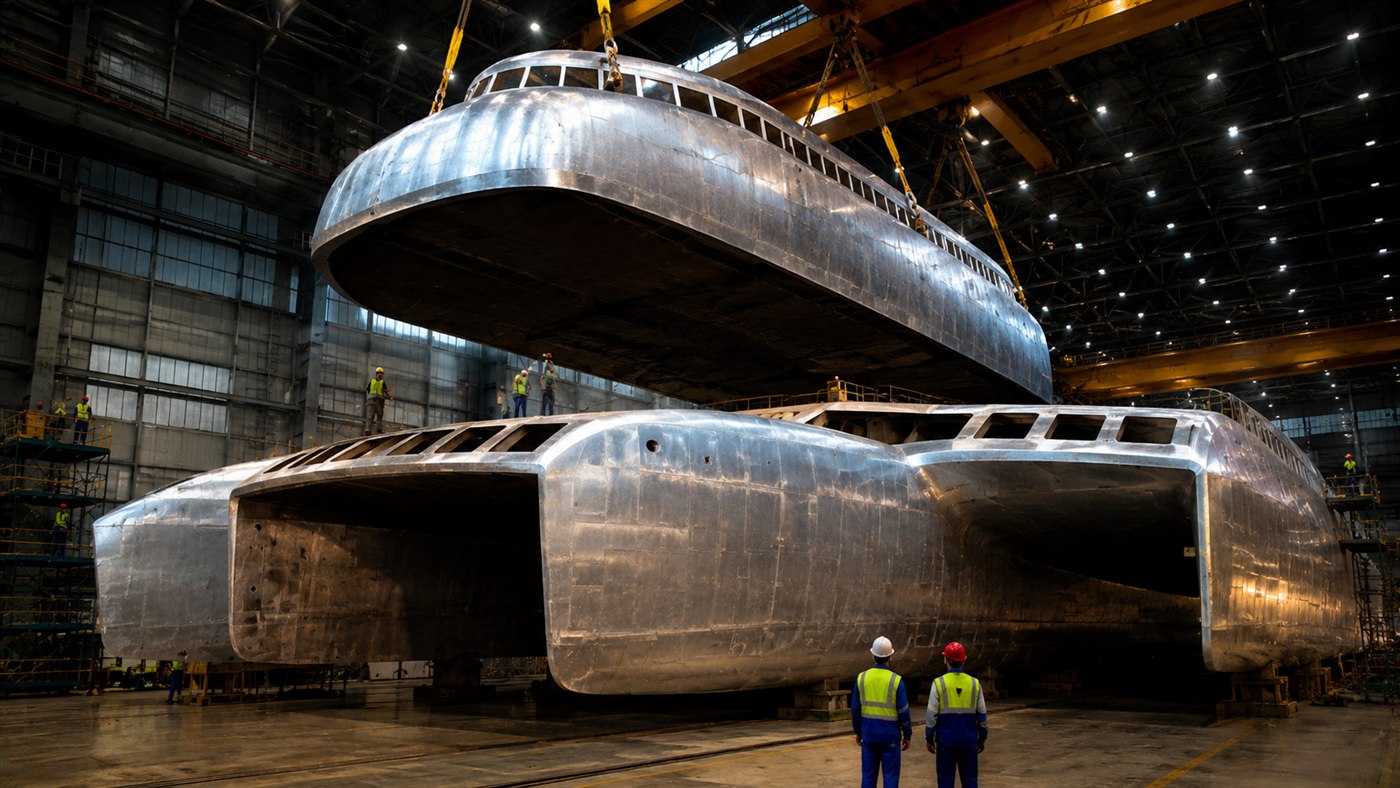
According to the company, the PWR-20 was developed to be manufactured in standardized modules produced in an industrial environment and later transported to the installation site. Instead of building practically the entire plant on the construction site, a large part of the components would already arrive ready for assembly.
The reactor uses pressurized water technology (PWR), the most widespread in the global nuclear industry, but on a much smaller scale. Each unit occupies an area comparable to a few shipping containers and is designed to operate for decades providing continuous energy. The modularization also allows for the installation of several units as demand increases, reducing the need for large initial investments.
The energy will be primarily destined for industry and data centers
The project’s goal is not to directly supply millions of homes, as occurs with large nuclear plants. According to Last Energy, the microreactors were designed to meet industrial consumers with high energy demand, such as factories, industrial centers, and data centers.
This model has gained strength in recent years because the growth of artificial intelligence is rapidly increasing electricity consumption in data processing centers. Unlike intermittent renewable sources, the reactors can provide energy continuously 24 hours a day, regardless of weather conditions.
Each 20-megawatt unit has enough capacity to supply approximately 20,000 homes, although the priority is to serve private contracts with large energy consumers.
The UK has not licensed a new nuclear site since the 1970s
The most symbolic aspect of the project may be less technological and more historical. According to the World Nuclear News, the application submitted by Last Energy represents the first new licensing process for a commercial nuclear generation site initiated in the UK since 1978. Over the past decades, the country has practically halted the expansion of new commercial nuclear areas, while several projects faced delays, high costs, and changes in energy policies.
The company also completed an important stage of regulatory review with the UK’s Office for Nuclear Regulation, responsible for assessing aspects related to the safety of future facilities. Although this stage does not represent authorization to build the reactors, it demonstrates that the project has begun to navigate the complex regulatory process required for any nuclear venture.
The promise is to reduce time and cost, but it still needs to be proven
Last Energy’s main bet is on the industrialization of nuclear construction. According to the company, producing components in series allows for cost reduction, simplifies assembly, and significantly accelerates the deployment of reactors.
In practice, the company intends to transform the construction of small plants into a process similar to an industrial production line, replacing large customized works with repetitive modules manufactured on a scale. This proposal generates enormous interest because one of the biggest challenges of modern nuclear energy has always been the constant increase in construction costs and timelines.
At the same time, experts are watching the project cautiously. The nuclear industry has decades of ventures that suffered significant delays and exceeded budget forecasts. Furthermore, despite the growing global interest in small modular reactors, few similar projects have effectively entered commercial operation.
A test that could define the future of nuclear energy
The project developed in Wales is part of an international movement that seeks to reinvent nuclear energy to meet a new energy reality. According to the World Nuclear News, Last Energy’s strategy bets on smaller installations, faster to build and aimed at specific consumers, reducing the dependence on megaprojects capable of consuming billions of dollars even before starting to produce electricity.
Last Energy itself states that its goal is to make nuclear energy simpler, scalable, and more like an industrial product than a unique engineering work. If this model can truly fulfill promises of timing, cost, and performance, it could pave the way for a new generation of compact nuclear plants installed near major industrial centers.
For now, however, the project remains in the licensing phase. The success of the initiative will depend on the approval of regulatory bodies and, above all, the company’s ability to demonstrate that small factory-produced reactors can deliver, in practice, what the nuclear industry has promised for decades: reliable, safe, and economically competitive energy.