Portuguese
  Spanish


The Brazilian geologist Leandro Ribeiro breaks down the article published in the Journal of Geophysical Research, explains the Coulomb stress measured in 2025, the “seismic gate” of Cajon Pass, and why the scary headline is not an earthquake prediction
The news that the San Andreas fault has reached the highest stress level in 1000 years spread worldwide and reignited the panic of the legendary “Big One,” but the real explanation is more interesting than the scare. According to the channel Professor Leandro Ribeiro, in a video published in June 2026, the Brazilian geologist Leandro Ribeiro delves into the study behind the headline and asserts: this is not an earthquake prediction with day, time, location, and magnitude, because that simply does not exist.
The central point is to separate science from clickbait. The news is based on a real scientific study, published in the Journal of Geophysical Research, which analyzed the San Andreas and San Jacinto system in Southern California and concluded that the system is in a critically loaded condition, but at no point does it mark the date of a major earthquake, as Professor Leandro Ribeiro explains. Those who turn this into “the big earthquake is scheduled” did not understand the study or are using the headline to scare.
What the study really says, and what it does not say
First, it is necessary to understand what was measured. According to Professor Leandro Ribeiro, no one installed a meter on the San Andreas fault in the Middle Ages: the researchers built a physical model of the seismic cycle using about 1000 years of paleoseismic records, evidence of ancient earthquakes preserved in rocks, sediments, radiocarbon dating, and even tree rings.
-
French Scientists Set Sail on Ice-Trapped Ship for 18-Month Arctic Climate Study

-
Dyson Introduces WashG1: A Revolutionary Floor Cleaner with Motorized Rollers and Self-Cleaning Technology
-
Australian Megafactory Austal Constructs 380-Foot, $74 Million High-Speed Ferry for Canary Islands Capable of Carrying 1,100 Passengers and 278 Cars at 38 Knots

-
Scientists Develop Battery Using Mineral Found in Bones and Chalk, Surviving 1,000 Charges While Retaining 75% Capacity, Paving the Way for a Lithium-Free Future




With this model, it is possible to track the accumulated energy. The model simulates how stress accumulated and was released over 1000 years in the main segments of San Andreas and San Jacinto, showing that an earthquake in one section can relieve stress there and at the same time transfer load to neighboring segments, as Professor Leandro Ribeiro details. Rocks are elastic, accumulate deformation like a bent ruler, and release everything at once when resistance is overcome.
Why there is no earthquake prediction with day and time
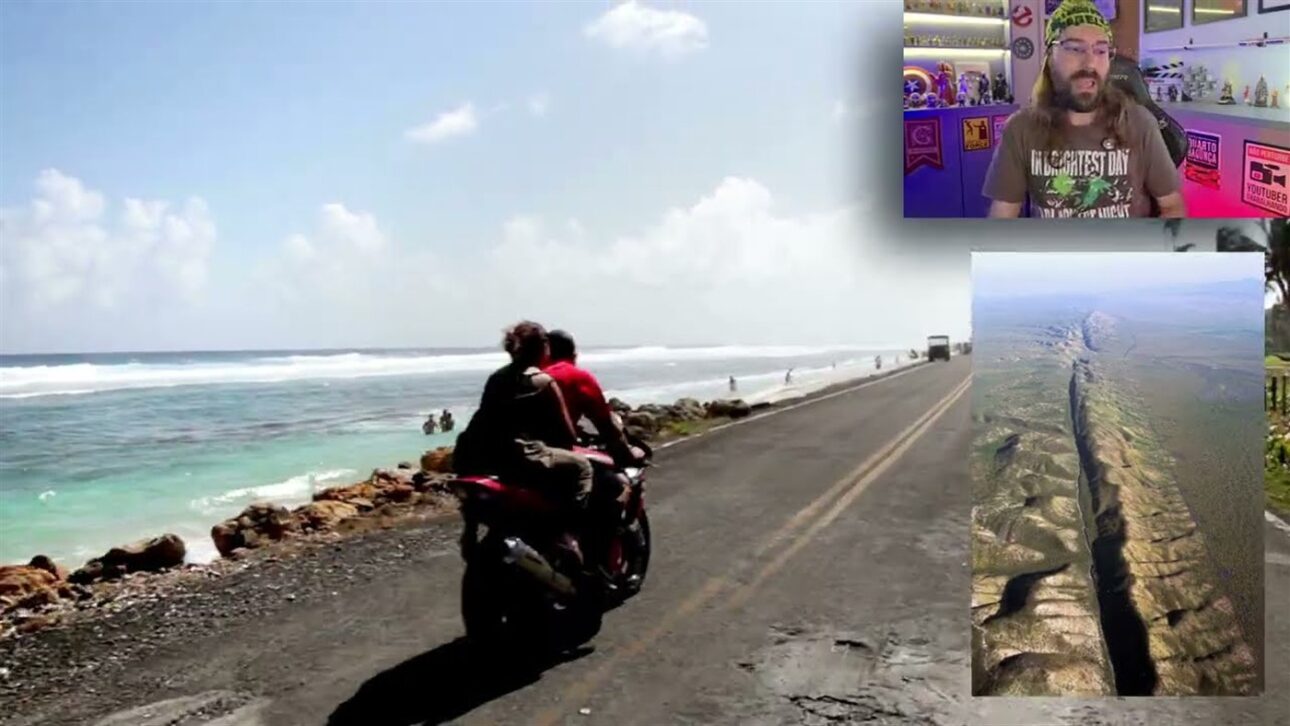
Here is the difference that almost every headline ignores. According to Professor Leandro Ribeiro, geophysicists are constantly searching for a way to predict earthquakes like predicting a storm, but to this day it doesn’t exist: it’s not possible to pinpoint the exact day, time, location, and magnitude of a tremor.
What exists is something else, and it saves lives. What science does is seismic hazard assessment, a probability estimate with scenario modeling and risk planning, which answers if the region has active faults, the history of ruptures, and how much tension is accumulated, without ever marking the time of the event, as Professor Leandro Ribeiro emphasizes. Predicting is saying the day and time, and we don’t know how to do that; assessing the risk is saying that the area needs to prepare, and that already saves many people.
The “seismic gate” of Cajon Pass that decides the size of the tremor
The heart of the study is a geological passage northeast of Los Angeles. According to Professor Leandro Ribeiro, the Cajon Pass region is a complex junction between the San Andreas system and the San Jacinto system, which the article calls an “earthquake gate,” functioning like a road bifurcation.
It is this gate that defines whether the earthquake will be large or gigantic. In some events, the rupture reaches the seismic gate and stops there; in others, it crosses the junction and continues through another fault system, and as the ruptured area determines the magnitude and duration of the shaking, the open or closed seismic gate decides the extent of the damage, as Professor Leandro Ribeiro shows. When two major faults connect in the same event, the problem is multiplied.
The tension numbers of 2025 on the San Andreas Fault
The study puts numbers on the accumulated tension. According to Professor Leandro Ribeiro, in 2025 the so-called Coulomb stress reached about 2.8 megapascals in the Southern Mojave segment of the San Andreas Fault, about 1.8 megapascals in the northern San Bernardino segment, and about 3.6 megapascals in the San Jacinto San Bernardino segment.
But not even the article itself pins down a fatal number. Coulomb stress evaluates whether a fault has become more or less favorable to slip, and the risk of rupture jumping from one fault to another depends on how the stresses are distributed and aligned between segments, without a universal value that guarantees “beyond this point, the earthquake happens”, as Professor Leandro Ribeiro points out. The behavior of a fault depends on geometry, friction, fluid pressure, and the history of previous tremors, an interconnected and complex system.
1812 and 1857: the open gate and the closed gate
History provides two clear examples of the mechanism. According to Professor Leandro Ribeiro, the 1812 earthquake, the Wrightwood, likely ruptured by crossing the seismic gate and involved segments of San Andreas and San Jacinto, the example of the open gate.
The counterexample came decades later. The Fort Tejon earthquake in 1857, with an approximate magnitude of 7.9, ruptured a large part of San Andreas but stopped at Cajon, meaning the seismic gate acted as a barrier and was closed, as the Professor Leandro Ribeiro channel on YouTube compares. For scale, the largest earthquake ever recorded was the Valdivia earthquake in Chile in 1960, with a magnitude of 9.5 to 9.6, near the practical limit of about 9.8 for Earth.
Preparation is not panic: building code and bridge reinforcement
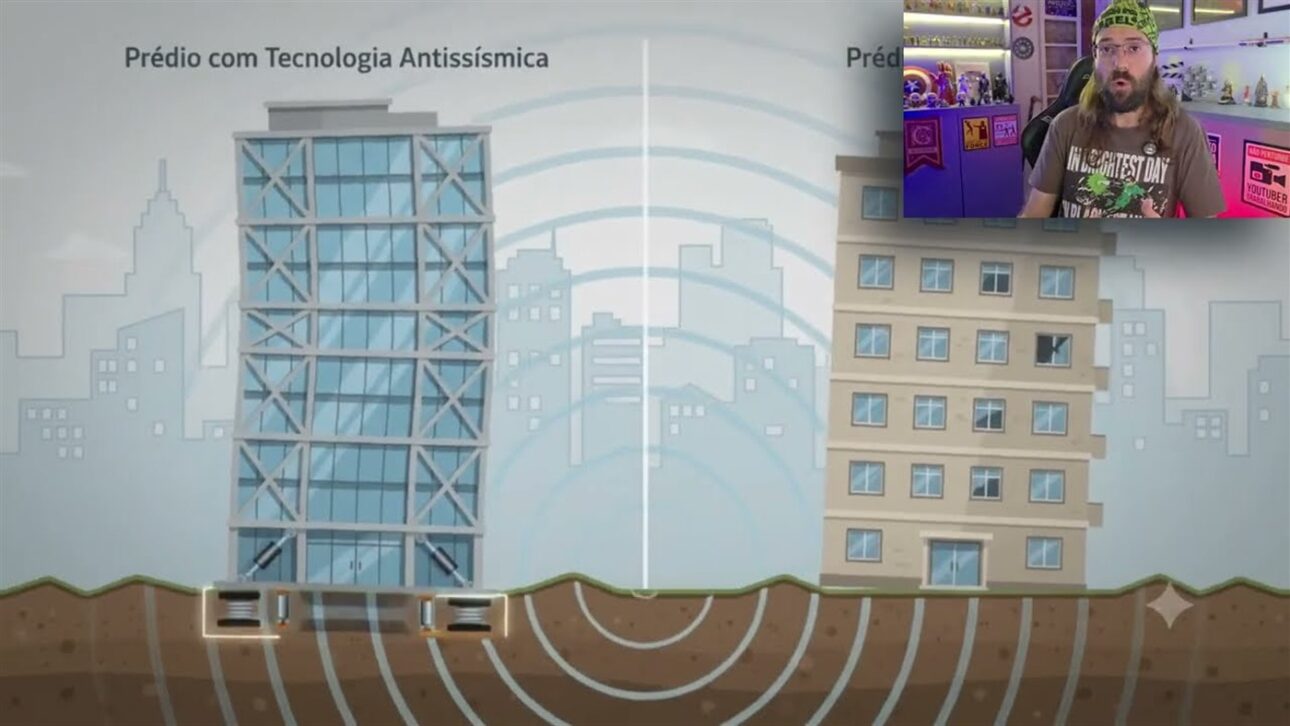
The practical message of the video is the opposite of despair. According to Professor Leandro Ribeiro, treating the scenario as plausible is not about panicking, but rather investing in adequate building codes, bridge reinforcement, emergency plans, evacuation routes, and population training from school.
The human risk depends more on preparation than on the fault. A major earthquake in the region could affect Los Angeles, San Bernardino, Riverside, and the Coachella Valley, as well as highways, railways, and energy corridors, and the size of the disaster depends on the quality of the buildings, the type of soil, and the emergency response, not a cinematic apocalypse, as Professor Leandro Ribeiro emphasizes. California will not fall into the sea, contrary to what movies show: what occurs is the lateral displacement of the terrain along the fault.
What changes for Brazil, which almost doesn’t shake


For the Brazilian reader, the news is a lesson, not an alarm. Brazil is located in the middle of the South American plate, far from edges like San Andreas, and therefore has low seismicity, with generally weak tremors, which does not eliminate the existence of local faults nor the need for technical standards in construction.
The lesson serves as seismic culture. Earthquakes have occurred since the Earth formed tectonic plates billions of years ago, and today’s seismic rate is similar to that of thousands of years ago, so the task is not to predict the impossible, but to build cities that coexist with the risk, a consolidated scientific context. From Southern California to the interior of Brazil, science does not control nature, but reading the geological clues reduces the surprise, and reducing the surprise in risk areas saves lives.
The video unravels the study of the San Andreas fault, the seismic gate of Cajon Pass, the Coulomb stress numbers, and the difference between predicting and assessing the risk of an earthquake.
The explanation by the Brazilian geologist shows that real geology is impressive enough without needing to invent an apocalypse. Tell us in the comments: did you think it was possible to predict an earthquake with day and time?