Portuguese
  Spanish


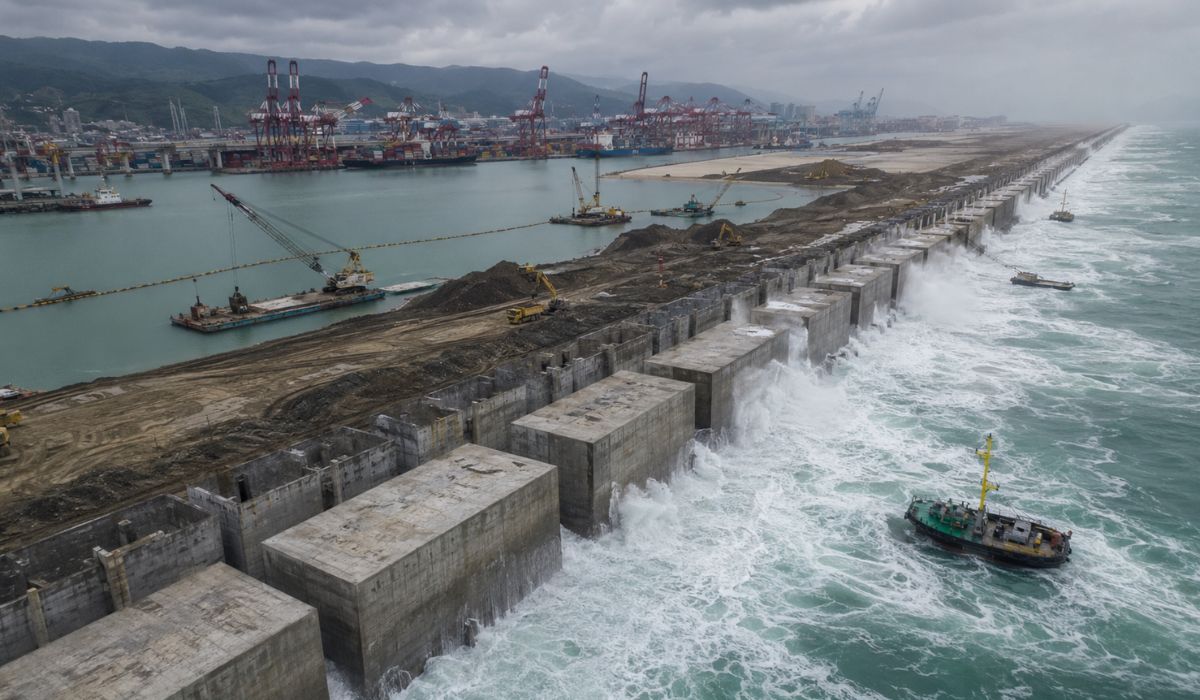


Work at Taipei Port combines maritime engineering, concrete caissons, and sediment reuse to protect port operations, contain dredging, and expand logistics areas in a region exposed to monsoons and typhoons.
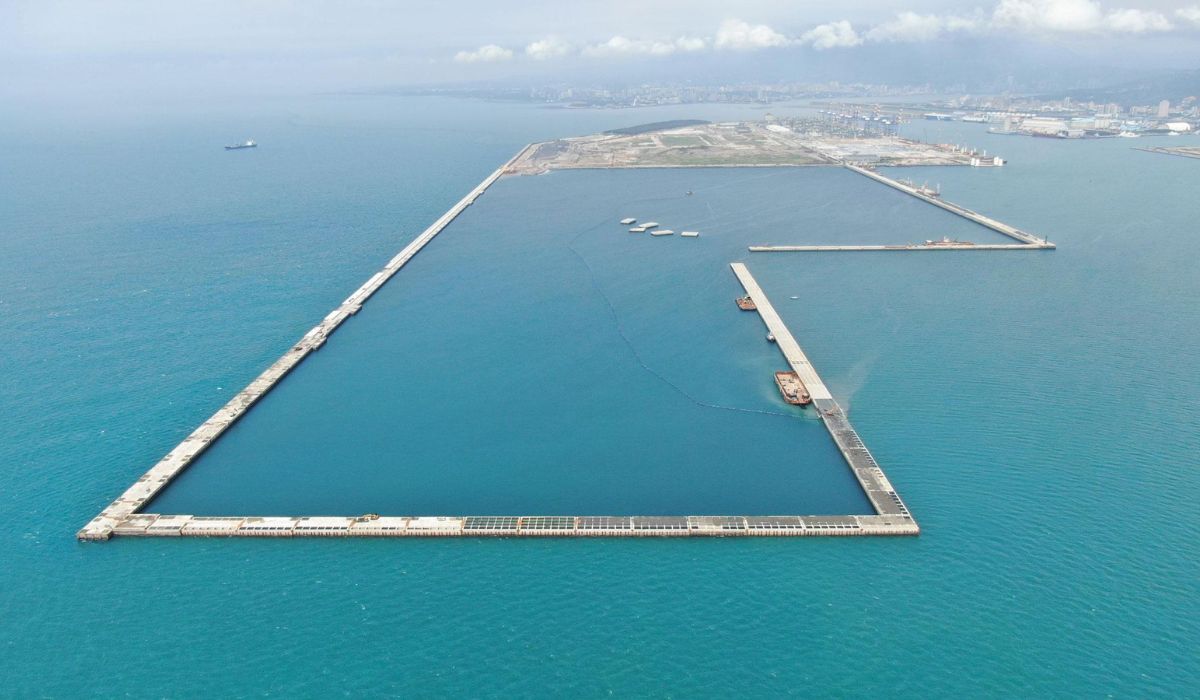
Taiwan advances in the construction of a 4,014-meter maritime barrier at Taipei Port, a coastal project aimed at protecting port infrastructure and expanding operational areas in the north of the island.
The project combines maritime engineering, containment of dredged sediments, and creation of reclaimed land to support the region’s logistics expansion.
The structure, known as the Taipei Port Seawall, is located at Taipei Port in New Taipei, an area exposed to the conditions of the East China Sea.
-
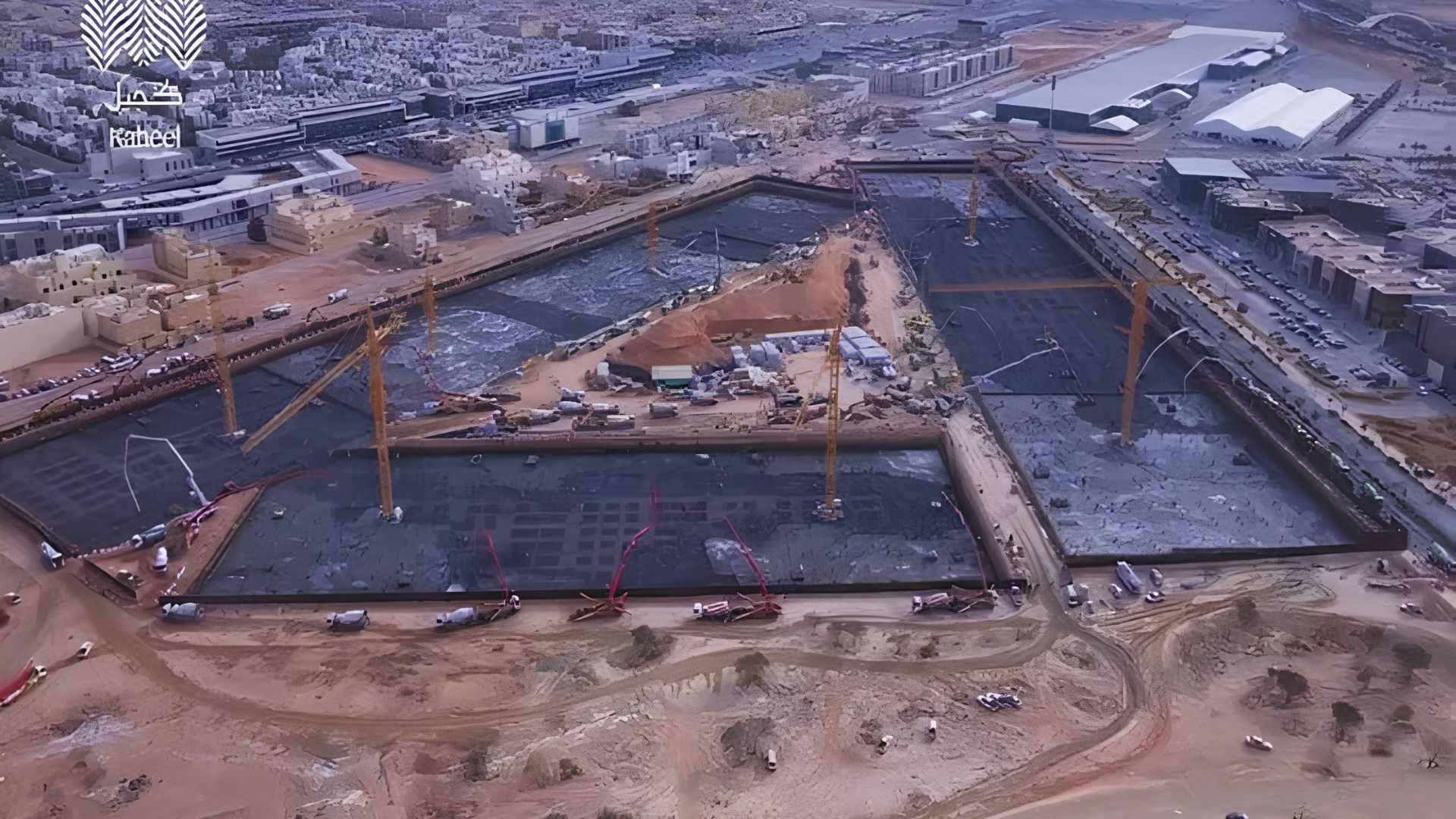
More than 6,000 trucks poured nearly 70,000 cubic meters of concrete without interruption for 72 hours to create the largest continuous concrete pour in history and erect a megaproject in Saudi Arabia.

-
28-meter, 156-ton titans traveled 20,000 km from China to the port of Santa Catarina: Portonave received 7 fully electric megacranes, part of a R$ 210 million package, to double container handling.
-
They exchanged the idea of a large house for a 35 m² warehouse, spent US$ 12,000 on the structure, and created a tiny house in Colorado with space to live and work.

-
A newly opened terminal in the middle of the Amazon has begun transporting soy and corn through Amapá, eyeing the queue of ships that is congesting the ports in the South.



According to the construction company Gamuda, responsible for the project in consortium with Taiwanese Dong-Pi Construction, the seawall was designed to reduce the impact of ocean waves, seasonal winds, and storms on port operations.
The barrier also has a territorial function.
Besides protecting the port, the structure helps contain sediments removed by dredging, offers space for controlled disposal of construction soil, and allows part of this material to be used in forming new usable area for the port complex.
How Taipei Port transforms sediments into usable area
The logic of the project uses common processes in large ports subject to silting.
Dredging removes accumulated sediments to maintain navigable channels and maneuvering areas, while the removed material can be directed to planned containment areas.
In the case of Taipei, these sediments are retained behind the new structure and contribute to the land reclamation process.
The technique is called land reclamation, or landfill over aquatic areas, and is usually applied in regions with limited land space.
Taipei Port was already developed using areas reclaimed from the sea.
The new phase follows this logic by allowing the expansion of port capacity without relying solely on nearby urban land, according to information from the project itself.
According to engineering consultancy CECI, the dike construction in stages 3 and 4 is approximately 4,014 meters and can enable a reclaimed area of 167 hectares, with capacity to accommodate 38.27 million cubic meters of material.
These numbers indicate that the intervention combines coastal protection functions, sediment management, and port expansion.
Concrete caissons support the sea barrier
The most visible structural component of the barrier is the sequence of 117 concrete caissons, large blocks used as part of the foundation and body of the sea wall.
According to Gamuda, each unit can weigh up to 8,600 tons.
In port engineering, caissons of this type are prefabricated pieces positioned in the sea to form containment, foundation, or coastal protection structures.
Once placed in the designated location, they become part of the defense system against wave action.
The installation stage requires precision because a piece placed out of position may need to be refloated, removed, and installed again.
Therefore, the positioning of each caisson depends on favorable weather windows, suitable equipment, and technical control during the maritime operation.
Huang Chun Hao, section chief of Operation and Construction at Gamuda and a member of the project team, stated that “the main function of the breakwater is to protect.”
According to him, without this barrier, large waves would directly hit the port, affecting planned environmental protection areas, tidal pools, and the docking safety of ships.
In another statement released by the company, Huang said that the installation of each caisson in a maritime environment is a high-risk operation and that “there is no room for error.”
The assessment was presented in the context of the difficulties of positioning structures weighing thousands of tons in an area subject to wind, currents, and waves.
Monsoons and typhoons interfere with the construction pace
The Port of Taipei faces adverse maritime conditions part of the year.
Between October and April, the region experiences the effects of the northeast monsoon, a period associated with persistent winds and increased sea agitation.
The typhoon season, generally more critical between July and October, also alters the routine of the construction site.
According to Gamuda, the team begins preparations about two days before the issuance of an official maritime alert.
During this phase, offshore operations are suspended.
The vessels are secured with steel cables, and navigation access must be kept clear to reduce risks to the entry and exit of commercial cargo ships.
When a typhoon passes through the region, work can be halted for at least a week, according to the company.
The stoppage involves safety measures, equipment protection, and rescheduling of stages that depend on more stable maritime conditions.
Onshore manufacturing accelerated the seawall caissons
One of the procedures adopted in the project was the onshore manufacturing of the caissons, instead of using the traditional floating method.
According to Gamuda, this strategy reduced the production cycle from 28 days to seven days per unit.
With this change, manufacturing could continue throughout the year, even during periods when the sea did not present suitable conditions for external operations.
The project began to combine a production front in a controlled environment with another maritime installation front, dependent on favorable weather windows.
The separation between manufacturing and installation helps explain how a coastal project can progress even in an area subject to monsoons and typhoons.
The scheduling reduces the direct exposure of teams and equipment to periods of greater instability at sea.
Artificial port expands logistics area in northern Taiwan
The Port of Taipei is located in the Bali district, in New Taipei, near the mouth of the Tamsui River.
The area has a logistical function in northern Taiwan and was conceived as an artificial port, using landfills and planned coastal infrastructure.
The seawall project was contracted in 2020 by the Gamuda-Dong-Pi consortium.
According to information released by Gamuda, the contract includes the construction of the new seawall, the dismantling of 945 meters of existing structures, and coastal protection works in the southern sector of the port.
Previous statements mentioned a completion forecast for January 2025.
In more recent institutional material, Gamuda presents the project period as January 2020 to July 2026.
The company also reported that the project exceeded 91% completion in the report published in May 2026.
In maritime works, schedule adjustments may depend on factors such as weather, operational safety, navigation logistics, and execution of technical stages, but the specific case of the Port of Taipei did not have confirmed justification in the consulted material.
Coastal engineering reduces wave impact on the port
The work brings together principles of coastal engineering applied to port protection.
The structure uses mass, geometry, and containment to reduce wave energy, stabilize landfill areas, and protect operational zones around the port.
The concrete caissons do not act in isolation.
They are part of a system that includes foundations, containment areas, landfill, coastal protection, and planned zones to limit the direct impact of the sea on port infrastructure.
Projects of this type also reflect the demand of ports for larger areas, safe navigable channels, and structures capable of operating in coastal environments subject to severe weather events.
In densely populated islands like Taiwan, reclaiming areas over the sea is an alternative used to expand infrastructure, although it depends on technical planning, licensing, and environmental control.
During the first settlement of a caisson, Huang reported that the team monitored the descent of the structure as the floating dock submerged.
When the position was confirmed, according to him, there was a collective sense of relief among the professionals involved.
To an outside observer, the operation may seem like just placing large concrete blocks in the sea.
On the site, however, each stage depends on structural calculation, flotation control, monitoring of maritime conditions, and coordination between teams on land and at sea.
The expansion of the Port of Taipei shows how coastal engineering has been used to adapt port areas to space limitations, commercial navigation, and climate exposure.