






 Portuguese
  Spanish


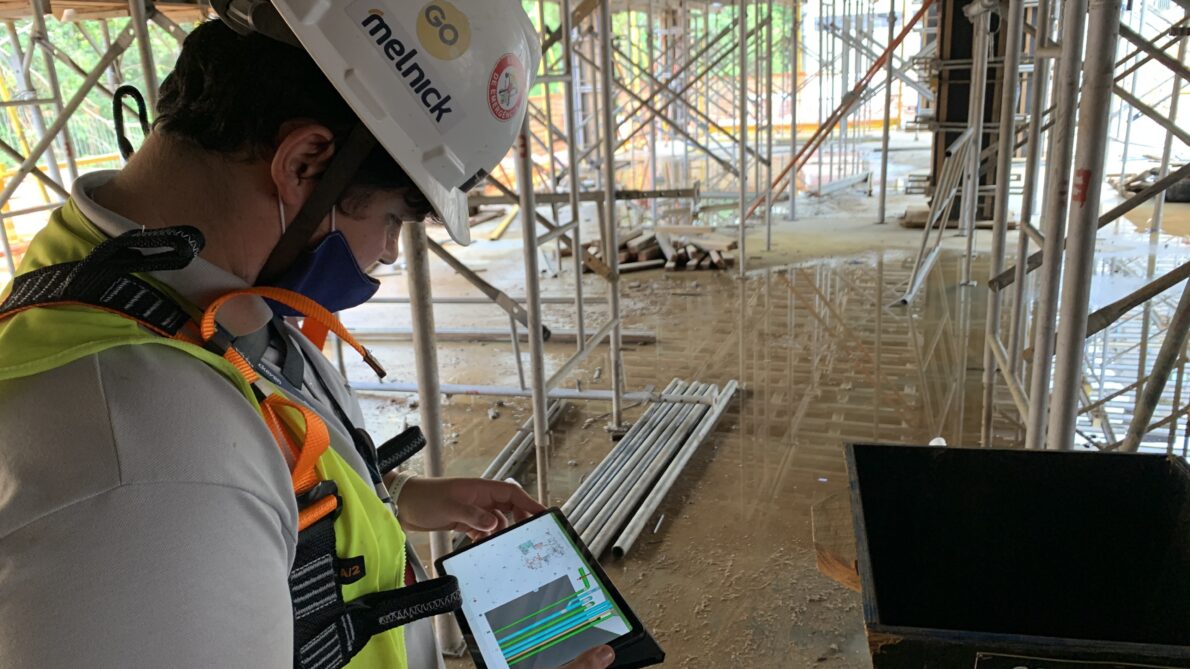

BIM Modeling Optimizes Resources at Melnick, with Virtual Models and Complete Database, Ensuring Quality and Comfort. Ideal for Feasibility Studies and Project Coordination.
The optimization of resources is one of the main advantages of BIM Modeling when applied in Melnick’s developments. By creating detailed virtual models and integrating a comprehensive database, this technology ensures high quality and comfort in all phases of the project. From feasibility studies to final delivery, BIM Modeling has stood out as an essential tool for construction companies looking for efficiency and innovation.
Building Information Modeling is part of Melnick’s strategy to ensure superior performance in its new developments. This process allows for comprehensive constructive management, from planning to execution. With Building Information Modeling, not only are resources better utilized, but project coordination also becomes more accurate and effective. The adoption of BIM has proven fundamental to raise construction and project management standards.
Understanding Building Information Modeling
Translating to Portuguese, this tool can be known as ‘Modelagem da Informação da Construção’. It employs advanced software to create 3D virtual models of the project, representing in detail the elements that will be constructed. Melnick, a reference in Civil Construction in southern Brazil, is a pioneer in adopting this technology, which is transforming the sector.
-
China Develops Custom 140-Ton Electric Mining Truck with 770 kWh Swappable Battery, Deploys 290 Units in Xinjiang’s Largest Zinc Mine

-
Meta to Launch Arena, a New Prediction App Targeting 3.56 Billion Users, Competing with Polymarket and Kalshi

-
Scientist Challenges Famous Human Evolution Theory, Argues Homo Sapiens Evolved Gradually Over Thousands of Years
-
15-Year-Old American Builds Ocean Generator with PVC Pipe and 3D-Printed Propeller for $12, Wins National Prize, Presents at White House, and Makes Forbes 30 Under 30 List




BIM as a Complete Database
Beyond three-dimensional visualization, BIM stands out as a complete database, integrating all project information, from the minute details of the land to the construction components that will be used. Building Information Modeling unifies technology, techniques, and processes, providing a global and detailed view of the project.
In this way, professionals involved in all phases of the project, such as designers, planning, budgeting, purchasing, execution, and post-delivery maintenance, gain unified and detailed analytical power, facilitating comprehensive project management.
Advantages of BIM Modeling
The use of BIM significantly improves the operational and strategic efficiency and coordination of projects, resulting in better outcomes, greater quality assurance, and cost reduction. BIM Modeling precisely facilitates various technical tasks of the feasibility study of the construction, a crucial initial step for the success of the project.
BIM Technology and Feasibility Study
With BIM modeling, it is possible to simulate and study different technical solutions in advance, always seeking the highest quality and comfort for the end client. Analyses such as earth movement and retaining walls are conducted to ensure optimal efficiency and use of the land to be incorporated.
Thermal and Acoustic Comfort with BIM
In the product conception stage, this technology allows for an accurate evaluation of the materials’ resistance as well as their behavior regarding energy and thermal and acoustic comfort issues. The project becomes more sustainable, considering that the tool can track the influence of the sun and wind on the building.
In this way, it is possible to simulate different scenarios and choose the best positioning of facades and frames, maximizing natural light and reducing electricity consumption, minimizing impacts on the ecosystem.
Project Coordination and Compatibility
During the projection phase, all disciplines use BIM technology to develop their projects. The system allows for better quality and productivity in project coordination and compatibility through tools that automatically check compliance with prerequisites and identify interferences between different elements of the disciplines.
Budgeting and Production with BIM
When we talk about construction budgeting, Building Information Modeling assists in the quick and efficient extraction of quantities, providing greater productivity and accuracy. Any necessary changes to the project result in an automatic update in the quantity spreadsheets, speeding up the process adjustments.
BIM on the Construction Site
During the execution phase, the virtual model can be manipulated on the construction site via tablets and smartphones, providing a better understanding of the projects. Specific applications allow for viewing important information about the elements to be executed, assisting the engineering team in verifying the services.
Moreover, BIM allows for more accurate planning of activities and better management of materials. According to Rubem Piccoli, Engineering Director at Melnick, BIM also helps in organizing the construction site, increasing the efficiency in managing materials and teams, resulting in cost reductions.
Total Control with BIM
The system centralizes a complete database, enhancing agility and offering managers total control over all stages of the construction process of the project. BIM achieves a harmonious and well-structured integration among all sectors of the construction company around the project, as Piccoli emphasizes.
BIM Available for Clients
This technology is also available for clients in specific developments, allowing access through an application. Through it, it is possible to view in three dimensions, via augmented reality, all electrical, hydraulic, gas, and air conditioning installations of the unit, assisting in understanding the systems present, whether for maintenance or future renovations.
Source: © Melnick Press






