Portuguese
  Spanish


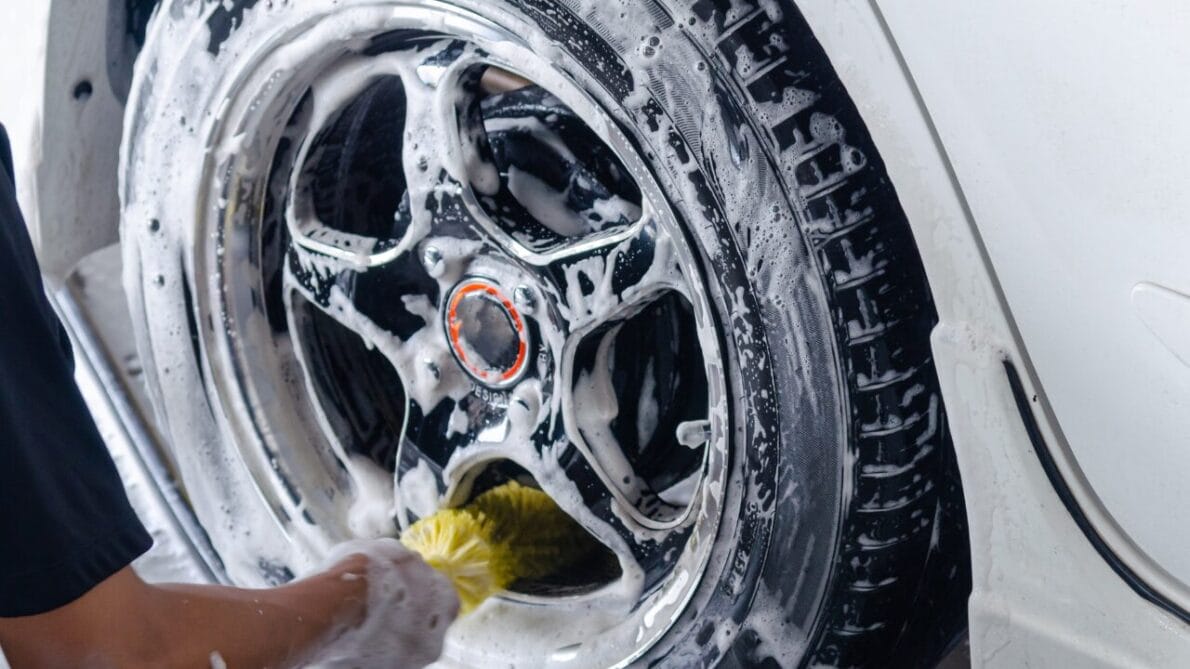

Learn Why Using Vinegar to Clean Car Tires May Compromise the Warranty and Damage the Rubber.
Keeping your tires in good condition is crucial for vehicle safety and performance. However, with the increasing popularity of alternative cleaning methods, it is important to understand the risks associated with these practices. Recently, vinegar has been promoted as an effective solution for cleaning and preserving tires, but this recommendation may bring more problems than benefits. Tire experts and manufacturers warn that using vinegar may compromise tire durability and even void the warranty offered by manufacturers.
Vinegar as a Cleaning Product
On social media, the use of vinegar to clean tires has gained popularity. Recently, a vinegar brand shared, on social media, the recommendation to use vinegar to increase tire durability and make them shiny.
According to the post, vinegar would help protect tires against drying out and cracking, as long as only white or apple cider vinegar is used.
-
1983 Chevrolet Runs Over 100,000 km Without Gasoline, Powered by Wood Chips, Reaches 125 km/h in Airport Test

-
Workshop Converts Giant Tractor Tire Tricycle into a Three-Wheel Drive Hybrid with 36,000-Watt Electric Motor Capable of Climbing Hills

-
Sales of Brazil’s Cheapest Electric Car Halted Before First Deliveries: E-Motors Suspends Emova Easy Due to Import Tax Increase and Rising Freight Costs

-
Nissan Discontinues Qashqai SUV Amid Cost-Cutting, Chinese Competition, and Product Line Review




Although the technique has attracted the attention of many drivers, it is important to consider the guidance from industry experts.
Goodyear, one of the leading tire manufacturers, discourages the use of vinegar for cleaning.
The company warns that, despite the lack of official studies on the effects of vinegar on tire rubber, the acetic acid in vinegar can harm the properties of the materials over time.
The Manufacturers’ Perspective
Rodrigo Falcão, Product Manager for Passenger Tires at Goodyear Brazil, explains that using chemical products, such as vinegar, may compromise rubber quality and, consequently, lead to warranty loss.
“We do not recommend cleaning tires with any type of chemical product and/or petroleum derivatives. Vinegar contains acetic acid and, over time, it may damage the properties of the rubber”, says Falcão.
According to the executive, the best way to keep tires in good condition is to use safer and recommended methods.
“The correct way to clean tires is with neutral soap and water”, advises Falcão. This approach avoids potential damage and ensures that the warranty on the tires is maintained.
Safe Alternatives to Using Vinegar
In addition to vinegar, other products and homemade solutions are also suggested for cleaning tires, but they are not recommended by experts.
None of these recipes include vinegar as an ingredient, and other substances, such as sugar with coffee, Coca-Cola, or kerosene, are also discouraged.
These products, besides offering no proven benefits, may actually damage the rubber of the tires.
Therefore, it is crucial to avoid using non-recommended products and opt for methods that do not compromise the integrity of the material.
If You Use Vinegar to Clean Your Tires, Stop Right Now!
Proper maintenance is essential for the safety and longevity of your car.
Although vinegar may seem like an attractive solution due to its accessibility and low cost, its use can lead to problems that go beyond mere aesthetic aspects, including rubber damage and loss of manufacturer warranty.
Following experts’ recommendations and using safe methods, such as neutral soap and water, is the best way to ensure that tires remain in good condition without compromising the warranty provided by manufacturers.
To avoid complications and maintain tire integrity, drivers must pay attention to the recommendations of manufacturers and experts.
While vinegar and other homemade products may seem like economical solutions, using recommended products and tested methods is essential to preserve tire quality and ensure that the warranty provided by manufacturers remains valid.
Investing in proper care and following the guidance of specialized companies helps to avoid long-term damage and ensures the safety and efficiency of the vehicle.
Source: CanalTech