





 Portuguese
  English
  Spanish
  3 min of reading
  0 comments


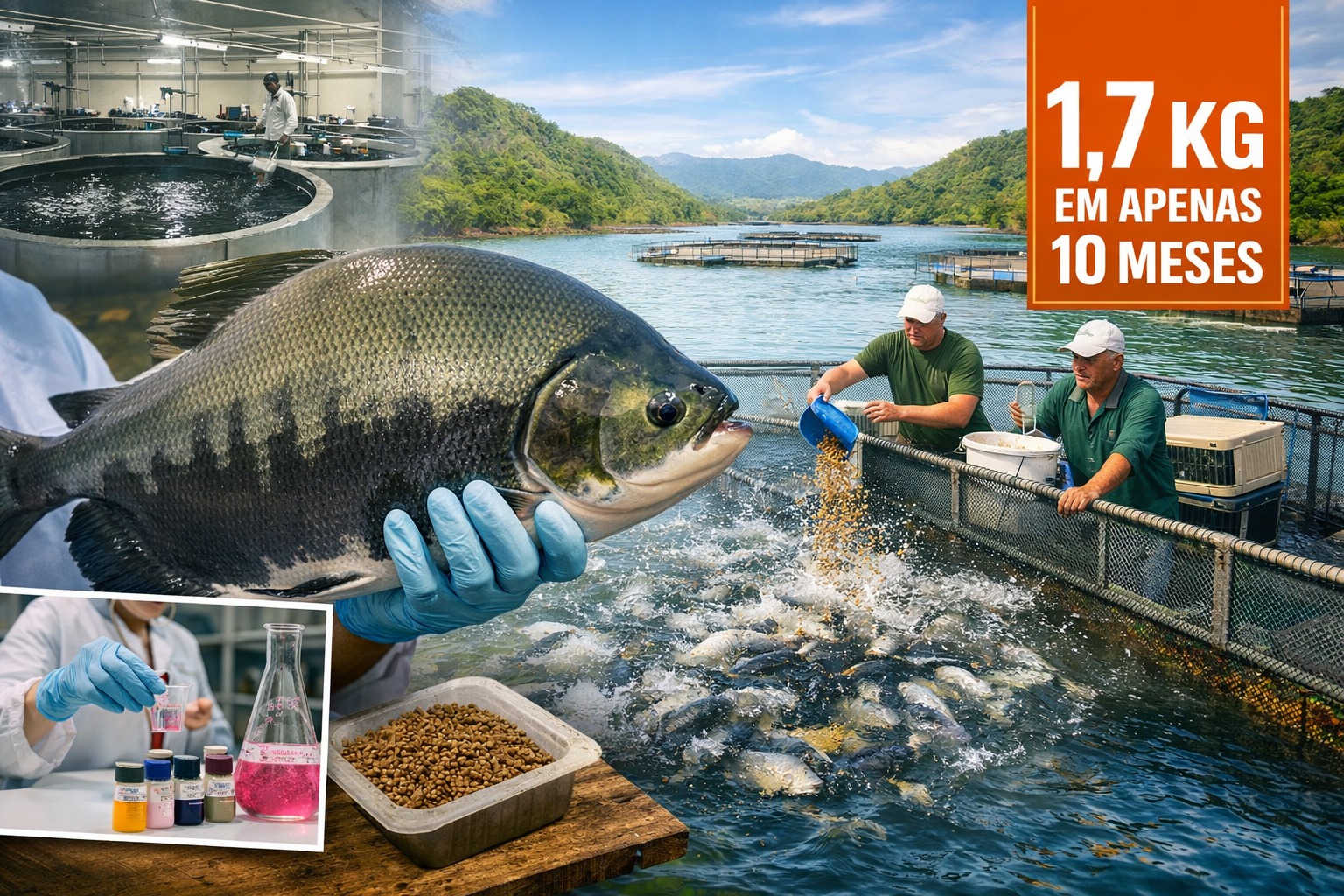
Tambaqui Reaches 1.7 Kg in 10 Months, Growth 2.04 Times Higher, Density of 40 Kg/m³ and Potential of 50 Kg/m³ in Embrapa Research in Tocantins with Direct Impact on Brazilian Aquaculture
The tambaqui, the most cultivated native fish in the country, reached 1.7 kg in 10 months in research by Embrapa Pesca e Aquicultura in Tocantins, surpassing the average of 1 kg in 12 months and indicating significant productivity gains.
The study demonstrated a growth rate 2.04 times higher than the traditional average, consolidating scientific advances with a direct impact on the productive efficiency of national aquaculture of native species.
The research was conducted by Embrapa Pesca e Aquicultura, based in Tocantins, an institution responsible for the development, validation, and dissemination of the protocol applied to the tambaqui in the experimental system.
-
Influencer reports alleged UFO sighting in Paraná, goes viral with millions of views, and says he lives between fascination and fear after mysterious phenomenon

-
Sedentary lifestyle advances silently in Brazil while millions ignore one of the biggest risk factors for cancer and other serious diseases.
-
The world’s largest lithium mine begins operations this month in Congo and promises to produce 130,000 tons per year of the metal that drives the battery era.

-
Jovi launches 5G phone for less than R$ 2,000 in Brazil and prepares an offensive with a premium line to compete for space among market giants



Feeding Conditioning as a Central Factor
Indoor feeding conditioning was crucial for the result, allowing the fish to learn to consume feed more efficiently from the early stages of cultivation.
This training induced feeding behavior similar to that observed in tilapia, the dominant species in Brazilian aquaculture, bringing the productive indicators of the two aquaculture chains closer together.
Another decisive factor was the use of the hormone estradiol in females during the rearing phase, a strategy adopted for the highest weight gain rate in females.
After six weeks of hormonal supplementation, the fish demonstrated accelerated growth and better feed utilization, contributing to increasing the final productivity of the batch.
Short-Term Results
With the application of the protocol, the tambaquis reached 1 kg in only six and a half months, a performance significantly superior to the historical standards of the species in Brazil.
This advancement reduced the production cycle and enhanced the competitiveness of tambaqui against tilapia, maintaining characteristics of a native species adapted to national systems.
The research was partially conducted in net cages in the Palmas Lake in Tocantins, with a density of 40 kg/m³, as well as in water recirculation systems.
A mixed population was also tested, without hormonal supplementation, which reached 1.4 kg in 10 months, a result considered positive by researchers.
Application for Small and Medium Producers
The technology shows potential for adoption by family fish farmers, promoting social inclusion in different Brazilian regions, including the Midwest and Legal Amazon.
States like Mato Grosso do Sul are identified as strategic, due to the search for alternatives to tilapia and the availability of large reservoirs.
Among the favorable environments are Porto Primavera, Ilha Solteira, and Manso, considered suitable for the expansion of native fish farming on a regional scale.
These areas offer conditions for the application of the protocol and expansion of production with a focus on feed efficiency and reduction of production cycles.
Economic Assessment as the Next Step
Despite the zootechnical advances, Embrapa Pesca e Aquicultura is evaluating economic indicators, which are essential for enabling the mass adoption of the technology in the field.
The cost of feeding can represent up to 80% of production costs, requiring detailed analysis of financial return and sustainability of the system.
Another point under evaluation is the prolonged time in the indoor environment, necessary for feeding training, considered a sensitive factor in operational costs.
There is also the prospect of increasing tank density to 50 kg/m³, which may raise production per area in net cage systems.
Perspectives on Genetic Innovation
Genome editing emerges as a future tool to enhance tambaqui performance, increasing productive gains and efficiency in aquaculture systems.
These approaches still depend on complementary studies and technical evaluation before any potential application on a commercial scale.
National Production and Official Data
The tambaqui is the most produced native fish in Brazil, with 113.6 thousand tons recorded in 2023, according to IBGE data.
The production generated over R$ 1.2 billion, with Rondônia, Roraima, and Maranhão being the main producing states.
Despite the numbers, current production represents only part of the national potential, given the environmental conditions and demand for native species.
The new protocols can contribute to the diversification of aquaculture, reducing logistical costs and strengthening the income of family producers.
With information from Compre Rural.





-

1 person reacted to this.