Portuguese
  Spanish


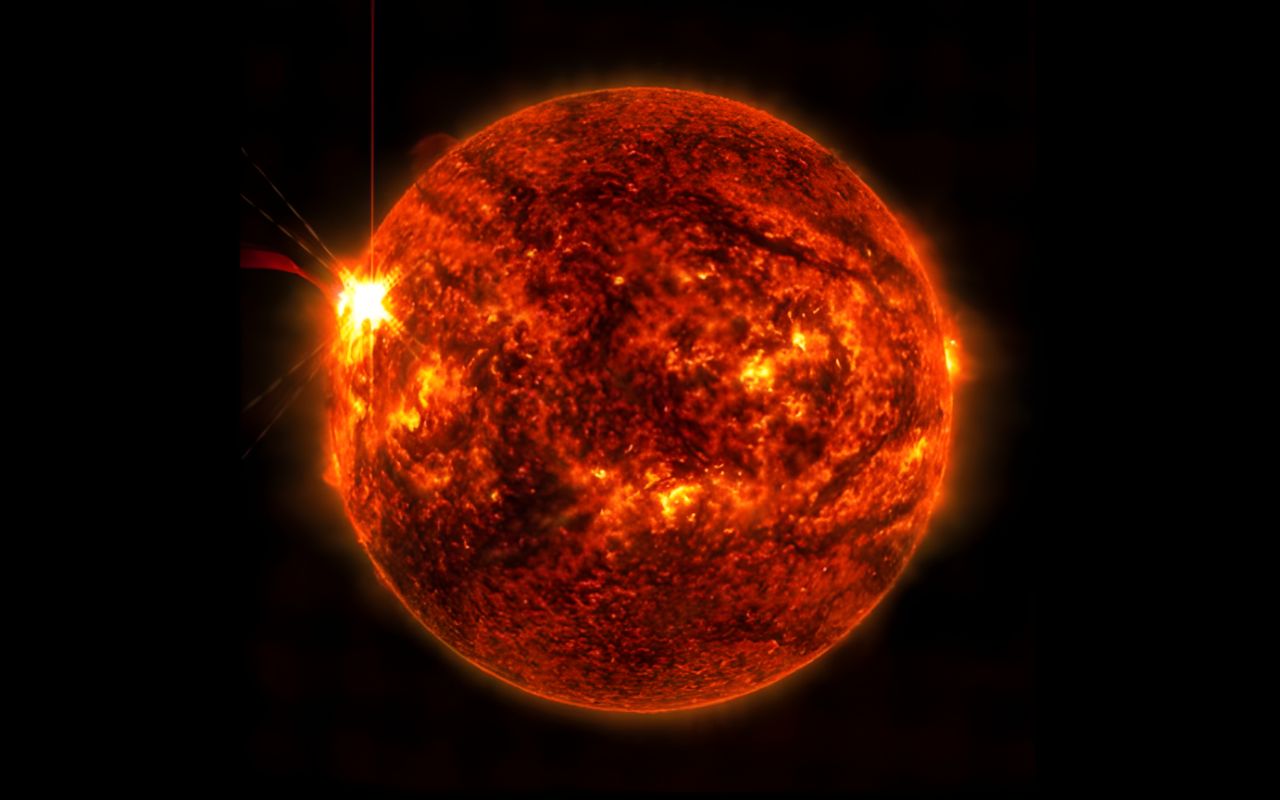


A Strong Solar Radiation Storm Elevated The Space Weather Alert Level, Caused Rare Auroras And Raised Concerns About Satellites And Communications.
A high-intensity radiation storm caused by the Sun recently hit Earth, mobilizing international space weather monitoring centers.
The phenomenon was identified, classified, and announced by specialists from the Space Weather Prediction Center, linked to the National Weather Service of the United States, after a strong solar eruption recorded in recent weeks.
The event occurred in near-Earth space, advanced through the planet’s magnetic field, and triggered alerts due to the associated technological and operational risk.
-
Seventh Grader Builds Nuclear Fusion Machine at Home, Aiming for Guinness World Record

-
Ancient Ritual Circle, Hidden for 5,000 Years, Discovered in Scotland’s Machrie Moor Using Sensors, Revealing a “Phantom Stonehenge”

-
Engineers Develop Fridge-Sized Machine to Produce 95-Octane Synthetic Fuel from Air and Water, Aiming to Sustain Combustion Engines Without Oil
-
Two-Armed Robot Uses AI to Reassemble Destroyed Pompeii Frescoes, Solving an “Impossible” Puzzle


Classified as level 4 on a scale that goes up to 5, the radiation storm is among the most severe observed in recent decades.
This degree indicates an intense release of energetic particles from the Sun, capable of interfering with sensitive systems, especially satellites, radio communications, and GPS signals.
According to scientists, the last similar record occurred in 2003, over 20 years ago.
How The Sun Triggered The Radiation Storm
The episode began with an extremely energetic solar eruption. This type of explosion occurs when the Sun‘s magnetic fields abruptly reorganize, releasing radiation and high-speed charged particles.
As soon as this material reaches Earth, it interacts with the planet’s magnetic field, generating instabilities known as geomagnetic storms.
Because of the radiation storm, international agencies issued preventive alerts for satellite operators, airlines, and electric grids.
Navigation systems, satellite communications, and instruments aboard spacecraft may experience temporary failures.
Additionally, flights on polar routes are under heightened alert, as they are more exposed to radiation from the Sun.
Rare Auroras Attract Attention In Unusual Regions
Meanwhile, the phenomenon also produced a rare visual spectacle.
Auroras were observed at latitudes where they typically do not appear, including areas of the United States, Canada, and parts of Europe.
This effect occurs because the radiation storm amplifies the interaction between solar particles and the Earth’s atmosphere.
The event occurs during a phase of high activity of the Sun, associated with the 25th solar cycle, which lasts about 11 years.
Scientists continue to monitor new eruptions, as similar radiation storms may occur in the coming days or weeks, keeping the space weather under constant observation.
Source: CanalTech