Portuguese
  Spanish


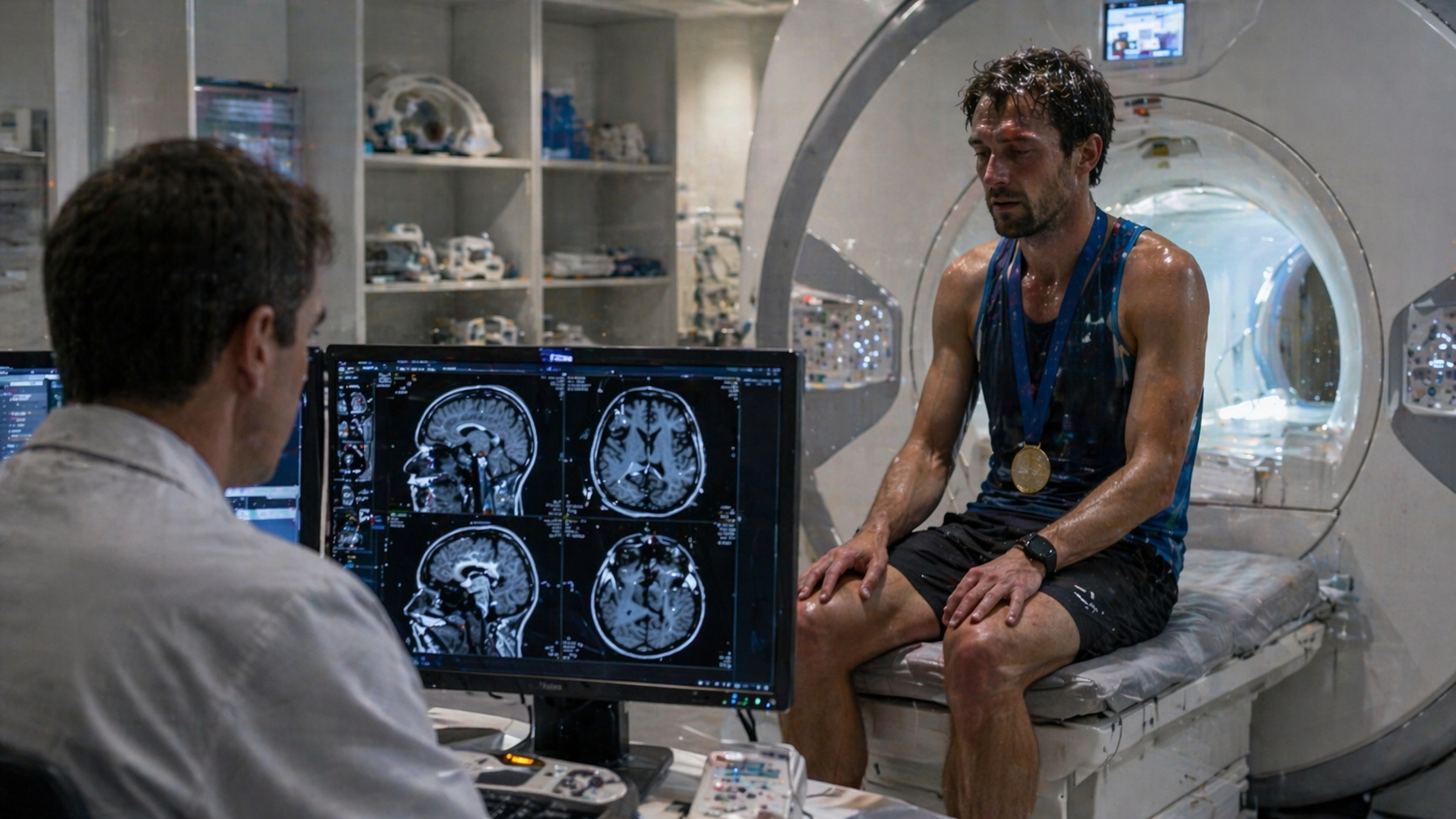

Study of Nature Metabolism shows that the brain uses myelin as energy after marathon, revealing an unknown mechanism until 2025.
According to a study published in March 2025 in the journal Nature Metabolism, researchers from the University of the Basque Country and the Cooperative Research Center in Biomaterials, in San Sebastián, identified an unexpected behavior of the human brain under extreme physical effort conditions. When marathon runners approach the end of the race and the body’s energy stores are nearly depleted, the brain does not collapse. Instead, it activates an emergency mechanism: it starts using its own myelin as an energy source.
The study was led by Carlos Matute, a professor of Anatomy and Human Embryology at the University of the Basque Country (UPV/EHU), who also has experience as a marathon runner, which directly influenced the formulation of the investigated hypothesis.
Myelin is the fatty substance that protects neurons and ensures rapid transmission of brain signals
Myelin is an essential structure of the nervous system. It is a lipid-rich layer that surrounds the axons of neurons, functioning as an electrical insulator and allowing nerve signals to propagate with high speed and efficiency.
-
Artist’s 15-Meter Lighthouse in the Mojave Desert, 160 km from the Sea, Intrigues Visitors with 19 km Range After Years of Bureaucracy

-
Bluetti AC70 Solar-Powered Station: Powers Fridge and Wi-Fi During Blackouts, Delivers 1,000W, 3,000 Charge Cycles, Priced at $900

-
Enormous Black Hole Phoenix A* Challenges Scientific Understanding with Mass of 100 Billion Suns, Surpassing Famous TON 618 in One of the Largest Known Galaxy Clusters
-
Say Goodbye to Storing Wine in a Regular Fridge: Midea’s Climate-Controlled Cellar Holds 34 Bottles, Maintains 5-18°C, and Uses Only Half a kWh Daily


This substance represents about 40% of brain tissue and is especially abundant in the so-called white matter, responsible for communication between different regions of the brain.
Changes in myelin directly compromise signal transmission, affecting motor, cognitive, and sensory functions.
Reduction of up to 28% in myelin was observed after marathon in magnetic resonance imaging
The experiment involved ten experienced runners, subjected to magnetic resonance imaging before and after completing a 42-kilometer marathon.
The exams were conducted at four distinct times: before the race, up to 48 hours after the run, two weeks later, and two months after the effort.
The results showed an average reduction of up to 28% in myelin in 12 regions of the white matter, especially in areas related to motor coordination and sensory integration.
This variation was considered significant and unexpected, indicating an active metabolic process involving this structure.
Hypoxia and energy exhaustion lead the brain to activate alternative survival mechanisms
During a marathon, the body initially consumes glycogen, the main source of energy derived from carbohydrates.
Around kilometer 30, these stores are depleted, a phenomenon known among runners as “the wall.” At this point, the body begins to use fat as fuel.

The brain, however, has a high dependence on glucose. In light of the drop in levels of this nutrient, the study indicates that the organ resorts to an internal alternative: the partial breakdown of myelin to meet energy demands.
Complete recovery of myelin in up to two months shows high capacity for brain regeneration
The most relevant data emerged in the post-race follow-up. Two weeks after the marathon, myelin levels already showed significant recovery. After two months, the values returned completely to the initial standard.
This result indicates that the process is reversible and did not leave detectable sequelae in the analyzed participants. Furthermore, it reveals a brain regeneration capacity faster than the scientific literature had indicated until then.
Discovery may help understand diseases like multiple sclerosis and remyelination processes
The scientific relevance of the study goes beyond sports. Multiple sclerosis is a disease characterized by the progressive destruction of myelin, with no efficient capacity for regeneration.
By demonstrating that a healthy brain can rebuild this structure in weeks, the research opens new possibilities for understanding remyelination mechanisms and developing therapies.
Experts point out that the observed process may have direct implications for the study of neurodegenerative diseases and brain aging.
Study ranked among the most impactful of 2025 according to Nature’s Altmetric ranking
In December 2025, the study was ranked as the second most impactful among all publications from the Nature group in the Altmetric ranking.
This recognition indicates a high level of scientific impact and global interest in the topic. It was the first time that a work from the University of the Basque Country reached this position.
The authors themselves acknowledge limitations in the research. The sample consisted of only ten participants, a number insufficient for broad generalizations.
Furthermore, factors such as inflammation, dehydration, and physiological stress may have influenced the results and still need to be isolated in future studies.
Now we want to know: does the human brain have other unknown energy reserves beyond myelin?
The discovery raises new questions about the functioning of the brain in extreme situations.
In your view, does this mechanism reveal only a specific process of sport, or does it indicate that the human brain still has forms of energy adaptation that science has not fully mapped?