Portuguese
  Spanish


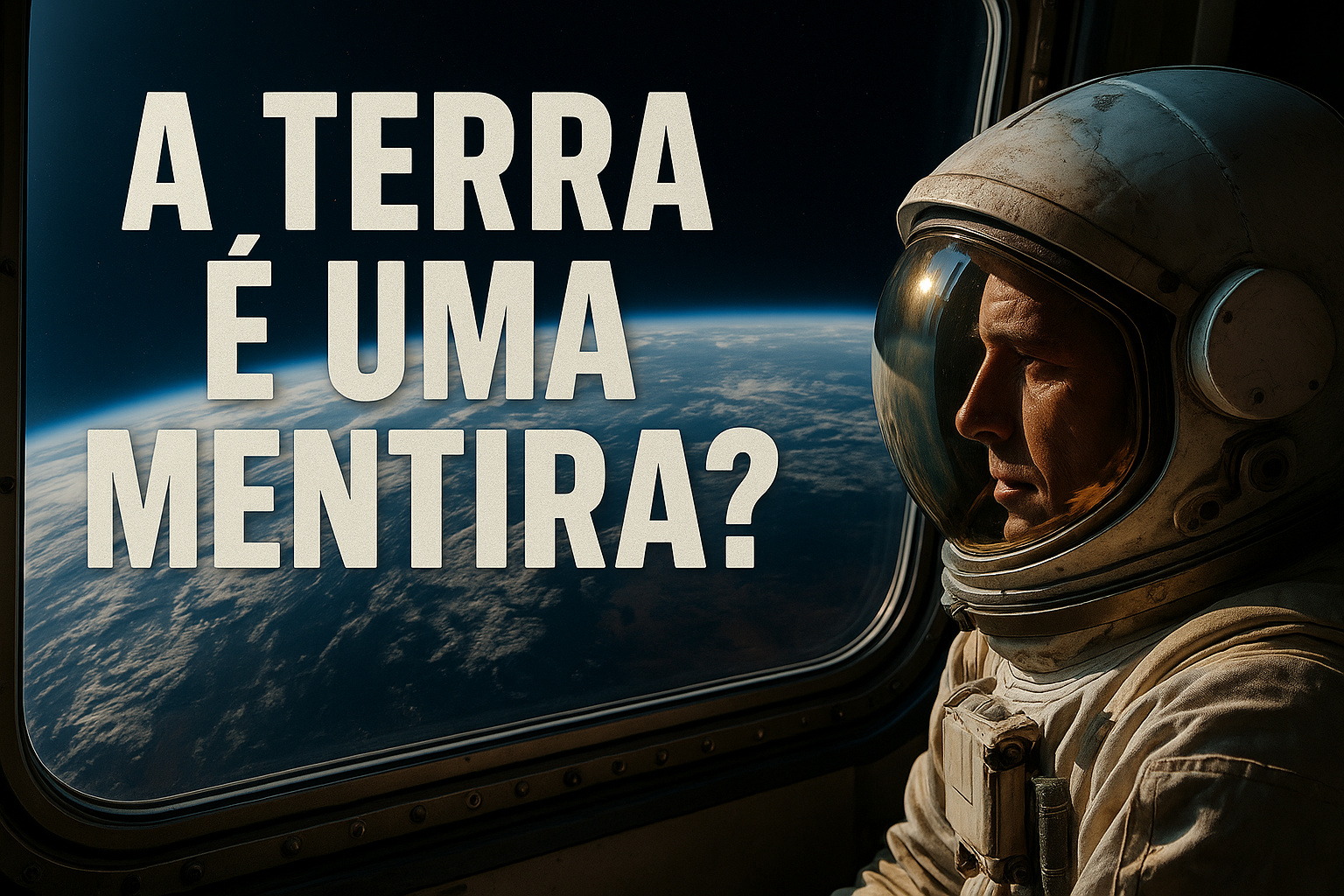

Ron Garan’s Long Mission, Held in 2011 by NASA, Reinforces that the View of Space Dismantles the Idea of Boundaries and Exposes the Fragility of the Planet
More than 2,800 orbits completed by Ron Garan during his 178-day mission reveal a profound change in perception. Therefore, this experience can transform environmental and social debates.
A deeply impactful and reflective space experience was lived in 2011 by former astronaut Ron Garan from NASA. Thus, his account attracted international attention.
Garan completed 178 days on the International Space Station and continuously observed Earth. According to his reports released after his return, this intense routine changed his perception.
-
She spent 73 years breathing inside an iron lung, survived the aftereffects of polio, and became the last woman in the United States dependent on the equipment before dying at 78 years old.

-
Brazilian students created a $1 filter using pine bark, cotton, and 3D-printed parts to clean cassava wastewater, reduce the toxicity of a hazardous waste, and transform contaminated water into biofertilizer.

-
Astronaut from Artemis II steps down after mission to the Moon and decision surprises after a record of 406,771 km, a historic 10-day journey, and an unprecedented achievement for Canada.

-
A fossil kept for years in a small museum in Montreal concealed 450-million-year-old soft tissue, a discovery that has only happened once before in history.


This period marked one of the most transformative experiences among astronauts. This occurs because the phenomenon known as overview effect reinforces the idea of the planet as a unique, fragile, and interdependent system.
According to Garan, this perception made him question the excessive priority given to economic systems. This is because many decisions ignore essential environmental processes.
Space Observation Reveals Unique Perspective on the Planet
The transformation experienced by Garan was the result of a constant routine of observing Earth from orbit. Thus, he perceived aspects that are not visible down here.
As he described, Earth viewed from space does not present borders, highlighting that human divisions are artificial. Therefore, these separations become irrelevant on a global scale.
He noted that, despite the political separations created by society, the Earth’s surface demonstrates absolute continuity. Thus, there are no visible barriers when observing the planet from the outside.
According to his statements, this understanding reinforces an urgent message. Humanity lives disconnected from its environmental reality, as it relies on divisions that do not exist in orbital view.
The Emotional Impact of Continuous Earth View
The clear and repeated view of the planet caused an intense emotional impact. Moreover, this perspective broadened his understanding of Earth’s fragility.
Garan explained that many astronauts return with a new disposition to integrate social and environmental issues. This happens because the spatial distance provides an unusual clarity.
He stated that phenomena such as climate change and deforestation continue to be analyzed in isolation. However, these issues depend entirely on the direct relationship between humanity and nature.
According to his account, ignoring this connection perpetuates a collective illusion. Therefore, the real focus should be sustainable balance.
Social Consequences and Post-Mission Reflections
Although Garan did not face external conflicts, he reported an internal confrontation upon realizing the chasm between human priorities and environmental needs. Thus, his experience reinforced a fundamental truth.
He emphasized that his mission made it even clearer that Earth is our only living biosphere. Therefore, any decision must consider this essential condition.
This understanding should guide public and private choices. After all, collective survival depends on consistent ecological awareness.
His final reflection makes it clear that the spatial view offers strong arguments to rethink development models. Thus, his experience becomes a relevant warning.
The Overview Effect as a Transformative Phenomenon
The phenomenon, reported since the 1970s, is recognized for altering astronauts’ perspectives. This occurs because the continuous observation of Earth provokes a deep change.
The orbital view reinforces that decisions based on cooperation are possible and urgent. Therefore, this understanding can guide new priorities.
Garan stated that by understanding Earth as a unique living system, it is possible to rethink choices. Thus, the search for balance between society and environment becomes essential.
What Does the Experience Indicate for the Future?
Ron Garan’s perception demonstrates that understanding Earth as a single organism can transform environmental and social debates. Therefore, this view can guide future decisions.
The ability to translate this perception into concrete actions depends on responsible collective choices. Moreover, it requires a real commitment to sustainability.
Meanwhile, the reflection left by Garan highlights a continuous challenge. Are we prepared to abandon the illusion of human divisions and prioritize the protection of the planet, since Earth viewed from space reveals no boundaries?