Portuguese
  Spanish


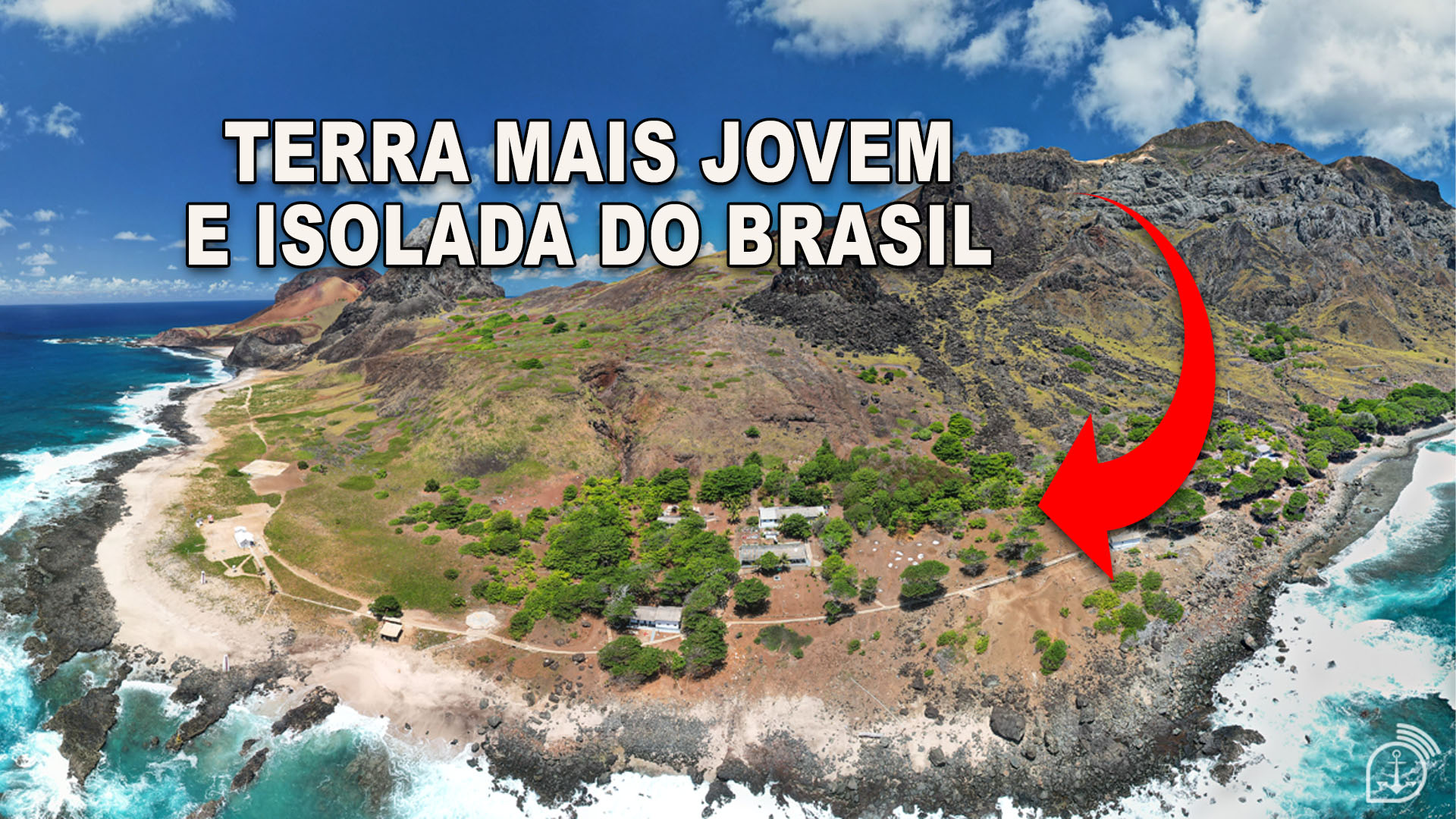

The Capixaba Archipelago, 1,140 km From the Mainland, Brings Together the Paredão Volcano, Rare Crystals Like Hauynite, Unique Biodiversity, and a History of International Greed in the South Atlantic.
Trindade Island, in Espírito Santo, is seldom remembered when it comes to volcanoes. But there, at the easternmost tip of Brazil, the Paredão Volcano marks the most recent activity of Brazilian volcanism and helps explain a young territory born just a few million years ago. According to the Brazilian Navy, Trindade is 1,140 km from Vitória and hosts the country’s main scientific and military base in open waters.
Geological studies situate the archipelago as the eastern end of the Vitória–Trindade Chain, an alignment of seamounts formed by a hotspot that pierced the oceanic crust. The result is alkaline rocks and phonolitic domes that sculpted the steep landscape of the island.
In the midst of this nature, the island harbors rare minerals and populations of giant ferns and green turtles, along with a past of international disputes, including a naval battle in World War I.
-
Orphaned Youth Turns Dismissed Idea into Global Prestige with Innovative Wristwatch

-
English Skills Boost Career Opportunities in the Oil and Gas Industry

-
Brazil Secures Second Place at WorldSkills 2024 in Lyon, with 64 Young Professionals and 8 Medals, Including Gold from a Rio de Janeiro Hairdresser

-
3,000 Military Personnel from 10 Countries, Including US and Chinese Marines, Train Together in Brazil’s Savanna: Operation Formosa Becomes Largest Naval Ground Exercise Before First Cancellation Since 1988


Where Is Trindade Island and Why Is It Strategic
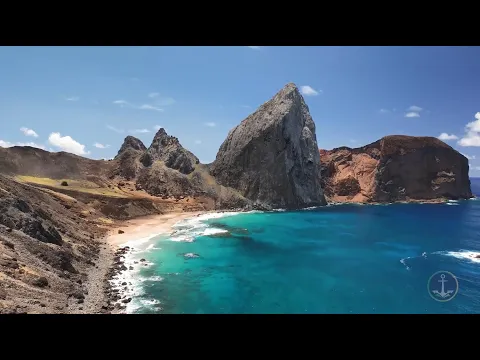

Trindade is part of the Trindade and Martim Vaz Archipelago, belonging to Espírito Santo, in the heart of the “Blue Amazon.” The distance from the mainland and the presence of the Oceanographic Post of Trindade Island (POIT) enhance Brazilian sovereignty over a vast Exclusive Economic Zone.
The Brazilian Navy conducts research there in geology, oceanography, and biodiversity, as well as logistics for environmental monitoring. In 2018, the area was incorporated into one of the largest sets of marine conservation units in the country, reinforcing its scientific and protective character.
The rugged terrain, with peaks close to 600 m, reveals its volcanic origin. Morphometric surveys describe steep slopes, narrow valleys, and gravel and dark sand beaches, common traits of young volcanic islands. In geological terms, three to four million years is “yesterday”.
How the Paredão Volcano Was Born and What Was the Last Eruption
The origin of Trindade is linked to a hotspot that built the Vitória–Trindade Chain. The Paredão Volcano, in the southeast of the island, is recognized as the last subaerial volcano in Brazil, with deposits of scoria and pyroclastic flows still preserved.
There is consensus that the most recent activity is from the Pleistocene. Scientific literature reports ages younger than 350 thousand years for the final events; the Navy discloses an approximate value of 50 thousand years for the last eruption. In short, this is “recent” activity on a geological scale, however, there have been no eruptions in the Holocene.
The landscape of the Paredão, with steep cliffs and a rugged coastline — reflects this history. Stratigraphic studies and recent mapping detail the lithofacies of the cone and its relation to the phonolitic domes of the island.
Unique Biodiversity: Giant Ferns and the Largest Green Turtle Nursery in Brazil
The isolation has favored the presence of endemic species. Among the plants, the giant fern (Cyathea copelandii) stands out, dominating the moist high-altitude areas. It is a symbol of Trindade’s vegetation.
In the sea, the island hosts the main breeding site for the green turtle (Chelonia mydas) in the country. Recent data from ICMBio/Tamar confirms a record concentration of nests on Trindade’s beaches, surpassing other Brazilian oceanic islands. Conservation and science go hand in hand.
The avifauna is also noteworthy: the archipelago is a confirmed breeding area for the Trindade petrel (Pterodroma arminjoniana), endemic and targeted by international bird conservation organizations.
Rare Minerals, “Precious Metals,” and Treasure Legends
The alkaline geology of the island exposes uncommon minerals, such as hauynite (from the sodalite group), historically recorded in Trindade and Martim Vaz and cited in mineralogical catalogs. It is a rare find in Brazil.
There are also records of magnetite, chromite, pyroxenes, and feldspar associated with local volcanic rocks, which sustains scientific interest in petrology and geochemistry. There is no active mining nor authorization for exploration in the protected area.
Popular references to “precious metals” stem, in part, from stories of pirate treasures attributed to the island since the 19th century. These are well-known legends, without historical confirmation of finds, that persist in the imaginings of navigators.
Disputes and War: From Edmund Halley to the Battle of Trindade
Discovered for Europeans in 1502 by Estêvão da Gama, Trindade attracted interest due to its strategic position in the South Atlantic. In 1700, astronomer Edmund Halley attempted to take possession of the island in the name of the British Crown; by the end of the 19th century, the British again sought to assert their presence, restrained by Brazilian diplomacy.
During World War I, the island’s coast was the scene of the Battle of Trindade: on September 14, 1914, the HMS Carmania sank the Cap Trafalgar, a German auxiliary cruiser, putting an end to a secret base of support in the archipelago. This episode solidified the strategic relevance of the location.
Today, in addition to its historical value, Trindade is the target of studies on modern impacts, such as the formation of “rocks” with melted plastic found on beaches, a phenomenon described by Brazilian universities since 2023.
The island is not open to tourism. Access is restricted to missions from the Navy and authorized research projects. This rule seeks to protect the fauna, geological formations, and the safety of the garrison. It’s science, conservation, and sovereignty in the forefront.
In your place, would you open Trindade to controlled visits for environmental education or keep the access restricted for safety and conservation? Comment below: should Brazil prioritize research and total protection or test models of well-regulated scientific tourism, as is done in other oceanic islands?