






 Portuguese
  Spanish


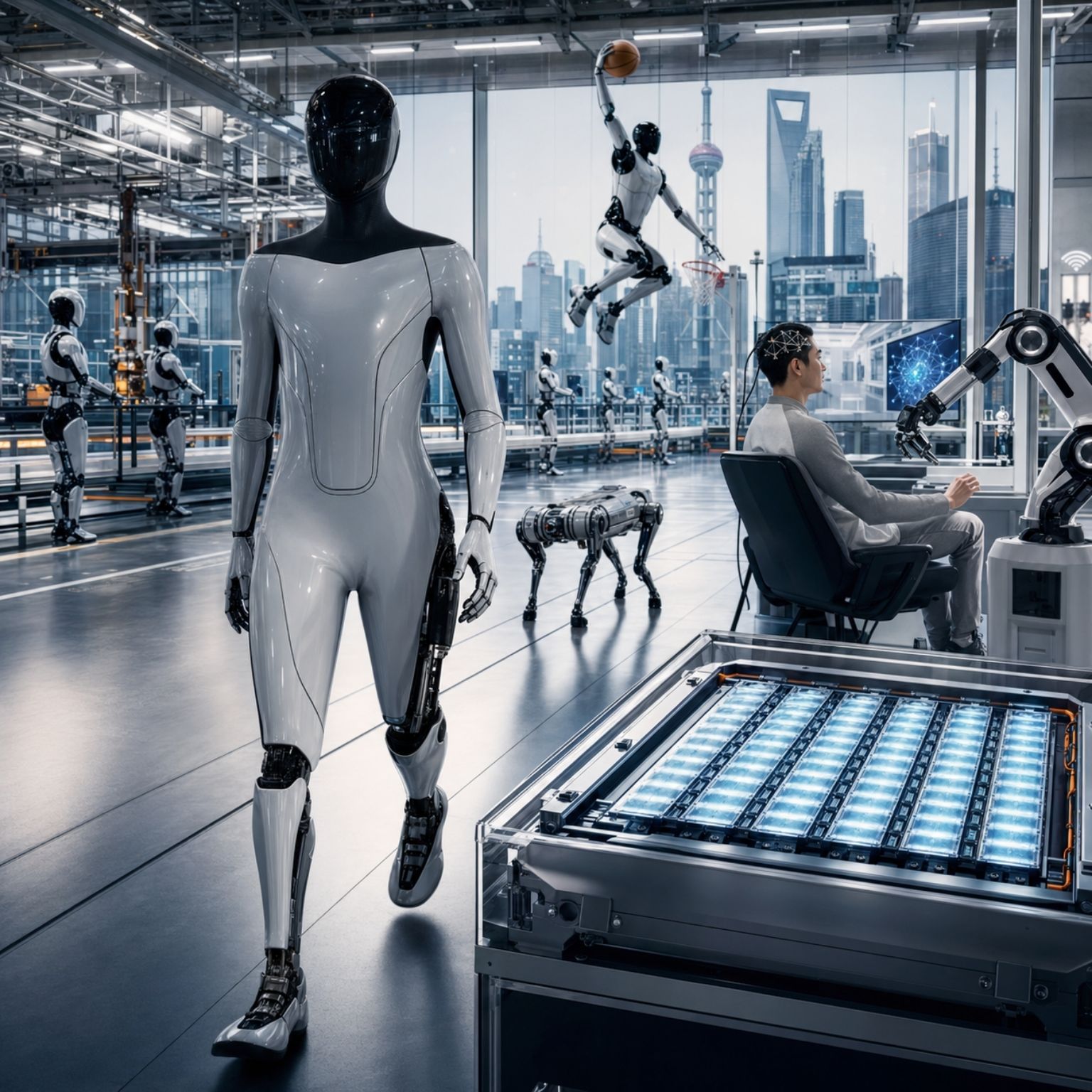


Robots enter a new phase with Tesla using China’s industrial scale, Neuralink translating thoughts into real commands, solid-state battery promising a leap in 2026, and machines that already walk like animals, play basketball, and become global exports
A combination of recent moves is reshaping the landscape of **robots** in the world, with impacts ranging from industry to daily life. On one hand, Tesla executives indicated that the Shanghai Gigafactory could play a central role in the future mass production of Optimus humanoid **robots**, using the Chinese industrial structure to unlock viable scale and cost. On the other hand, Neuralink released a new video showing clinical trial participants controlling a computer cursor, writing messages, and even moving **robotic** arms just with their minds.
At the same time, China also appeared in the spotlight with an announcement of an all-solid-state battery: Greater Bay Technology, supported by the GAC automotive group, claims to have developed sample cells with an energy density of up to **500 Wh/kg** and states that it intends to start gigawatt-hour scale production as early as **2026**. At the most visible end of this race, quadruped **robots** already move like animals with real-time adaptation, a humanoid in Japan was seen playing basketball in front of thousands of people, and Chinese exports of intelligent machines are advancing in batches to various countries.
Tesla and China: why Shanghai could be the key to humanoid robots
The basis of the movement is an alliance that, according to reports, few would have imagined a few years ago: Tesla and China’s industrial might acting as a production accelerator. Company executives indicated that the Shanghai Gigafactory could become a strategic piece in the mass production of Optimus humanoid **robots**, signaling a change in mindset.
-
ChatGPT Alerts FBI to Prevent Planned Murder of 8-Year-Old in Brazil’s Espírito Santo

-
Scientists Discover 125-Million-Year-Old “Pregnant Fossil” with Preserved Embryos and Microscopic Larvae Inside Mollusk in England

-
17-Year-Old Justin Bernstein Develops Bacteria to Produce Glass on Arctic Ice to Reflect Sunlight, Wins $50,000 U.S. Scholarship

-
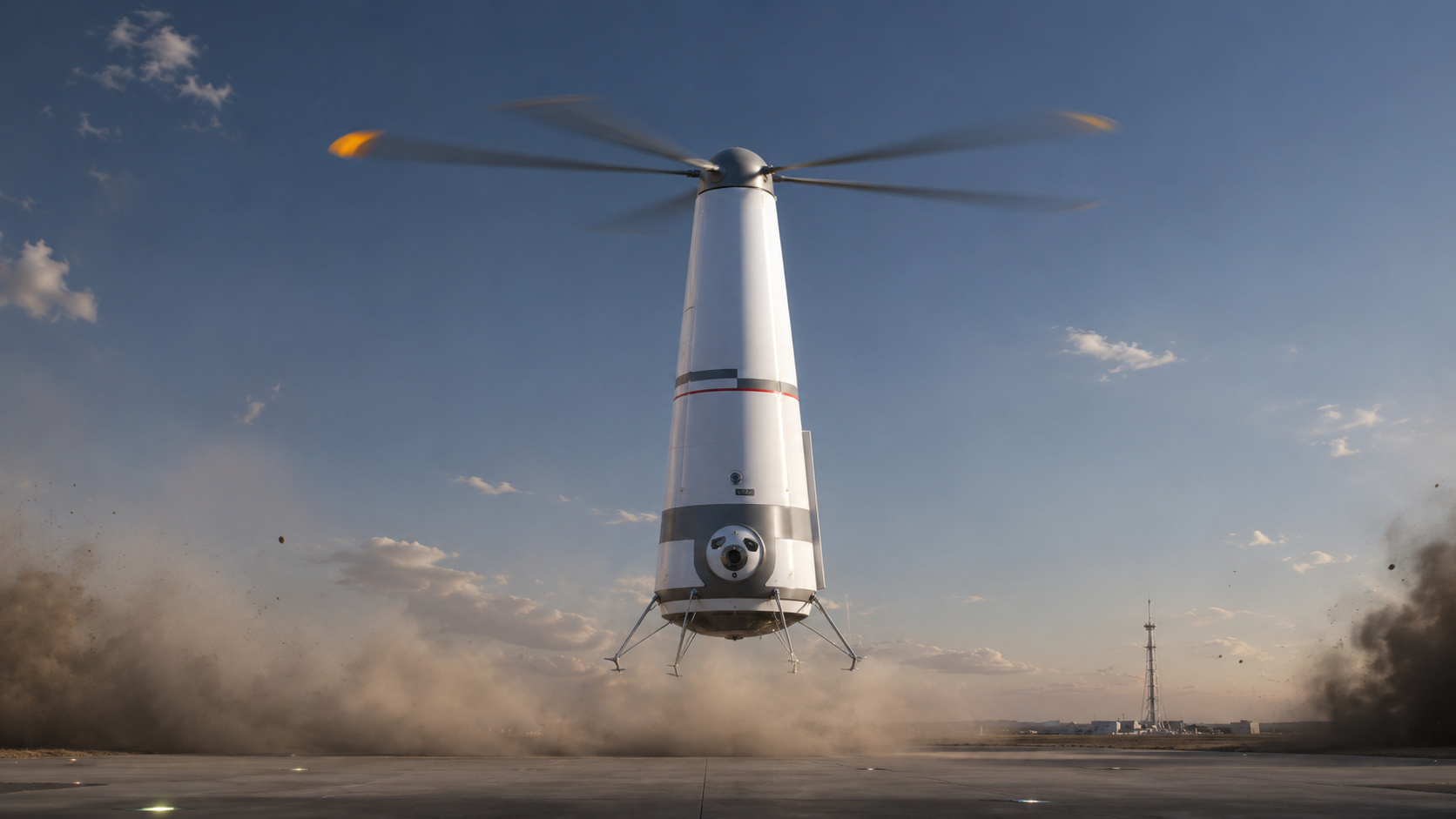
The 19-Meter Rocket-Helicopter: A Private Industry Prototype That Challenged Space Race Logic



The message is that Tesla’s factories would no longer be seen merely as vehicle assembly plants and would begin to function as centers for creating intelligent machines. In this scenario, Shanghai appears as the asset capable of providing speed, advanced automation, and direct integration with the Chinese supply chain.
The big bottleneck isn’t making them walk: it’s manufacturing robots in quantity at a viable cost

The text makes it clear what challenge separates demonstration from revolution: it’s not about making a robot walk, move objects, or respond to commands. The obstacle is producing thousands or millions of functional **robots** in large quantities at a viable cost.
Creating demonstration units is impressive, but it doesn’t change the world on its own. Mass production, however, does change it, because it transforms innovation into a scalable product. That’s why Shanghai’s structure, described as one of Tesla’s most efficient, serves as a differentiator for industrializing humanoid **robots**.
Optimus as a bet beyond cars and the pressure for scale

The report reinforces that Elon Musk has been repeating that Tesla’s future depends less and less on car sales and more on artificial intelligence, autonomous vehicles, and humanoid **robots**. In this context, Optimus is presented as a machine capable of operating in factories, homes, and even in elder care.
But for this to move from the stage to the real world, the key piece is scale. The idea is that Tesla’s automotive experience can be converted into **robot** manufacturing, accelerating years of development in a short time, if the company manages to industrialize the innovation.
Neuralink shows people controlling computer and robotic arm with their minds
In another development, Neuralink released a demonstration video that, according to the text, makes something that seemed like science fiction concrete. Clinical trial participants showed how the brain implant transforms neural signals into digital actions: moving a computer cursor, controlling assistive robotic arms, writing messages, and communicating, all without hands, voice, or physical movement, just with mental intention.
The most used system at the moment is called Telepat. The explanation provided is straightforward: when someone thinks about moving something, the brain generates electrical signals. In healthy people, these signals reach the body, but injuries or diseases can interrupt this path. Neuralink’s proposal is to rebuild this bridge, capturing brain signals and translating them into digital commands.
The impressive accounts and what this changes in practice

The cited video features what are considered profound accounts. One participant states that before the implant, they were non-verbal, quadriplegic, and extremely limited, and now they can control the computer just by thinking.
Another describes the emotion of moving an arm again, albeit a robotic one, recovering functions they believed they had lost forever. There is also a moment described as impactful involving patients with that disease that progressively robs speech and movement: in the video, a participant communicates through a brain interface, transmitting phrases just with their mind.
The next step mentioned: Blind system to try to restore visual perception
The company also mentioned a next step called “blind,” described as a system created to try to restore visual perception, including for people who have lost their eyes or optic nerve, by sending visual information directly to the brain through new equipment.
The text emphasizes that enormous technical, ethical, and medical challenges still exist. Even so, the central idea is that brain-computer interfaces are no longer a distant promise and are already operating in the real world, with direct effects on people’s autonomy.
China announces all-solid-state battery with 500 Wh/kg and targets production in 2026
In the field of batteries, Greater Bay Technology, supported by the GAC automotive group, announced that it has developed its first sample cells of an all-solid-state battery with an energy density of up to 500 Wh/kg.
If confirmed on an industrial scale, the text points to a significant leap for electric vehicles, as solid-state batteries are treated as the next major evolution, promising greater safety, more autonomy, and faster charging.
Why the solid battery draws attention and what it promises to change


The central comparison in the report is the electrolyte. In current batteries, the electrolyte is liquid and can pose a risk in extreme situations. In the announced project, the company claims to use a completely solid system, without flammable liquids.
The density of 500 Wh/kg is presented as having the potential for much higher ranges than current ones, with smaller and lighter batteries for the same distance. In practice, this is described as a path to more efficient, faster, and potentially cheaper cars in the future.
The next steps: gigawatt-hour scale production in 2026
According to the company, the intention is to start gigawatt-hour scale production by the end of 2026. If it meets the schedule, Greater Bay Technology could become the first to take the all-solid-state battery from the laboratory to large-scale commercial production.
The text places this in a larger context: China already dominates essential parts of the global battery supply chain, critical minerals, and electric vehicle manufacturing, and wants to lead the next generation of this technology.
Quadruped robots now walk like animals and anticipate obstacles

In the robotics section, the report highlights an advancement presented by South Korean researchers: a system called Dreamw Plus, capable of making quadrupedal robots see the terrain and adapt in real-time, similar to real animals.
The described change is moving from reactive mode to anticipation. Instead of reacting only after stepping on or hitting something unexpected, the robot identifies obstacles and decides how to walk before touching them. The system combines cameras and internal body sensors of the robot to interpret the scenario as it walks, detecting stairs, rocks, ramps, and holes.
The numbers that explain the leap: 50º in 35 seconds and 35º inclination
In the cited tests, the robot climbed a 50º staircase in just 35 seconds. It also overcame inclinations of up to 35º, surpassing the terrain used in initial training.
In uncertain areas, it even stopped on its own to evaluate the path before continuing, and also managed to cross obstacles taller than its own body while carrying additional weight, maintaining stability and balance. The text points to applications such as rescue, dangerous industrial areas, agriculture, forests, and inspections in hazardous locations.
In Japan, humanoid robot plays basketball and uses reinforcement learning

The content also brings an example aimed at the public: a new version of Toyota’s humanoid basketball-playing robot. A model called Qet appeared in Tokyo during halftime of an official Japanese Basketball League game and converted a free throw in front of the crowd. It then attempted a three-pointer, which hit the rim and bounced out, but still generated applause.
The text explains that the project began in 2017 as a voluntary initiative by Toyota employees. The difference from previous versions is the use of reinforcement learning, where the machine improves by repeating movements thousands of times in a virtual environment. There was also a change in physical design: instead of two wheels on each foot, the robot now uses one wheel per foot with a more efficient dynamic balance system, reducing falls and improving rapid movements.
Robots become mass export and China spreads machines worldwide
Finally, the report describes the Chinese expansion of robots as a phenomenon of scale. One region cited is Anhui province, where robotic production is said to have grown about 30 times in the last decade. At its center is the city of Wuhu, home to the country’s first national robotics hub.
On the production line of AOGA Robotics, a generation of quadrupedal robots is presented for global export, capable of walking on difficult terrain, climbing inclines, crossing gravel, navigating between obstacles, and accessing tight spaces. With night vision and self-autonomy, they are sought after for patrolling industrial areas and also in residences, and the text even mentions their sale as domestic companions.
In addition to “dog robots,” the company also exports humanoid robots about 1.67 m tall and feminine in form, capable of interacting in 11 languages, sent in batches to countries such as the United Kingdom, Poland, and Italy. The text also points out that the country has created more formal classes for export, including collaborative robots, intelligent bionic robots, and cleaning robots, a sign that the sector has ceased to be a promise and has become an industry.
With Tesla aiming for scale in Shanghai, Neuralink demonstrating mind control, and China pushing batteries and exports, do you think robots will fully enter people’s daily lives in the coming years?


