






 Portuguese
  Spanish
  3 min of reading


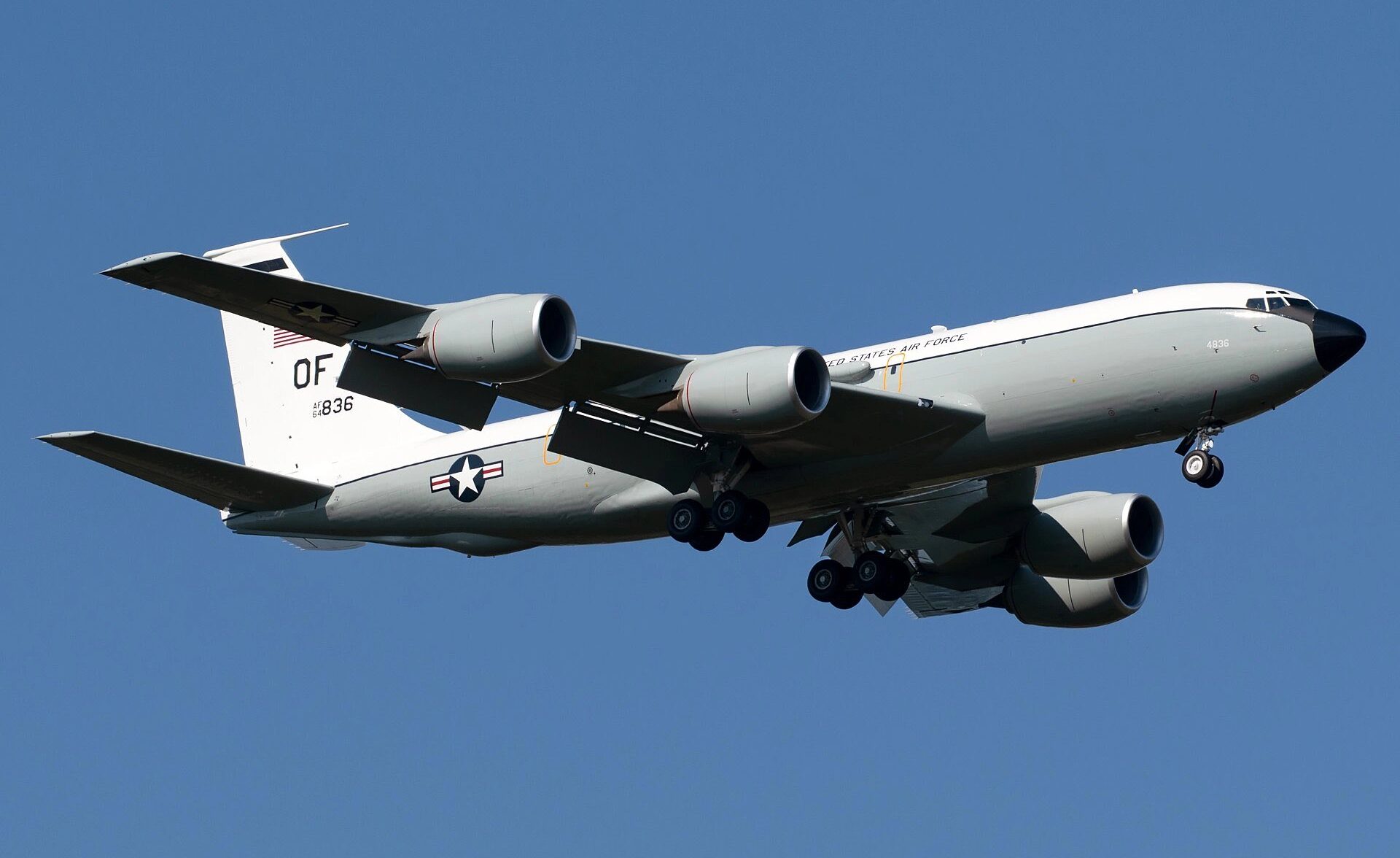
The Verification of Nuclear Energy Particles Off the Brazilian Coast Is Part of the Limited Nuclear Test Ban Treaty. The U.S. Air Force Concluded Testing with the Constant Phoenix Aircraft, but No Such Substance Was Found.
Verifying the continuity of the Limited Nuclear Test Ban Treaty agreement off the South American coast, the U.S. Air Force conducted atmospheric particle collection tests to analyze the presence of nuclear energy. However, the test was concluded, and as of this Thursday (01/19), no signs of the substance were found, as announced. The special aircraft Constant Phoenix was used in the operation, ensuring faster and optimized processing.
U.S. Air Force Conducts Test to Verify the Presence of Nuclear Energy in the Atmosphere Off the Brazilian Coast, but Fails to Find Evidence
Despite all efforts to verify the presence of nuclear energy in the atmosphere off the Brazilian coast, the U.S. Air Force was unable to find any traces of the substance.
The organization conducted tests with the special aircraft Constant Phoenix along the entire national coast, collecting atmospheric particle samples for verification, but concluded the operation without success.
-
American company drills a 1,830-meter hole in Kansas using oil well technology, places a nuclear reactor inside, and claims it will generate electricity without any cooling tower.

-
Canada invests more than 2 billion dollars to upgrade an old nuclear laboratory and try to rival the world’s major atomic energy powers.
-
Nuclear company backed by Bill Gates partners with Hyundai for next-generation 345 MW nuclear reactor

-
Russia is sailing all 8 nuclear icebreakers of its fleet simultaneously for the first time in history, as the Arctic freezes two weeks earlier than expected.





The operation flew over the North and Northeast of the country, then proceeded to the height of Rio de Janeiro, to sniff for nuclear particles, but did not land on Brazilian territory at any moment.
The WC-135R is an atmospheric collection aircraft that gathers particles, gases, and residues from the atmosphere in support of the Limited Nuclear Test Ban Treaty of 1963.
Thus, the U.S. Air Force ensures that the agreement established in the treaty continues to be upheld in the countries that participated in the action.
The aircraft took off from San Juan, Puerto Rico, and was then accompanied by a KC-10A refueler.
After that, the special aircraft Constant Phoenix flew over Venezuela and headed to the height of Rio de Janeiro, descending to 6,500 feet.
The U.S. Air Force secured collaboration for the verification of nuclear energy in the atmospheric particles off the national coast, thus ensuring faster and optimized operations.
Special Aircraft Constant Phoenix Underwent Modifications to Ensure Greater Efficiency in the U.S. Air Force Nuclear Particle Verification Operation
The WC-135 is a modified C-135B or EC-135C platform, ensuring new characteristics that contributed to the nuclear particle verification operation off the Brazilian coast.
These modifications are mainly related to its onboard atmospheric collection set, which allows the mission crew to detect “clouds.”
Additionally, the Constant Phoenix aircraft is also equipped with external devices that allow for the collection of particulates on filter paper, as well as a compression system for air samples collected in holding spheres.
Three KC-135R tankers were converted to WC-135 to be used in the U.S. Air Force’s later operations.
The first converted aircraft was delivered in July 2022, being the one chosen for the operation off the Brazilian coast.
Learn More About the Special Aircraft Constant Phoenix
The WC-135 Constant Phoenix is a special-purpose aircraft derived from the Boeing C-135 Stratolifter and used by the United States Air Force. Its mission is to collect atmospheric samples to detect and identify nuclear explosions. It is also informally referred to as the “weather bird” or “the sniffer” by program workers and the international media, respectively.









Be the first to react!