






 Portuguese
  Spanish


The 2026 astronomical calendar highlights meteor showers with strong peaks, but conditions vary greatly: Perseids will have a new moon, Geminids can reach 150 meteors per hour, and Taurids draw attention with fireballs, requiring planning, dark skies, and observation after midnight to better enjoy each well-chosen event.
The 2026 meteor shower will feature a sequence of important nights for sky watchers, highlighting Perseids, Taurids, Geminids, and other meteor streams throughout the year. The phenomenon will be accompanied by amateur astronomers, curious individuals, and astronomy enthusiasts in various regions, especially on the peak nights indicated for each event.
According to the American Meteor Society (AMS) and the Royal Observatory Greenwich, the calendar positions 2026 as a year of contrasts: some showers will have strong interference from the Moon, while others should find much more favorable conditions. Among the most anticipated moments are the Perseids in August, with 0% full Moon, the Taurids in November, known for fireballs, and the Geminids in December, with the potential for up to 150 meteors per hour under ideal conditions.
Meteor shower depends on dark skies, right timing, and little Moon

A meteor shower occurs when the Earth crosses regions of space with debris left by comets or asteroids. Upon entering the atmosphere at high speed, this material heats up and produces the luminous trails popularly known as shooting stars.
-
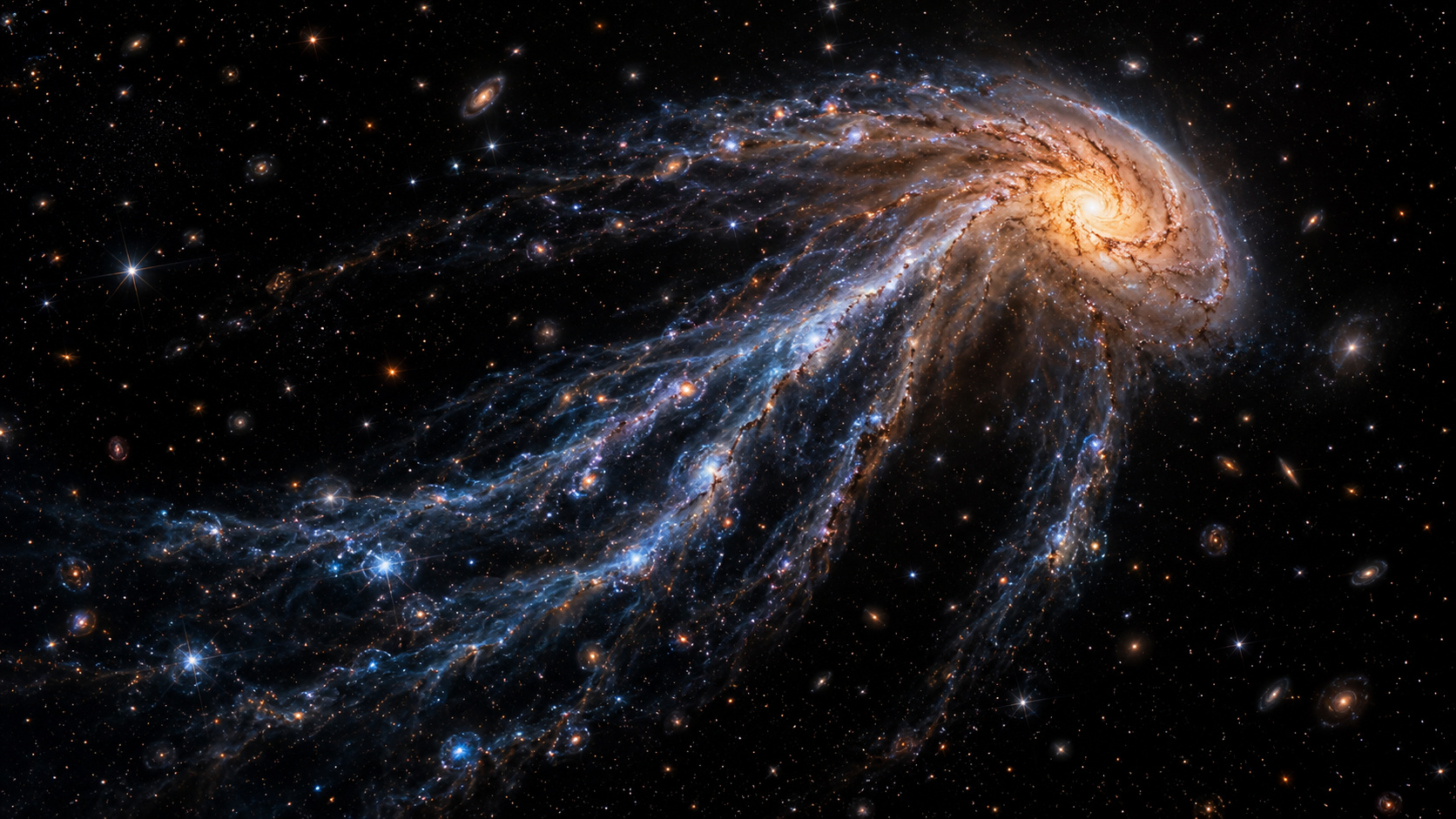
Distant Galaxy Shaped Like a Giant Jellyfish Sheds Gas, Forming New Stars as It Moves Through Hot Cosmic Gas

-
Nearly 40% of Treated Water in Brazil is Lost Before Reaching Homes; Companies Use Satellites, AI, Helium, and Innovative Tech to Improve Access in Remote Areas

-
Steel Sphere Cylinder Achieves 14% Damping in Tests, Functions Without Sensors or Electricity, and Can Reduce Vibrations in Skyscrapers, Bridges, and Sensitive Equipment with US Patent Registered
-
Artist’s 15-Meter Lighthouse in the Mojave Desert, 160 km from the Sea, Intrigues Visitors with 19 km Range After Years of Bureaucracy



Even when the predicted rate is high, the spectacle doesn’t depend solely on the number of meteors. Bright moon, clouds, light pollution, and wrong timing can drastically reduce what appears in the sky, so the best observations usually occur in dark places and after midnight.
Perseids arrive with 0% Moon and could be one of the great moments of 2026
The Perseids will be active from July 17 to August 24, with a peak expected on the night of August 12 to 13, 2026. This meteor shower is one of the most popular of the year, especially in the northern hemisphere, as it occurs on warmer nights and produces fast and bright meteors.
In 2026, the Moon will be 0% full on the peak night, a condition considered excellent for observation. This means the sky tends to be darker, favoring the visualization of trails. For those who wish to see a meteor shower with a good chance of visual impact, the Perseids should be at the top of the list.
Geminids promise up to 150 meteors per hour in December
The Geminids are pointed out as one of the most intense showers of 2026, with a peak on the night of December 13 to 14. The estimated rate can reach up to 150 meteors per hour under ideal conditions, making the event one of the most anticipated on the astronomical calendar.
This meteor shower also has an important advantage: it usually presents good activity before midnight, when the constellation of Gemini is already well-positioned. The Geminid meteors tend to be bright and colorful, although they generally do not leave persistent trails.
Taurids draw attention with fireballs in the sky

The Southern Taurids will peak on the night of November 4 to 5, 2026, with the Moon 18% full. Meanwhile, the Northern Taurids will peak on the night of November 11 to 12, with the Moon 7% full. Although the hourly rate is low, the differential lies in the possibility of fireballs.
Fireballs are brighter meteors, capable of drawing attention even when the total number of trails is not high. Therefore, the Taurids may surprise more by the visual intensity of isolated events than by the constant frequency of meteors in the sky.
July will have two showers in the same period, but full moon interferes
The night of July 30 to 31, 2026, features two events: Southern Delta Aquariids and Alpha Capricornids. The first can have a rate of up to 25 meteors per hour, while the second is usually weaker, rarely exceeding 5 meteors per hour.
The problem is that the Moon will be 98% full during this period, creating strong light interference. This is likely to hinder the visibility of weaker meteors. Nevertheless, the Alpha Capricornids deserve attention for producing bright fireballs, which can appear even in less favorable conditions.
Orionids and Leonids will have potential, but intermediate conditions
The Orionids will peak on the night of October 21 to 22, 2026, with the Moon 80% full. This meteor shower usually has medium intensity, with the possibility of 10 to 20 meteors per hour in normal years, but the lunar brightness is expected to make observation difficult in 2026.
The Leonids, on the other hand, peak on the night of November 16 to 17, with the Moon 45% full. They are famous for historic meteor storms, but there is no indication of a major outburst in 2026. Even so, they remain relevant for their speed and history of remarkable displays.
End of the year concentrates strong events and also some frustrations
After the Geminids, the Ursids will peak on the night of December 21 to 22, 2026. This meteor shower is more discreet, with a common expectation of 5 to 10 meteors per hour, but can occasionally register outbursts in some years.
In 2026, however, the Moon will be 94% full during the Ursids’ peak, which is expected to significantly hinder observation. The contrast shows why it’s not enough to just look at the predicted rate: a modest meteor shower with a dark sky can be better than a strong one under intense Moonlight.
Observing after midnight increases the chances of seeing more trails
Most meteor showers tend to be better after midnight, when the apparent point of origin of the meteors, called the radiant, is better positioned in the sky. This detail changes the experience for those who try to observe too early and see few trails.
Another important factor is to avoid light pollution. Rural areas, dark beaches, areas away from urban centers, and points with an open horizon tend to offer better conditions. The darker the sky, the greater the chance of seeing faint meteors that would disappear under artificial light.
2026 Meteor Shower Will Have Unmissable Nights, But Requires Planning
The 2026 calendar shows that not all showers will be equally favorable. Perseids and Geminids stand out due to the combination of strong activity and good lunar conditions, while Taurids are a bet for those who want to see fireballs.
Events like Delta Aquarids, Alpha Capricornids and Ursids may suffer from the full or nearly full Moon. Therefore, those planning to watch a meteor shower in 2026 should consider three main points: peak date, Moon phase, and the possibility of finding a truly dark sky.
Now the question is: do you prefer to wait for the Geminids, with the chance of a large volume of meteors, or do you find it more exciting to look for the Taurids, even with lower frequency, for the possibility of unexpected fireballs? Leave your opinion in the comments.


