Portuguese
  Spanish


In more remote areas, especially on the east coast, ships and aircraft depend on restricted weather windows to operate. Therefore, there are places where human presence is minimal and continuous infrastructure is almost non-existent.

Fjords, glaciers, and mountains create an almost untouched landscape
If residents are few, nature abounds. Sermersooq is home to gigantic fjords, extensive glaciers, and practically untouched mountains, forming one of the planet’s most impressive landscapes.
In many places, human presence almost disappears. Nature remains dominant, with vast frozen and practically empty areas.
-
Cold War Secret Plane Lost Engine Mid-Flight, Forcing Six to Parachute in Darkness; Wreckage Remains in Death Valley Mountains 73 Years Later

-
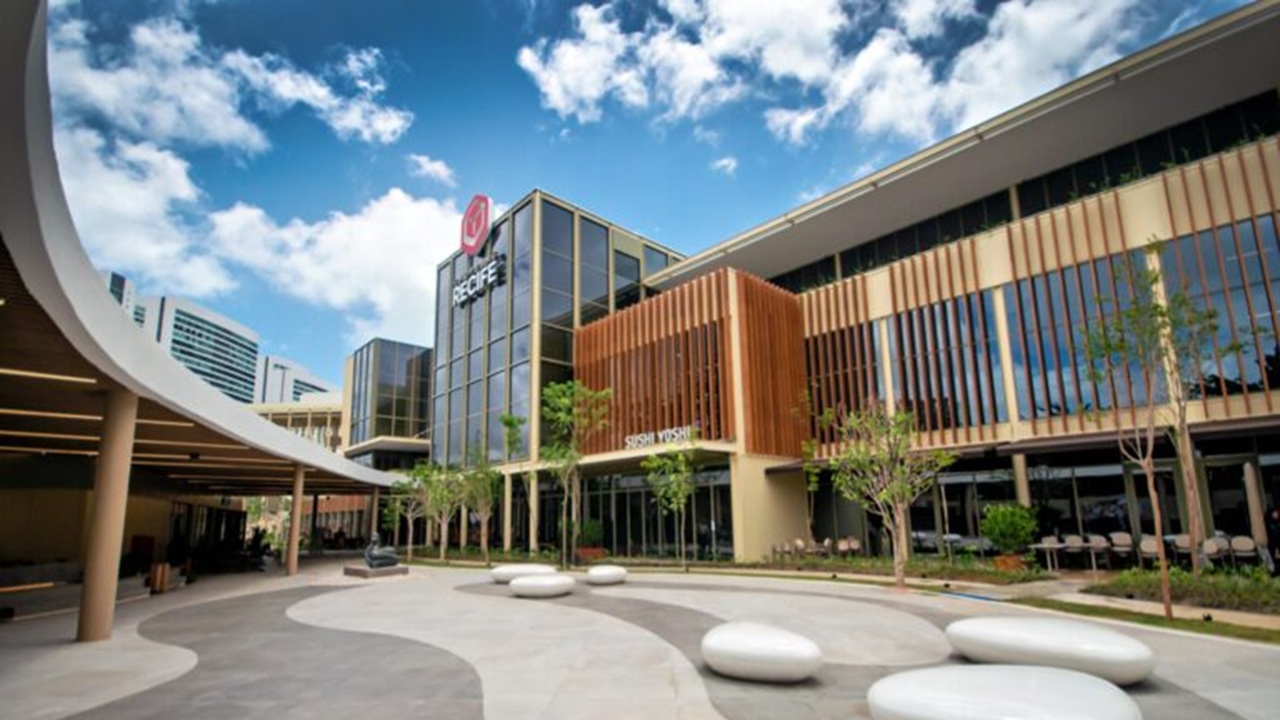
Opened in 1980, Shopping Recife was Pernambuco’s first mall and helped transform Boa Viagem into a bustling and sought-after district in southern Recife.
-
Tired of Monthly Water Supply, South African Villagers in Limpopo Connect Mountain Spring to Taps, Bringing Water to 5,000 People with $700 Initiative

-
Rare Case of Neurocysticercosis in Spain: 60-Year-Old Man’s Suspected Brain Cancer Turns Out to Be Tapeworm Cysts, Avoiding Invasive Cancer Treatments




The municipality that looks like a city but functions as an immense natural territory
The case of Sermersooq shows how the concept of a city can be misleading. Although it is officially a municipality and among the largest in the world by area, it functions more like a vast natural territory with small inhabited nuclei.
It is precisely this contrast that makes Sermersooq so fascinating: a gigantic, frozen, isolated, and almost empty place, where nature occupies the space that, in other cities, would be taken by avenues, buildings, and crowds.
After all, how many places in the world manage to be so large, so empty, and, at the same time, so impressive?
Municipality created on January 1, 2009, brings together about 531 thousand km², low human occupation, permanent ice, extreme isolation, and some of the planet’s most impressive natural landscapes
Sermersooq completely defies the traditional idea of a city. While metropolises like São Paulo and Tokyo are marked by high population density, this municipality in Greenland takes the opposite path: it has a gigantic territory but houses few residents.
Data from the municipality of Sermersooq, Statistics Greenland, and Trap Greenland indicate that the region covers approximately 531 thousand km². This area surpasses the size of many countries and places the municipality among the largest on the planet in terms of territorial extent. Even so, the population is just over 20 thousand people, creating an extremely low demographic density.
An immense territory where ice limits human occupation
Geography helps explain this contrast. Located in Greenland, Sermersooq has a large part of its territory covered by permanent ice, which drastically reduces the areas available for human occupation.
In practice, enormous regions remain completely uninhabited. The few existing towns are small, isolated, and separated by immense distances. The municipal capital, Nuuk, concentrates a large part of the population, while the rest of the territory remains practically empty.

Extreme isolation transforms daily life into a constant challenge
Natural conditions make daily life more difficult. Sermersooq faces extreme temperatures, long periods of sea ice, and logistical barriers that complicate travel and supply.
In more remote areas, especially on the east coast, ships and aircraft depend on restricted weather windows to operate. Therefore, there are places where human presence is minimal and continuous infrastructure is almost non-existent.
Fjords, glaciers, and mountains create an almost untouched landscape
If residents are few, nature abounds. Sermersooq is home to gigantic fjords, extensive glaciers, and practically untouched mountains, forming one of the planet’s most impressive landscapes.
In many places, human presence almost disappears. Nature remains dominant, with vast frozen and practically empty areas.
The municipality that looks like a city but functions as an immense natural territory
The case of Sermersooq shows how the concept of a city can be misleading. Although it is officially a municipality and among the largest in the world by area, it functions more like a vast natural territory with small inhabited nuclei.
It is precisely this contrast that makes Sermersooq so fascinating: a gigantic, frozen, isolated, and almost empty place, where nature occupies the space that, in other cities, would be taken by avenues, buildings, and crowds.
After all, how many places in the world manage to be so large, so empty, and, at the same time, so impressive?