






 Portuguese
  Spanish


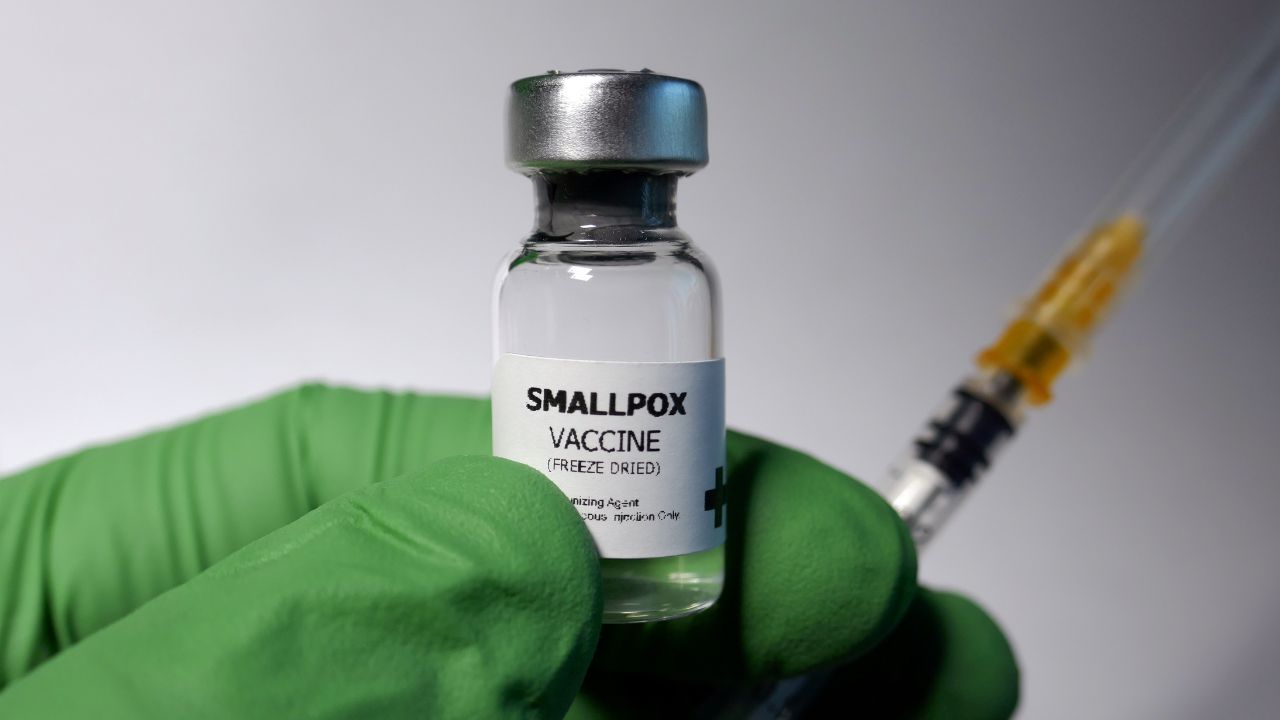

Discover the journey of the world’s first vaccine, created by Edward Jenner. Understand the bold experiment and the biological luck that led to the eradication of smallpox.
Four decades ago, humanity celebrated an unprecedented achievement: the official eradication of smallpox, the only human disease eliminated from nature to date. According to virologist Clarissa Damaso, advisor to the World Health Organization (WHO), “This is, to this day, the only human disease eradicated. Achieving this feat is a great pride.”
According to information from g1, this global success was only possible thanks to the world’s first vaccine, developed in 1796 by the English doctor Edward Jenner.
Smallpox was not just a common ailment; it was a lethal enemy with a mortality rate of 30%. For comparison, Damaso highlights that “the new coronavirus has a global lethality rate of 6.5%,” which makes it understandable why smallpox “was considered the ‘horror’ of the time!”
-
China Develops Custom 140-Ton Electric Mining Truck with 770 kWh Swappable Battery, Deploys 290 Units in Xinjiang’s Largest Zinc Mine

-
Meta to Launch Arena, a New Prediction App Targeting 3.56 Billion Users, Competing with Polymarket and Kalshi

-
Scientist Challenges Famous Human Evolution Theory, Argues Homo Sapiens Evolved Gradually Over Thousands of Years
-
How to Prevent Brown Recluse Spider Bites: Common Hiding Spots and Free Tips to Reduce Risks




The final victory against this virus occurred in a month of May, the same month in which, centuries earlier, science took its first steps towards immunization.
The biological “luck” and Jenner’s clinical reasoning
The effectiveness of the world’s first vaccine depended on a rare combination of intelligence and chance.
Jenner, acting 100 years before the official discovery of viruses, used the cowpox virus to protect humans.


Virologist Clarissa Damaso explains that he had great luck: “The virus used by Jenner is not the smallpox virus, it is one of the same genus. And this family has the peculiarity that viruses of the same genus protect against the disease by others. He didn’t know this at the time and got lucky, because it’s not common. For example, if you have dengue, you are not protected from yellow fever or Zika, even though they are all of the same genus.”
In addition to this biological coincidence, the doctor demonstrated an impressive technical rigor for his time:
- Response time: He waited six weeks after the first dose to expose the patient to the lethal virus;
- Validation: Conducted 21 different tests in just two years to prove his thesis;
- Scientific naming: In 1800, the process was called “vaccination,” referring to the Latin term for cow.
Damaso emphasizes that the methodology was precise: “(…) He was fantastic in reasoning and drawing conclusions.” If Jenner had rushed the process, the experiment would have failed and the history of medicine would be different.
The experiment that challenged ethics and prejudice
The origin of the world’s first vaccine is linked to a test that would be prohibited today: Jenner took secretion from a lesion of a cow milkmaid and inoculated it into James Phipps, an 8-year-old child. The doctor had observed that women who handled cattle were immune to human smallpox.

“It’s a perfect scientific reasoning and an experiment we still conduct today called a ‘challenge’. In it, you must prove that a virus can be vaccinated. Of course, nowadays, this is not done with humans,” clarifies the WHO specialist.
Despite its effectiveness, Jenner was the target of “Fake News” and satires. Newspapers of the time published cartoons of people growing cow heads after the application.
Ridiculed by part of the medical community, he even isolated himself in a hut to continue vaccinating the local population for free, proving that the social benefit was greater than the fear of the unknown.
From isolation to the global union of the WHO
Although the world’s first vaccine was quickly distributed — reaching the entire planet in just 13 years after its discovery — smallpox persisted for a long time due to disorganized campaigns.
The scenario only changed when the WHO initiated a coordinated offensive that, in just ten years, wiped the virus off the map.
Today, Edward Jenner’s legacy is the foundation of all immunology. He had no knowledge of virology or modern scientific postulates, but his keen perception of cow lesions saved billions of lives.
Therefore, the journey of the world’s first vaccine is a testament to how science can transform “horror” into hope, provided there is courage to observe nature and persistence to face skepticism.

With information from g1




