






 Portuguese
  Spanish
  5 min of reading
  0 comments


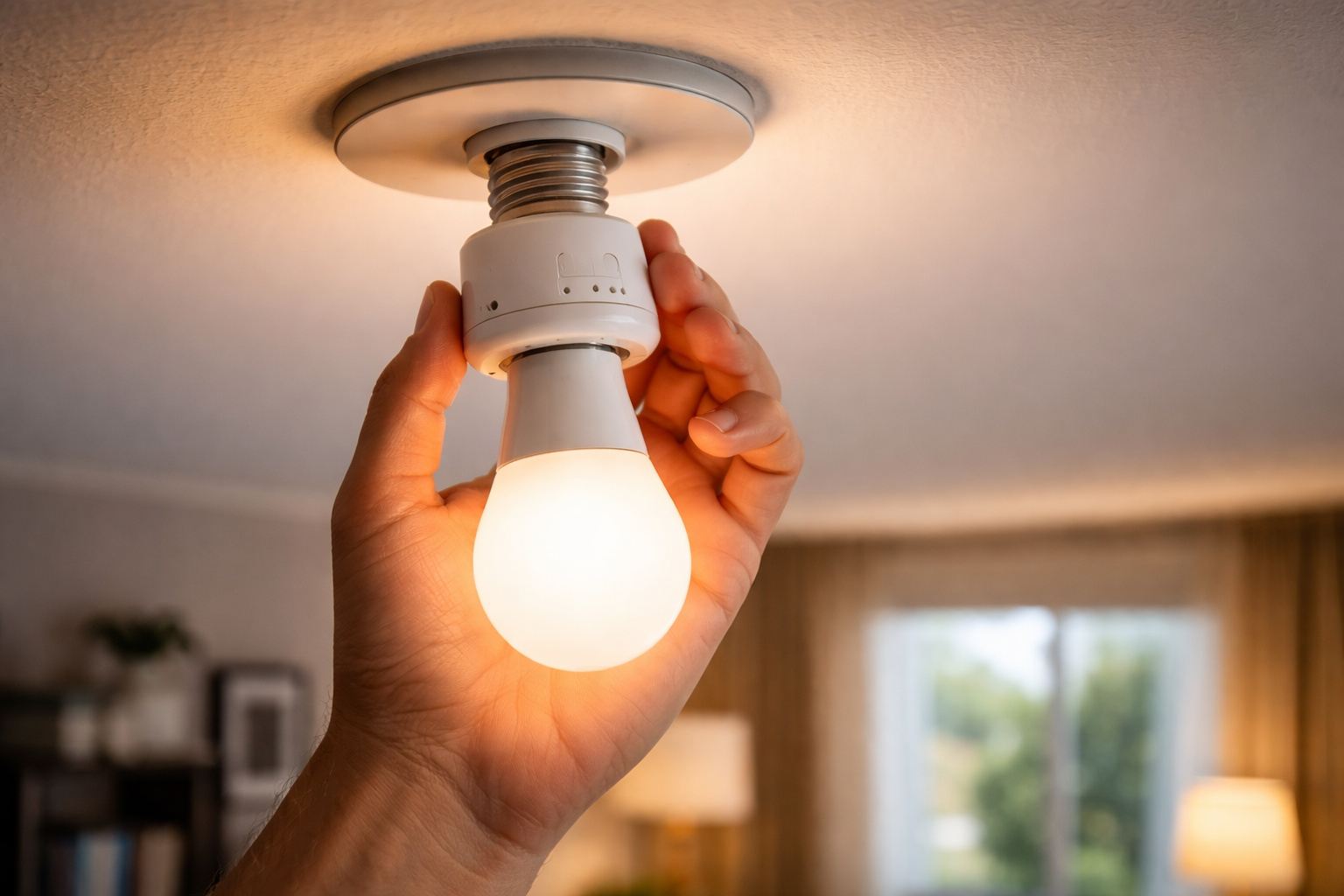
E27 accessory transforms regular bulbs into smart ones in Brazil, allowing control via mobile without renovation or replacement of electric installation.
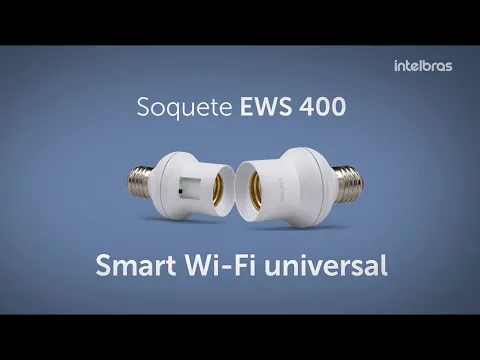
In 2026, home automation in Brazil began to gain traction through a less renovation-dependent path, avoiding wall breaking or complete replacement of electrical infrastructure. An example of this is the Smart Wi-Fi Socket from Positivo Casa Inteligente, an accessory compatible with the E27 standard that the brand itself introduced in content published on March 20, 2021, as a solution capable of transforming conventional bulbs into connected lighting points without structural intervention.
Already marketed in the Brazilian market by Positivo Casa Inteligente, the device is installed directly into the existing socket and, according to the manufacturer, does not require extra accessories or specialized labor, allowing control of the lighting via mobile and also through voice assistants like Alexa and Google Assistant. In practice, the proposal shows how home automation began to advance in the country through simpler, more accessible solutions compatible with the existing structure in most Brazilian homes.
The impact of this technology lies in the fact that automation no longer depends on construction, high costs, or technical knowledge and becomes accessible with a simple socket replacement.
-
Brazilian Company Launches Retro Smartphone with 48 MP Camera, T9 Keyboard, and Privacy Features for Social Media-Free Use

-
Self-Taught Chinese Farmer Builds 5-Ton Submarine from Scrap, Launches It in Anhui River
-
Invisible Induction Technology Enables Wireless Power for Blenders, Coffee Makers, and Air Fryers, Reducing Countertop Cables

-
Smart Outdoor Lighting Transforms Gardens into Living Spaces with Weather Resistance and App-Controlled Scenes





Installation without renovation eliminates one of the biggest barriers to home automation
Historically, home automation has always faced a central obstacle: the need to adapt the electrical infrastructure. More complete systems require smart switches, control centers, and, in some cases, alterations to the home’s network, which increases cost, time, and complexity.


With the smart socket, this barrier is practically eliminated. The device acts as an intermediary between the socket and the bulb, creating a smart interface without altering the original installation. This means that any light point with the E27 standard can be converted into a digitally controlled point in a matter of seconds.
This simplicity completely transforms access to automation, allowing already built homes to adopt technology without any type of construction.
App control changes the relationship with home lighting
Once installed, the device connects to the home’s Wi-Fi network and can be controlled via an app. This allows users to turn on, off, and schedule lighting remotely, even when they are away from home.
This functionality changes the traditional logic of using lighting, which no longer depends exclusively on physical switches. Control becomes digital, centralized, and accessible in real-time.
Lighting ceases to be a passive element and starts to respond directly to commands and routines configured by the user.
Compatibility with virtual assistants enhances the level of automation
In addition to app control, many of these devices are also compatible with virtual assistants, allowing voice commands. This integrates lighting into a broader connected home ecosystem, where different devices can operate in a coordinated manner.
This makes it possible to create automated scenarios, such as turning on lights at dusk, turning off all points when leaving home, or adjusting lighting according to specific activities.
Light ceases to be just an electrical function and becomes part of an automated environmental system.
Low-cost solution accelerates adoption in the Brazilian market
Another factor driving the expansion of this technology is the relatively low cost compared to traditional automation systems. Since there is no need to replace switches, break walls, or hire specialized installation, the initial investment is reduced.
This makes the technology more accessible for different types of residences, including rental properties, where structural interventions are often not allowed.
Home automation ceases to be a restricted resource and begins to reach a wider audience within Brazil.
Practical application goes beyond convenience and enters the field of security
In addition to comfort, the use of these devices also has direct applications in home security. The ability to activate lights remotely or schedule operation at specific times allows for simulating presence in the property, reducing risks during periods of absence.
It is also possible to integrate lighting with other smart devices, such as cameras and sensors, creating automatic responses to events, such as detected movement.
Lighting begins to act as an active element in the protection of the property, not just as a visibility resource.
Technical limitations still exist and need to be considered
Despite the advantages, technology also has limitations. Its operation depends on a stable Wi-Fi connection, and compatibility may vary depending on the type of bulb used, especially in models that require dimming control.

Additionally, the system does not completely replace more robust automation solutions in scenarios that require advanced integration or centralized control of multiple electrical circuits.
This indicates that the smart socket does not eliminate other technologies but occupies a specific space within the evolution of home automation.
Growth of the connected home in Brazil supports the advancement of this type of solution
The advancement of this type of device is directly linked to the growth of the so-called connected home in Brazil. With greater access to the internet, the popularization of smartphones, and the reduction in the cost of smart devices, the home environment is undergoing a gradual transformation.
National and international companies have expanded their product portfolios aimed at this market, creating an increasingly integrated ecosystem.
The trend is that simple and easy-to-install solutions, like the smart socket, will play a central role in the expansion of home automation in the country.
Technology points to a model of automation without structural barriers
The main differentiator of this technology lies in its ability to eliminate historical barriers. By allowing automation without construction, without electrical adaptation, and without technical knowledge, it redefines the entry point for smart homes.
This opens up space for a faster, decentralized, and accessible adoption model, where technology can be gradually incorporated according to the user’s needs and interests.
Automation ceases to be a complex project and becomes a natural evolution of everyday home use.


Be the first to react!