Portuguese
  Spanish


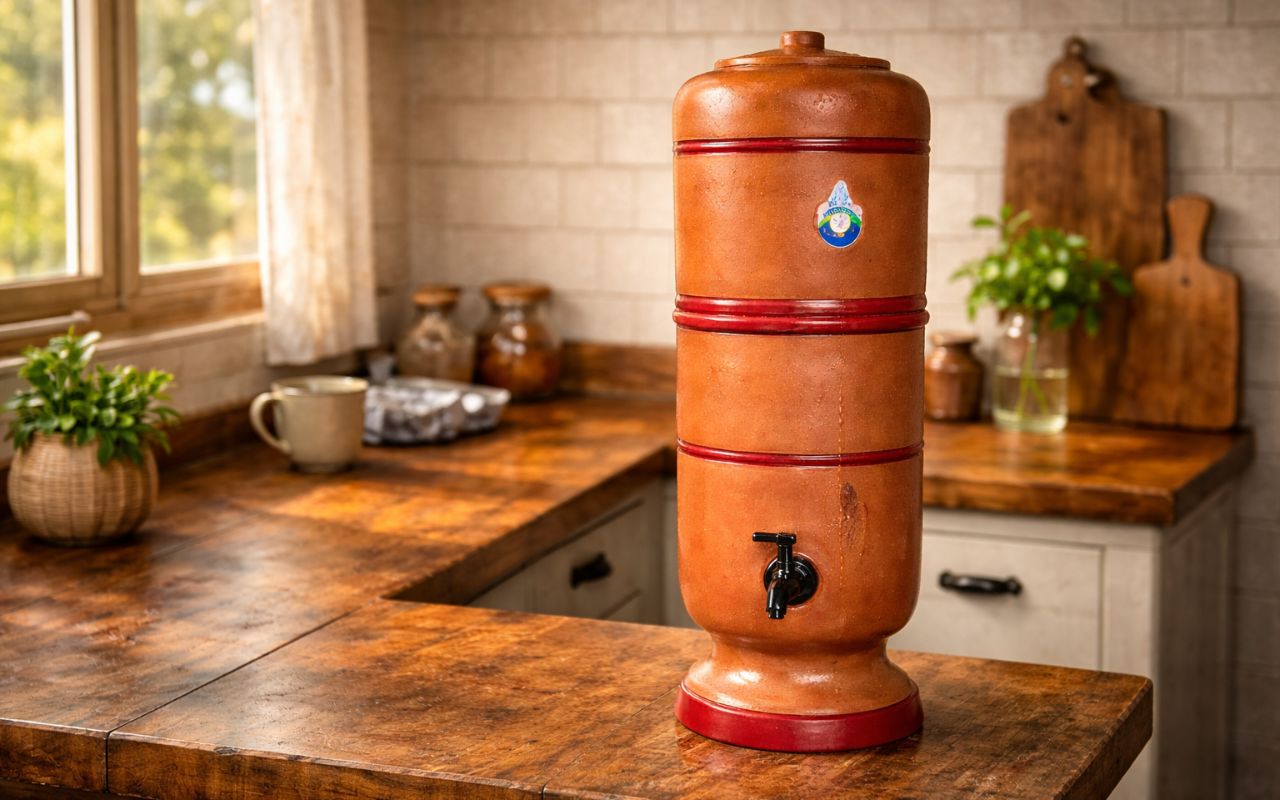

Present for over a century, the clay filter ensures fresh water without energy and remains a symbol of Brazilian homes.
Present for decades in Brazilian homes, the clay filter has established itself as one of the simplest and most efficient ways to store and purify water. Used by families in different regions of the country, it ensures fresh water without relying on electricity, thanks to its porous ceramic structure.
Its popularization occurred especially between the late 19th century and the early 20th century, in a context of limited access to treated water.
Since then, the clay filter has remained a functional and cultural item, associated with everyday life, practicality, and traditional Brazilian habits.
-
Black Granite Sarcophagus Found in Alexandria Reveals Three Skeletons, Strange Liquid, and an Ongoing Archaeological Mystery in Egypt

-
Childhood Psychology: Experts Highlight How Playing Outdoors Until Dusk Boosted Autonomy, Decision-Making, and Resilience in Previous Generations, Influencing Adult Behavior Today
-
Former Truck Driver from Brazil Builds Logistics Company Aiming for $70 Million Revenue with 11 Branches, 700 Monthly Clients, and $10 Million Fleet Investment

-
World’s First Plasma Dress Turns Fashion Show into Scientific Spectacle with Controlled Electric Discharges and Ionized Gases in Iris Van Herpen’s Groundbreaking Tech-Fashion Creation





From tradition to forgetfulness: the trajectory of the clay filter
For much of the 20th century, the clay filter was an essential item in Brazilian households.
Its presence was common in kitchens from north to south, ensuring fresh and better quality water for families.
However, from the second half of the last century, this scenario began to change.
Technological advancements brought new alternatives, such as electric purifiers and bottled water.
As a result, the clay filter lost ground and began to be associated with old habits, taking a back seat in homes.
Although considered a national symbol, the clay filter has roots in ancient practices of various civilizations.
People from the Middle East, Africa, and Asia already used ceramic containers to improve water quality.
These techniques arrived in Brazil during the colonial period and were adapted to local conditions. The hot climate and the need for accessible solutions favored its consolidation.

Thus, the clay filter emerged as a result of the combination of ancestral knowledge and Brazilian artisanal skills.
Popularization of the clay filter in Brazilian homes
The clay filter became widely used in Brazil between the late 19th century and the early 20th century.
During this period, the country faced difficulties in accessing treated water, especially in expanding urban areas.
In this scenario, it stood out as an efficient and low-cost solution. Quickly, it became part of the routine of millions of Brazilians.
Over time, its presence became practically universal, crossing different social classes and regions of the country.
Natural and smart solution
The functioning of the clay filter is based on simple but highly effective principles.
Its porous ceramic structure allows for the retention of impurities and contributes to the improvement of water quality.
Additionally, the material helps keep the water fresh through a natural evaporation process. This eliminates the need for electricity and complex systems.
Therefore, the clay filter is often associated with sustainable solutions and low environmental impact.
Over time, the clay filter has transcended its practical function and has come to represent a cultural symbol. It is present in the affectionate memory of many Brazilian families.
Its image evokes childhood, family togetherness, and the simplicity of everyday life. This emotional bond contributes to its permanence across generations.
Today, the clay filter is also valued as a design piece, integrating contemporary environments with a touch of tradition.

A classic that adapts to the present
The clay filter proves that simple solutions can transcend time and remain relevant. Even in the face of technological advancements, it maintains its utility and significance.
Thus, the clay filter remains firmly as one of the most emblematic objects in Brazilian homes, uniquely connecting the past and present.
With information from CasaCor