Portuguese
  Spanish


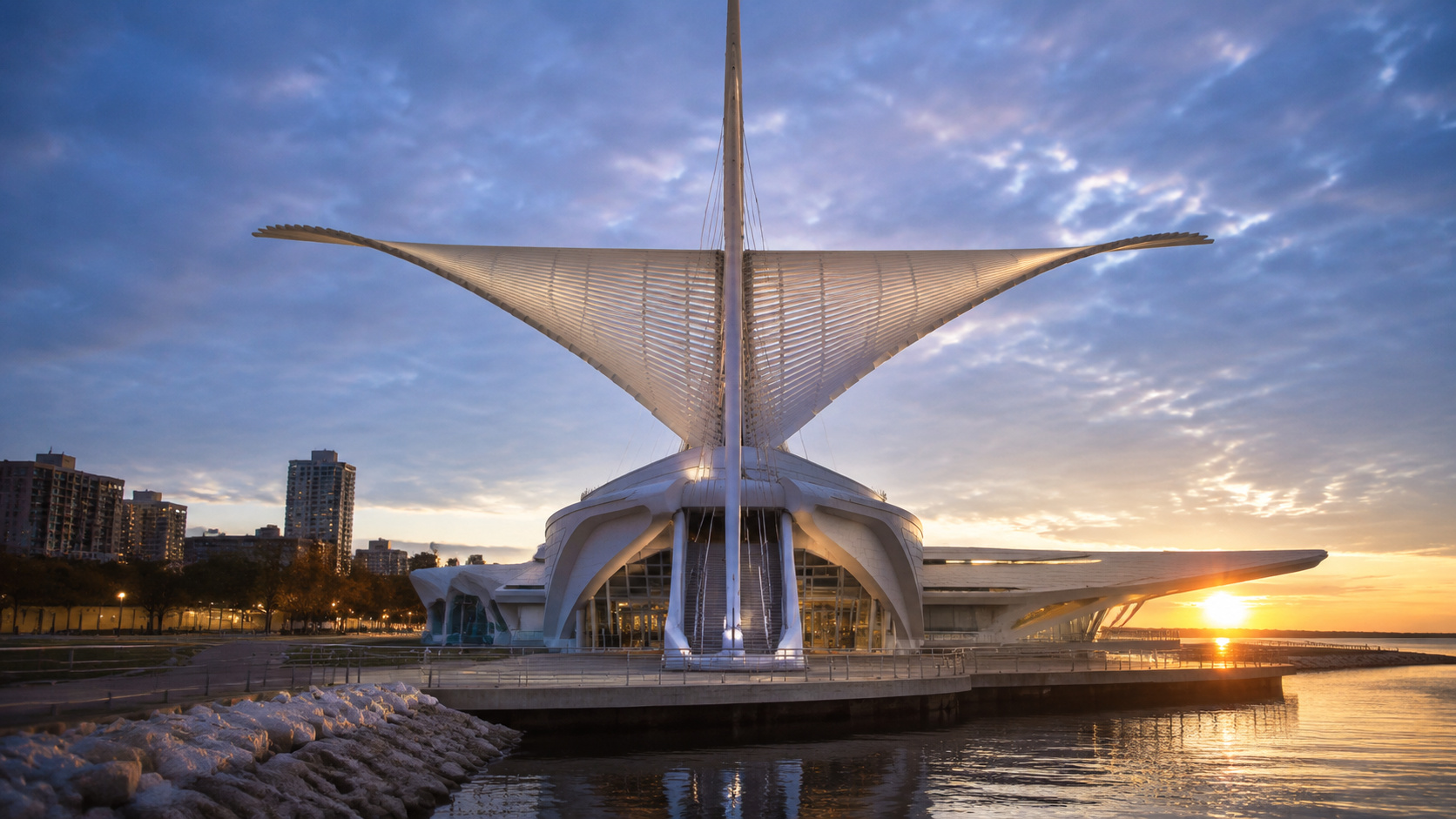

The Milwaukee Art Museum transforms its architecture into a daily spectacle, with 66-meter movable wings that uniquely regulate light and ventilation
The Milwaukee Art Museum, an art museum located on the shores of Lake Michigan, presents a daily show of movement and light with its 66-meter movable wings, known as Burke Brise Soleil. The structure opens and closes twice daily, creating the effect of a giant bird over the glass hall, while protecting visitors from excessive sun and heat.
Besides the visual impact, the mechanism is practical and safe. Sensors detect strong winds and automatically close the wings when the speed reaches 37 kilometers per hour or more, ensuring protection for both the structure and visitors. The daily movement transforms the building into a work of art in motion, attracting tourists and architecture enthusiasts.
The information was released by Milwaukee Art Museum, an American art museum, detailing the operation of the Burke Brise Soleil and its interaction with the Windhover Hall, with a 27-meter high glass ceiling.
-
At 17, she hand-painted her first watercolor design for school uniforms; her brand grew without investors, sold 135,000 pieces, and aims for $3 million in revenue by 2026.

-
Shell Discovers Intact Early 19th-Century Wooden Shipwreck in the Gulf of Mexico at Over 1,300 Meters Deep
-
Brazilian Entrepreneur Turns Door-to-Door Jewelry Sales into a Family Business Empire with Over 70 Stores

-
$75 Million Bridge in Brazil Opens to Connect Cities, Create Jobs, and Cut Travel Time from 30 to 2 Minutes; Spanning 1.24 km, It’s Among the Country’s Largest and Ends Decades of Ferry Queues.




How the Burke Brise Soleil wings work
The Burke Brise Soleil is a movable structure designed to open and close automatically every day. Each wing has a 66-meter wingspan, providing the sensation of a giant bird about to take flight over Lake Michigan.


The opening occurs in the morning and the closing at the end of the day, allowing the Windhover Hall to receive controlled natural light, protecting artworks and creating thermal comfort for visitors.
Why sensors close the structure when it’s windy
Safety is essential for the operation of the Burke Brise Soleil. Ultrasonic sensors monitor wind speed and automatically trigger the closing of the wings when winds reach 37 kilometers per hour, preventing damage and keeping the experience safe for everyone.
The mechanism combines technology and design, transforming movement into a functional solution for the lake’s natural conditions without compromising the daily visual spectacle.
The role of the 27-meter glass hall
The Windhover Hall, with its 27-meter glass ceiling, provides ample natural lighting. The movable wings regulate light entry, keeping the visit pleasant even on sunny days and preventing the wear of exposed works.
The space becomes the central point of the architectural spectacle, where visitors can perceive the fusion between art, engineering, and urban design.
Calatrava and the architecture that moves
Santiago Calatrava is known for projects that unite aesthetics and engineering. In the Quadracci Pavilion, his 66-meter movable wings function as a dynamic component, offering both functionality and beauty.
The movement of the wings, the control of light, and the interaction with the wind transform the museum into an interactive experience, standing out in global architecture as an example of innovation and art in motion.

Why few buildings use mechanisms of this scale
Movable structures of this size are rare due to technical complexity and maintenance costs. Combining advanced engineering and artistic design requires precise sensors and durable materials to withstand repeated movements.
Few buildings can integrate aesthetics, safety, and functionality so efficiently. The Milwaukee Art Museum demonstrates how architecture can be both a visual spectacle and a practical solution.
The control of natural light, interaction with the wind, and daily transformation of the internal space make the museum a reference in functional and artistic architecture.
Have you ever imagined seeing an entire building move like a giant bird? Share your opinion and tell us if you would like to visit this architectural spectacle.