





 Portuguese
  English
  Spanish
  4 min of reading
  0 comments


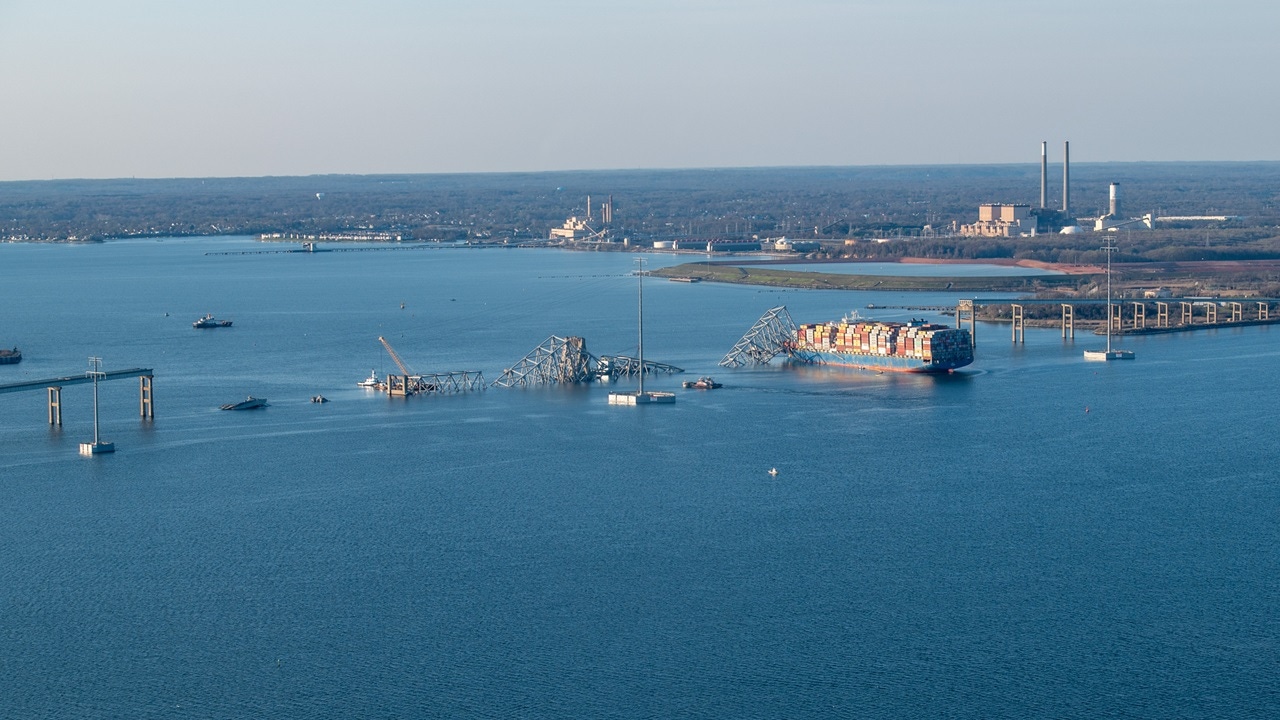
The Maryland Transportation Authority announced on May 20 four contracts totaling up to $4.8 billion to rebuild the Francis Scott Key Bridge in Baltimore, which collapsed in March 2024 after being hit by an unpowered cargo ship. The new structure will be cable-stayed, with a 508-meter free span designed specifically to withstand the impact of a giant ship.
The decision changes the project’s strategy.
Instead of a single giant contract, the MDTA divided the reconstruction into four separate packages.
The largest of these is the design-build of the main span, estimated between $3.5 and $4 billion.
-
Family builds natural pool without chlorine and without mud; the water is so crystal clear that fish and shrimp clean the bottom by themselves and guests get a free “fish manicure.”

-
Without cement, glue, or a single screw, interlocking wooden blocks promise to erect the skeleton of a house in about seven days, with one worker assembling one square meter of wall in less than a minute.
-
Suspended house made with reused containers, wood, and steel, does not have a television or Wi-Fi system and was designed to operate without air conditioning; the residence was built among trees in the interior of São Paulo and relies on natural ventilation and a green roof.

-
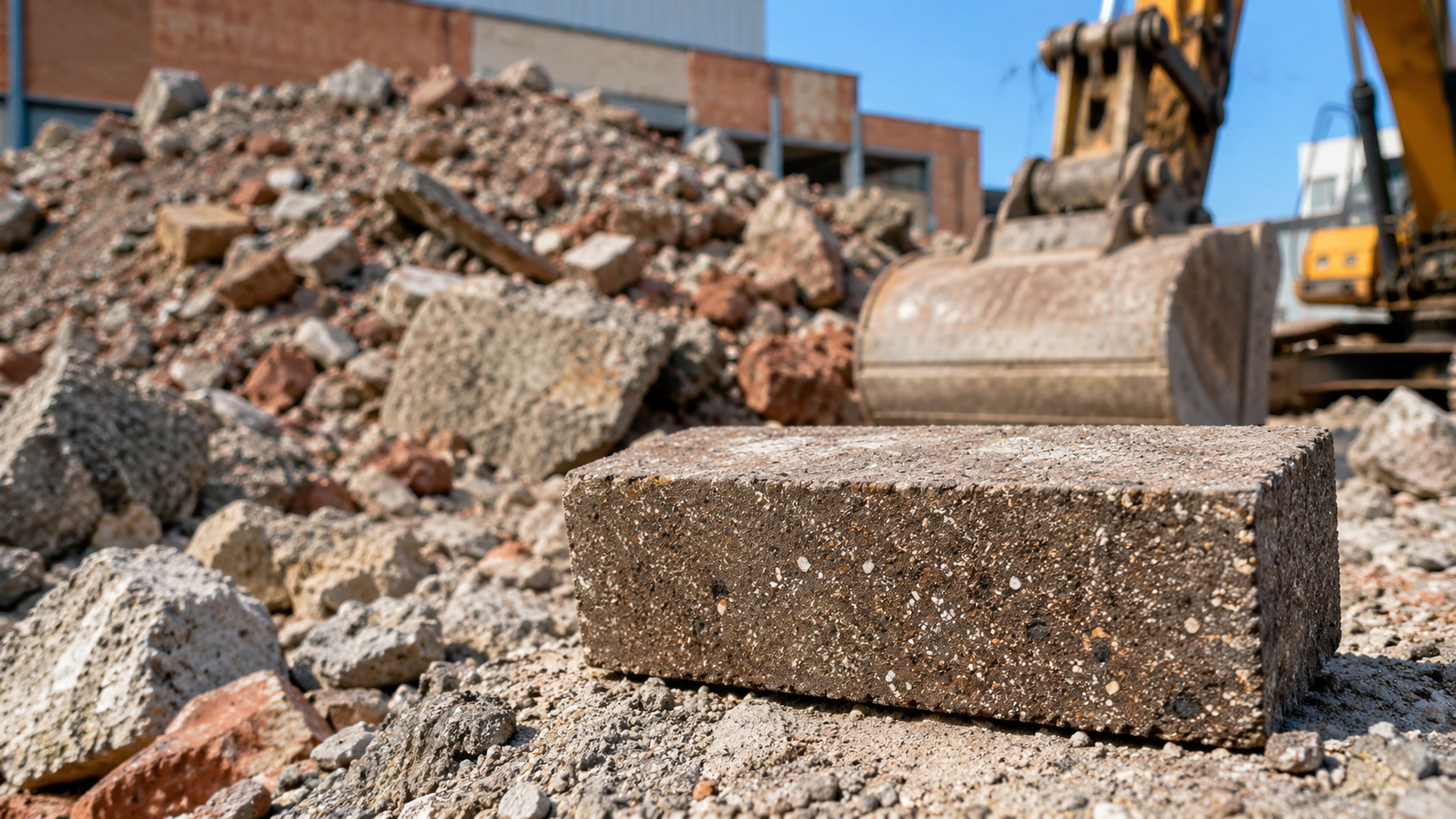
Scotland creates a brick made with over 95% recycled debris, eliminates kiln firing, and attempts to reinvent a piece used in construction for almost a thousand years.



The other three cover the demolition of what remains of the old structure, the southern access bridge, and the northern access bridge.
According to the announcement released by the MDTA, splitting the project into four increases competition among builders and speeds up the contracts.
Another advantage pointed out is creating opportunities for local labor to participate in smaller packages.
The project is already 70% designed.
The request for qualifications for the main span begins this summer in the northern hemisphere.
The construction itself is expected to start in the summer of 2027, with full delivery scheduled for the beginning of the next decade.
It’s an aggressive schedule for a project of this scale, especially with four fronts running in parallel.
Why the new Francis Scott Key Bridge will be cable-stayed
The old structure was a steel truss bridge, inaugurated in 1977.
It had relatively close piers to the navigation channel, without much protection against collision.
This was exactly the weak point exploited by the 2024 tragedy.
The cargo ship Dali, an almost 300-meter container ship, lost power and propulsion minutes before passing under the bridge.
Without control, the ship drifted and hit one of the main piers.
The entire truss collapsed in a few seconds, and six workers performing maintenance on the deck died.

The new bridge adopts a different engineering principle.
Cable-stayed bridges support the deck with cables attached to tall towers, allowing much larger spans between supports.
The larger the free span, the further the piers are from the ships’ route.
The 508-meter span of the new Key was calculated so that no cargo ship needs to pass near a critical foundation.
Additionally, the piers will receive collision protection structures, called dolphins, that absorb the impact before it reaches the bridge.
The minimum height over the channel rises to 70 meters, enough for the next generation of container ships.
The concept is not new, but it is rarely applied in emergency replacement.
Generally, a cable-stayed bridge of this size takes almost a decade from design to inauguration.
Maryland is trying to compress this timeline precisely because the port of Baltimore cannot wait.
A problem that goes far beyond Baltimore
The case of the Key Bridge exposed a global fragility.
Most large bridges over navigation routes were designed decades ago when ships were much smaller.
Modern container ships can carry more than twenty thousand containers, compared to a few thousand in the 1970s.
This mismatch between old infrastructure and giant ships is a ticking time bomb in several ports around the world.
Not by chance, we have already shown the case of a 95-year-old bridge over the Columbia River that could collapse because the ships have doubled in size.
The pattern repeats in bridges worldwide, including several on the Brazilian coast.
As maritime trade grows, the cost of modernizing these crossings only increases.

The United States decided to treat the reconstruction as a national priority.
The federal government has already secured funds to cover most of the cost of the new bridge.
The goal is to fully restore access to the port of Baltimore, one of the busiest on the U.S. east coast.
The port was blocked for weeks by debris after the accident, causing billions in losses to the logistics chain.
A military engineering operation was needed to cut and remove the tons of twisted steel that sank to the bottom.
Only after that did commercial navigation return to normal, still in 2024.
The lesson was clear for American authorities: a poorly protected bridge becomes a national economic bottleneck when it falls.
I confess I wonder how long it would take Brazil to rebuild a critical bridge of this scale.
Here, the Key Bridge goes from paper to construction site in just over three years after the collapse.
It’s a speed that, in our context of bids and impasses, seems almost fiction.
And you, do you know any Brazilian bridge that should have already been reinforced against today’s giant ships? Share your thoughts.




-

1 person reacted to this.