






 Portuguese
  Spanish


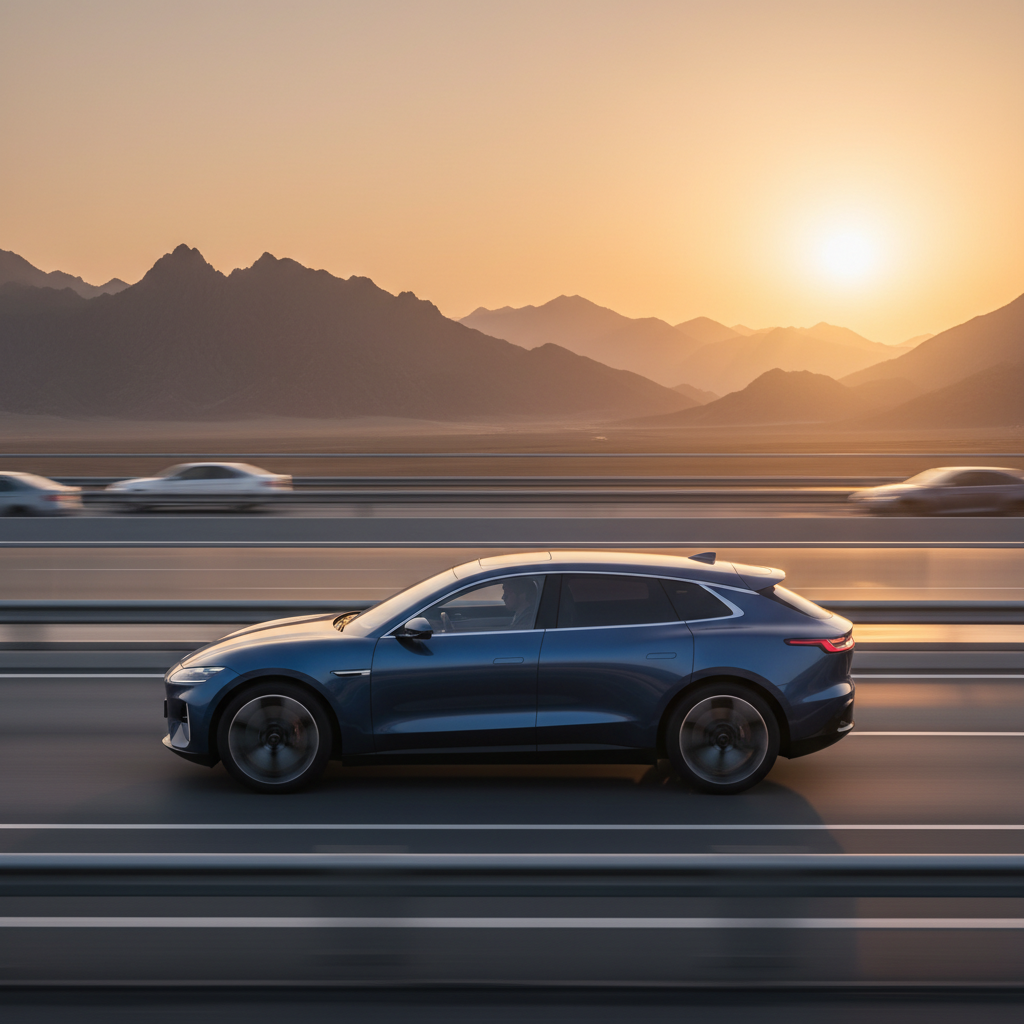

With a density of 350 Wh/kg, a range of 1,000 km, charging of 450 km in 5 minutes, and production scheduled for September 2026, Dongfeng has taken the step that Toyota, BMW, and Tesla are still promising
While the world’s largest automakers are still treating solid-state batteries as a laboratory project, a Chinese manufacturer has already set up the production line.
Dongfeng Motor announced that it will begin mass production of its solid-state battery with 350 Wh/kg energy density in September 2026.
This density means, in practice, a range of over 1,000 kilometers on a single charge.
-
Brazil’s Most Powerful Truck, Priced at $320,000, Delivers 770 HP and 3,700 Nm Torque, Surpassing Volvo’s Previous Record and Serving as a Base for a $600,000+ Motorhome

-
Man Revives 1962 Mercury Comet with Parts from a Damaged Nissan Leaf, Achieving Electric Conversion for Under $6,000

-
British Mechanics Convert Classic Land Rover Defender to Electric, Maintaining Original Look with 483 Horsepower and 75 kWh Battery

-
Chevrolet Onix Turbo AT 2020: Affordable Used Hatchback with Turbo Engine, Automatic Transmission, and Six Airbags


The announcement was made during the World Power Battery Conference 2025.

The numbers that make a difference
The Dongfeng battery uses a high-capacity ternary cathode, silicon-carbon anode, and solid polymer oxide electrolyte.
Weighing just over 500 kilograms, the package achieves an approximate capacity of 180 kWh.
This is enough to travel 1,000 km considering an average efficiency of 180 Wh/km.
Moreover, the “Mach Ultra-kV” platform operates with an architecture of 1,200 volts and an internally developed 1,700V silicon carbide power module.
The high-speed motor spins at 30,000 rpm, contributing to the real range.
450 km in 5 minutes — and the system is automatic
The platform supports charging of up to 2 megawatts from a single gun.
In practice, this means 450 km of range restored in just 5 minutes.

Additionally, the system includes automated charging and integrated contactless payment.
This way, the driver does not even need to leave the car to refuel.
Works at minus 30 degrees
One of the biggest problems with electric cars is the loss of range in the cold.
Conventional lithium batteries retain approximately 60% of capacity at -30°C.
The Dongfeng battery retains over 72% under the same conditions.
Moreover, the battery also passed thermal chamber testing at 170°C, well above the Chinese standard of 130°C.

Safety: alert 48 hours before a problem
The battery pack withstands impacts of 1,500 joules.
Additionally, a thermal monitoring system issues a degradation alert 48 hours in advance.
Thus, the risk of spontaneous combustion, which haunts lithium batteries, is drastically reduced.
From 2018 to today: 50 cars and 1.5 million km driven
Dongfeng began its research on solid-state batteries in 2018.
In 2019, it completed the first functional system.
In 2020, it integrated the technology into a real vehicle.
In 2022, it deployed the battery in the Dongfeng E70 sedan.
Since then, a fleet of 50 demonstration vehicles has accumulated over 1.5 million kilometers driven in 10 cities across six Chinese provinces.
The company already has a pilot production line of 0.2 GWh in operation.
Next generation: 500 Wh/kg with sulfide
Dongfeng has not stopped at 350 Wh/kg.
The company is already researching a next-generation battery based on sulfide, with a target density of 500 Wh/kg.
The fast-charging version of the current battery is scheduled for pilot installation in December 2027.
Important caveats
September 2026 is still a target date, not a guarantee.
There is still no confirmation of which models will receive the technology or if there will be international distribution.
Additionally, the range and charging data are based on ideal testing conditions, which may differ from real-world use.
Still, the fact that Dongfeng already has a demonstration fleet with 1.5 million km and an operational pilot line puts it ahead of competitors like Toyota, BMW, and Volkswagen, who are still in the prototype phase.


