






 5 min of reading
  0 comments


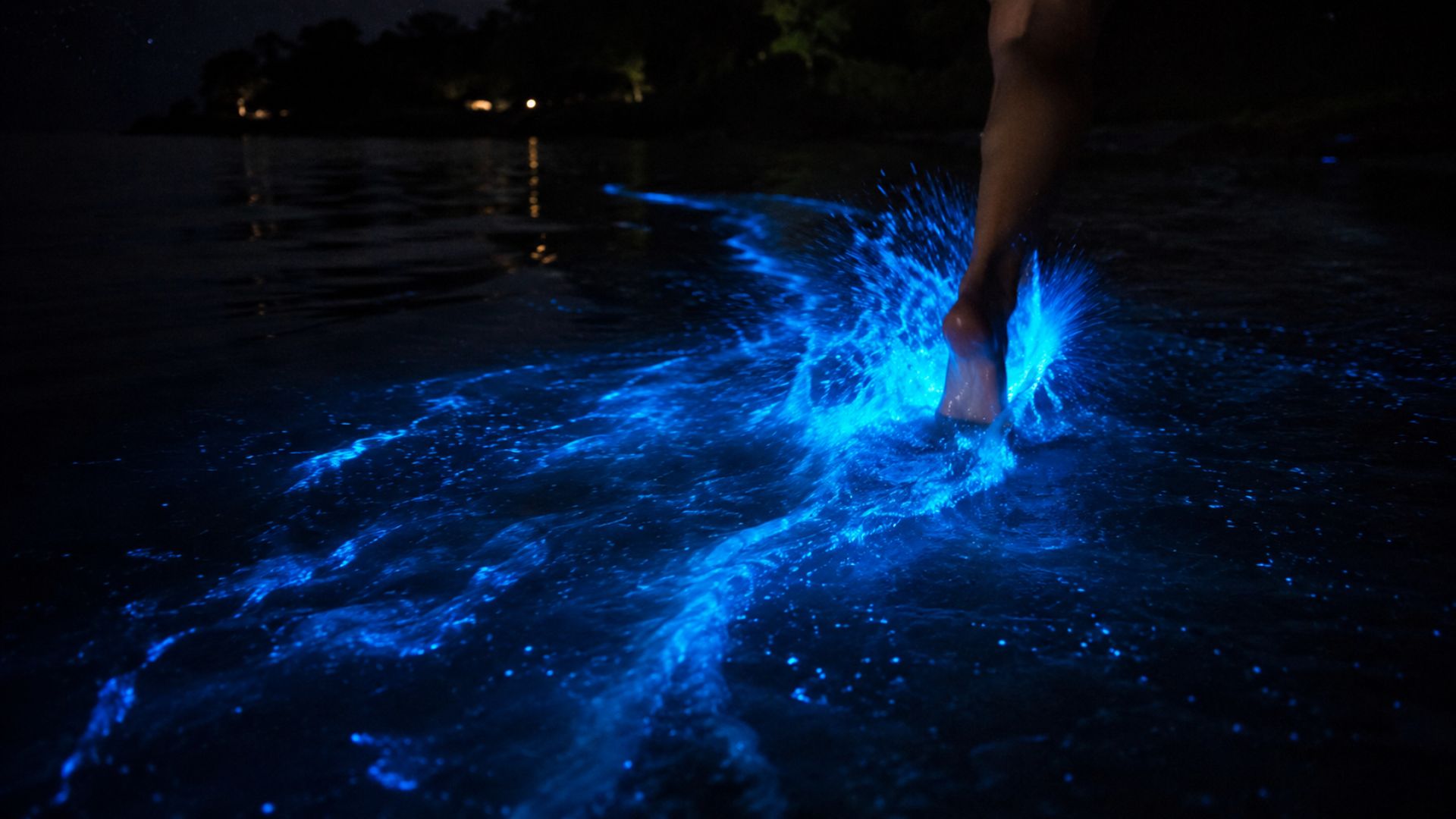
In Maricá, in the Lakes Region of Rio, the Jacaroá Lagoon began to glow blue at night with the slightest movement of the water. Scientists from UFF explain that the bioluminescence comes from microalgae brought from the sea, while the city hall credits the spectacle to the dredging works that reconnected the lagoon to the ocean.
Anyone who passed by the Jacaroá Lagoon in Maricá after nightfall swore they saw magic. With every paddle stroke, every wave hitting the shore, every fish crossing the water, the surface of the lagoon lit up in a fluorescent blue, as if someone had spilled a piece of starry sky into it. The phenomenon of bioluminescence transformed the lagoon in the Lakes Region, in Rio de Janeiro, into a nighttime spectacle that went viral on social media and brought residents and tourists to the water’s edge just to see the glow.
The most curious part is not the glow itself, but the dispute over explaining where it came from. On one side, scientists say it is a natural phenomenon, with microalgae brought from the ocean. On the other, the city hall credits much of the spectacle to a recent dredging work that reconnected the lagoon to the sea. Nature and human action intersect in the same glowing water, and understanding both sides is what makes the story even better.
The spectacle: a lagoon that became liquid sky
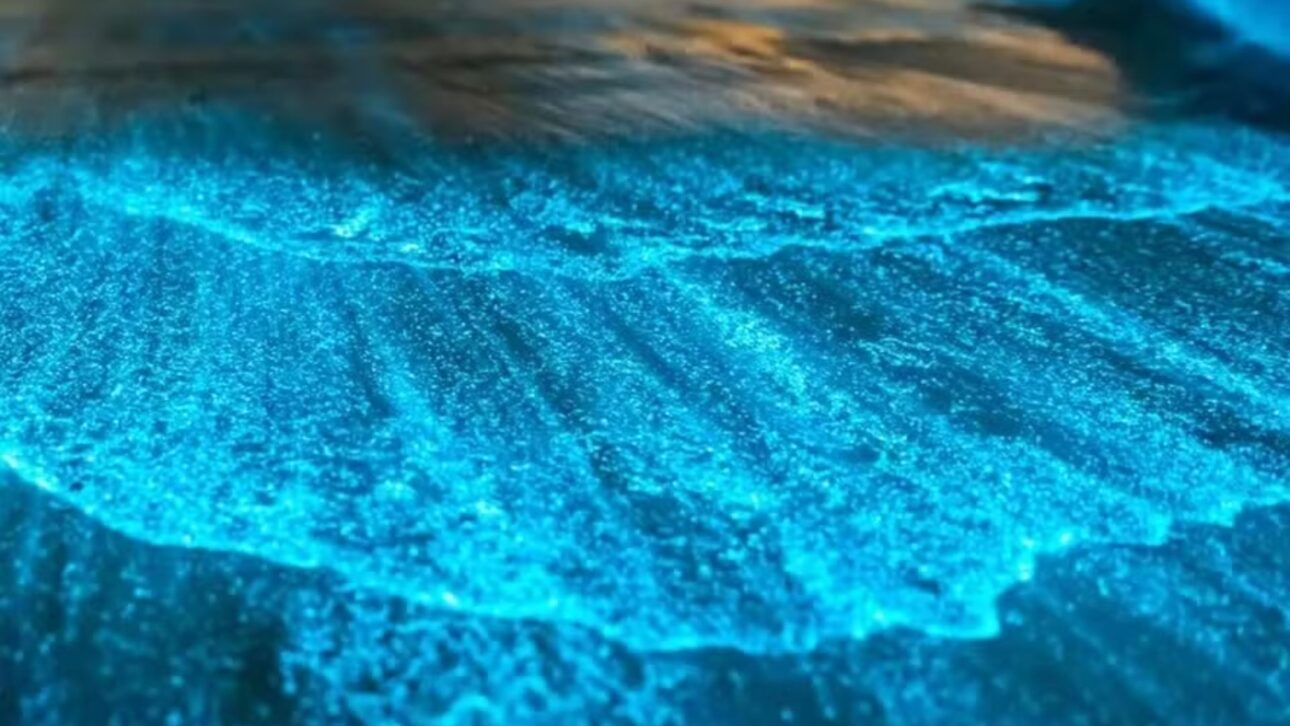
The water of the Jacaroá Lagoon only lights up when agitated, so every movement becomes a luminous trail. Rowers leave a blue path behind the canoe, fish draw lines of light as they swim, and those who pass their hand on the surface see their own skin outlined by a glow. At night, with little light around, the effect is hypnotic.
-
Charge the phone with or without a case? Manufacturers warn that a simple layer can retain heat, interrupt charging, and influence the battery’s lifespan after years of continuous use.

-
Elderly man accumulates 17 tons of garbage inside his house in SP, lives alone among scrap, scorpions, and dengue risk, and ends up being taken to a public shelter after an operation with nine trucks.
-
Workers were renovating Castro Alves Square in Salvador when they found, under the sidewalk, parts of the facade and staircases of a theater destroyed in 1923 that was once one of the largest in Brazil.
-
Dissatisfied with people trapped between sidewalks, shelters, and impossible rent in São Paulo, the city government created an aid of R$ 600 to R$ 1,200 to accommodate homeless people in family homes, private properties, or lodgings with technical support.


This visual is what made the phenomenon explode on social media. Videos and photos of the bioluminescence traveled across the country, and the lagoon, previously just another postcard of Maricá, became a point of nighttime pilgrimage. The phenomenon is considered extremely rare in Brazilian lagoons, more common in tropical beaches of places like the Maldives and Australia, which explains the frenzy of those who never imagined seeing something like this so close to home.
The good news for the curious is that the spectacle lasted longer than usual. Bioluminescence usually appears and disappears quickly, but in Maricá, it persisted for a longer period, giving people time to check out the glow up close before the drop in temperature threatened to end the party.
The science: microalgae that light up at a touch
Behind the magic are billions of microscopic beings. The glow of Lagoa de Jacaroá is produced by microalgae called dinoflagellates, which emit light when they experience mechanical stimulation. According to UFF researcher Alexander Ventura, scientific manager of the Projeto Lagoa Viva, cited by Codemar, the effect is a chemical reaction of the organism’s defense.
“What we see is a defense reaction: the microalgae release an enzyme that, in contact with oxygen, produces this characteristic bluish light,” explained Ventura. In practice, the microalga lights up to scare off predators, and any agitation in the water, whether a wave, a fish, or a person, triggers the blue flash. It’s self-defense turning into art.
The color is no coincidence. According to the project scientists, including chemist Beatriz Gonçalves and environmental engineer Joel Júnior, both from UFF, blue predominates because it is the shade that best propagates in water, being more efficient than other bioluminescent colors. And, an important point, these dinoflagellates multiplied in the open ocean and were brought to the Maricá lagoon system by tides and swells, reinforcing the thesis of a natural phenomenon.
Human action: the dredging that reconnected the lagoon to the sea

This is where the municipality’s version comes in. For the municipality, the glow of Lagoa de Jacaroá has natural reasons, but also investment. Since February 2025, the Maricá municipality, through the Somar authority, has been dredging the city’s channels, removing trash, wood, and mud accumulated for years in places like the Guaratiba, Bambuí, and Cordeirinho channels and Lagoa do Padre.
This dredging work, according to the Maricá municipality, improved the oxygenation of the lagoons and reopened the connection of the lagoon system with the sea. With the channels clean and the water exchange with the ocean reestablished, the entry of marine microalgae and the increase in salinity would have created the perfect environment for the phenomenon to occur and last longer.
In other words, the official reading is that of the happy side effect: the city dredged the canals thinking about sanitation and flood prevention, and ended up, as a bonus, helping to light up the lagoon. It’s the kind of twist that no one plans, where an infrastructure project ends up delivering a light spectacle.
Nature or work? The explanation that unites the two
The truth is that the two versions do not cancel each other out, they complement each other. UFF researchers are clear in saying that bioluminescence is, at its origin, a natural phenomenon, coming from the sea, and Codemar even emphasizes that the glow does not indicate, by itself, an improvement or deterioration in water quality. In other words, seeing the lagoon lit up does not automatically mean it has become cleaner.
On the other hand, it is reasonable that the dredging gave it a boost. A lagoon more connected to the ocean exchanges more water, receives more marine organisms, and maintains more stable conditions, which helps explain why the phenomenon appeared now and lasted weeks, not just one night. Nature brought the microalgae, the work opened the door for them.
This meeting between the chance of nature and the hand of public power is precisely what makes the Lagoa de Jacaroá a special case. It’s not just another beach that glows abroad, it’s a piece of Rio de Janeiro where an urban management decision and a microscopic marine organism came together to create, without planning, one of the most beautiful visuals the Região dos Lagos has ever seen.
The Lagoa de Jacaroá showed that even a dredging project can end in poetry. The bioluminescence of the microalgae painted Maricá’s nights blue, enchanted half of Brazil through social media, and even opened a beautiful debate between the force of nature and the action of the city hall, with both sides being right. As long as the glow lasts, it’s worth the visit.
And you, would you face the edge of the lagoon at night to see the water light up in blue, or do you think this type of phenomenon is better admired on a cell phone screen? Share your thoughts in the comments.


Be the first to react!