






 Portuguese
  Spanish


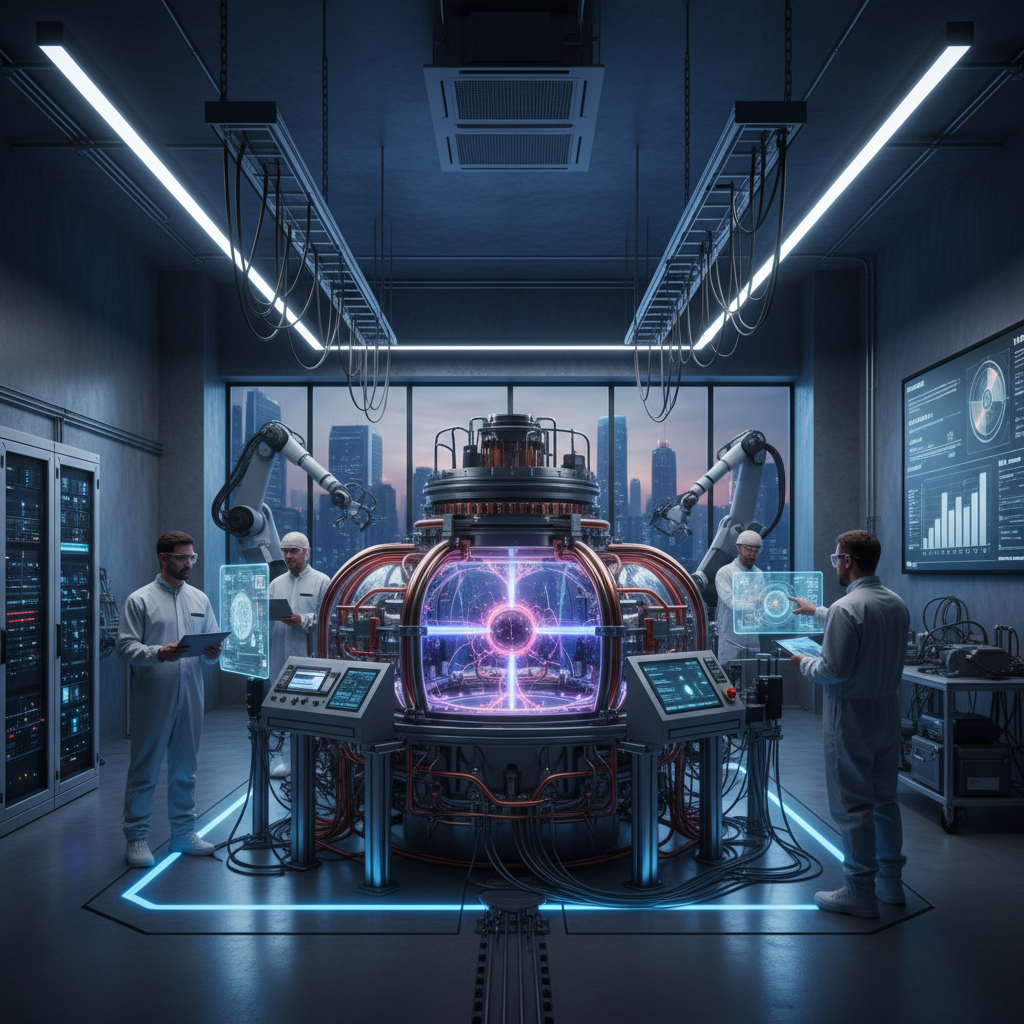
Sam Altman invested hundreds of millions in Helion Energy, OpenAI is negotiating to buy 12.5% of all the energy the company produces, and Microsoft has already signed a contract to receive 50 MW from a reactor that has not yet generated a single watt — the boldest bet in the history of nuclear fusion
The man who created ChatGPT has a problem.
The data centers that power artificial intelligence consume absurd amounts of energy.
And Sam Altman believes there is only one long-term solution: nuclear fusion.
-
Chile’s Plan for a 20,000 km Undersea Cable to Hong Kong Halted by U.S. Pressure, Highlighting the Silent Data Control Battle in Latin America

-
In Somaliland’s Desert, Greenhouse Uses Sun and Seawater to Grow Lettuce, Cucumbers, and Tomatoes Without Rain: 1-Hectare Project Cools Crops, Desalinates Water, and Converts Brine into Commercial Salt
-
Trump Unveils $400 Million Boeing 747 Donated by Qatar as Temporary Air Force One Amid Boeing Delays, Sparking Debate on National Security, Costs, and Foreign Influence
-
Chinese Company Unveils Robotic Toilet That Comes to You, Featuring Lidar Sensors, Voice Command, Bidet, Hot Air Drying, UV Light, and Self-Cleaning Waste Disposal


That’s why he invested US$ 375 million in Helion Energy, a startup that promises to generate electricity from fusion by 2028.

The numbers that scare
- US$ 375 million: personal investment by Sam Altman in Helion
- US$ 500 million: Series E round in 2021, led by Altman
- US$ 612 million: total raised in venture capital
- US$ 425 million: additional round in January 2025
- US$ 1.8 billion: promise of funding conditioned on technical milestones
- 12.5%: share of production that OpenAI wants to secure
- 5 GW by 2030 and 50 GW by 2035: Helion’s projections
Microsoft has already bought energy that does not exist
In May 2023, Microsoft signed a historic agreement with Helion.
Bill Gates’ company will receive up to 50 megawatts of clean energy from Helion.
The delivery is scheduled for 2028.
The contract includes financial penalties if Helion fails to meet the timeline.
It is the first PPA (Power Purchase Agreement) in history for nuclear fusion energy.

OpenAI wants 12.5% of all production
In March 2026, Axios revealed that OpenAI is in advanced negotiations to buy 12.5% of all the energy that Helion produces.
This means that if Helion reaches 5 GW by 2030, OpenAI would have 625 MW guaranteed — enough energy to power hundreds of thousands of GPUs training AI models.
Altman recently stepped down as chairman of Helion’s board and distanced himself from the negotiations to avoid a conflict of interest.
What Altman said in Davos
At the World Economic Forum, Altman stated: “There is no way to get there without a breakthrough. We need fusion or we need radically cheaper solar energy with more storage or something at that massive level.”
For him, AI requires an energy revolution — and fusion is the bet.
Google bet on the competitor
While Altman bets on Helion, Google has made deals with Commonwealth Fusion Systems, including a contract for 200 megawatts of energy.
Additionally, investors such as SoftBank, Mithril Capital (from Peter Thiel), and Dustin Moskovitz (co-founder of Facebook) are also betting on Helion.

Important caveats
No private company has achieved “scientific breakeven” — the milestone at which fusion produces more energy than it consumes.
Discussions with OpenAI are in preliminary stages, with conditions still to be met.
Helion is optimistic, but commercial nuclear fusion technology has never been realized by any entity in the world.
Moreover, the Stargate Project (Microsoft-OpenAI) that would consume this energy has a projected cost of up to US$ 100 billion.
Still, when the CEO of the world’s most valuable AI company invests hundreds of millions of his own money in nuclear fusion, the market pays attention.


-

1 person reacted to this.