Portuguese
  Spanish


Vincent Kickerillo transformed civil construction on an urban scale, with subdivisions, houses in Houston, and planned neighborhoods that show how the real estate market can change a city. The banking crisis of 1987 also entered this story, with a direct impact on real estate, banks, and credit. The case explains why 16,500 houses matter to understand Houston’s growth.
The man who started in civil construction with his own house created a company in 1957, went through a banking crisis in 1987, and ended up connected to 16,500 houses in Houston. Vincent Kickerillo entered the real estate market through a residential project and, over nearly 70 years, became one of the names associated with the city’s urban expansion.
The information was published by Houston Chronicle, a United States newspaper with local and business coverage, on June 16, 2026. Vincent Kickerillo died on June 7, 2026, at the age of 97, after a career marked by houses, subdivisions, and planned communities.
The practical impact is on the scale. His company developed more than 22,000 lots and built 16,500 houses, numbers that help explain how residential areas form, grow, and begin to change a city’s routine.
-
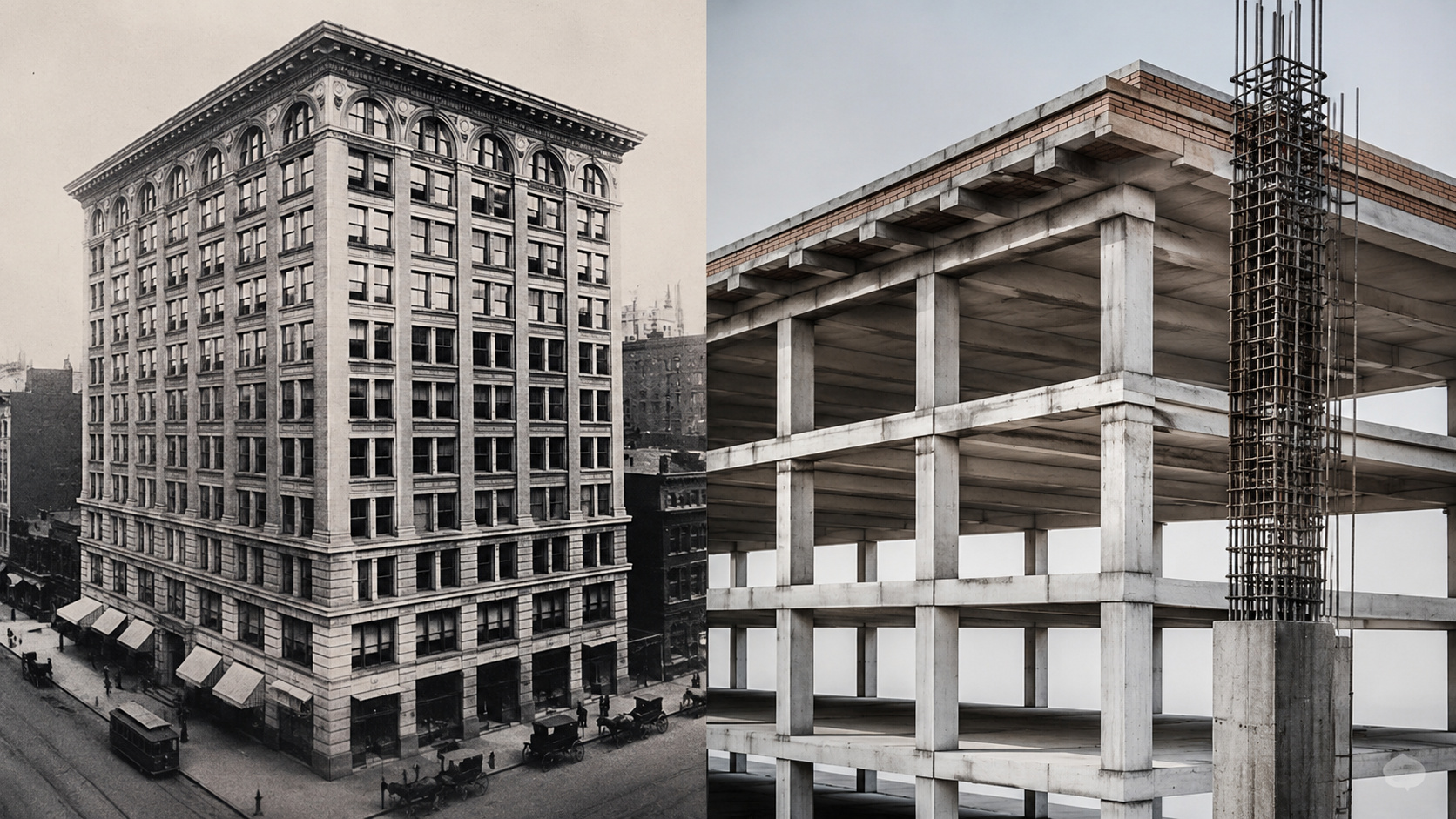
Builders challenged experts, erected a 16-story building using only reinforced concrete when the known limit was six floors, and proved that skyscrapers would never be the same again.

-
Up to 60 concrete mixer trucks pour 380 m³ of concrete onto the “big slab” of Niemeyer’s first work in Amazonas, in a decisive stage of the construction of the monumental oca that will mark the Parque Encontro das Águas in Manaus.

-
Alert in Santa Catarina: the Anita Garibaldi Bridge on BR-101 is completely closed in both directions due to “structural risk,” and drivers are diverted to a 20 km/h detour that promises kilometer-long queues until July 20.

-
More than 6,000 trucks poured nearly 70,000 cubic meters of concrete without interruption for 72 hours to create the largest continuous concrete pour in history and erect a megaproject in Saudi Arabia.



A home of his own paved the way for a construction company in 1957
Vincent Kickerillo’s entry into civil construction began directly. He was dissatisfied with the progress of his house’s construction in the Memorial Drive area of Houston, took over the construction, and enjoyed the process.
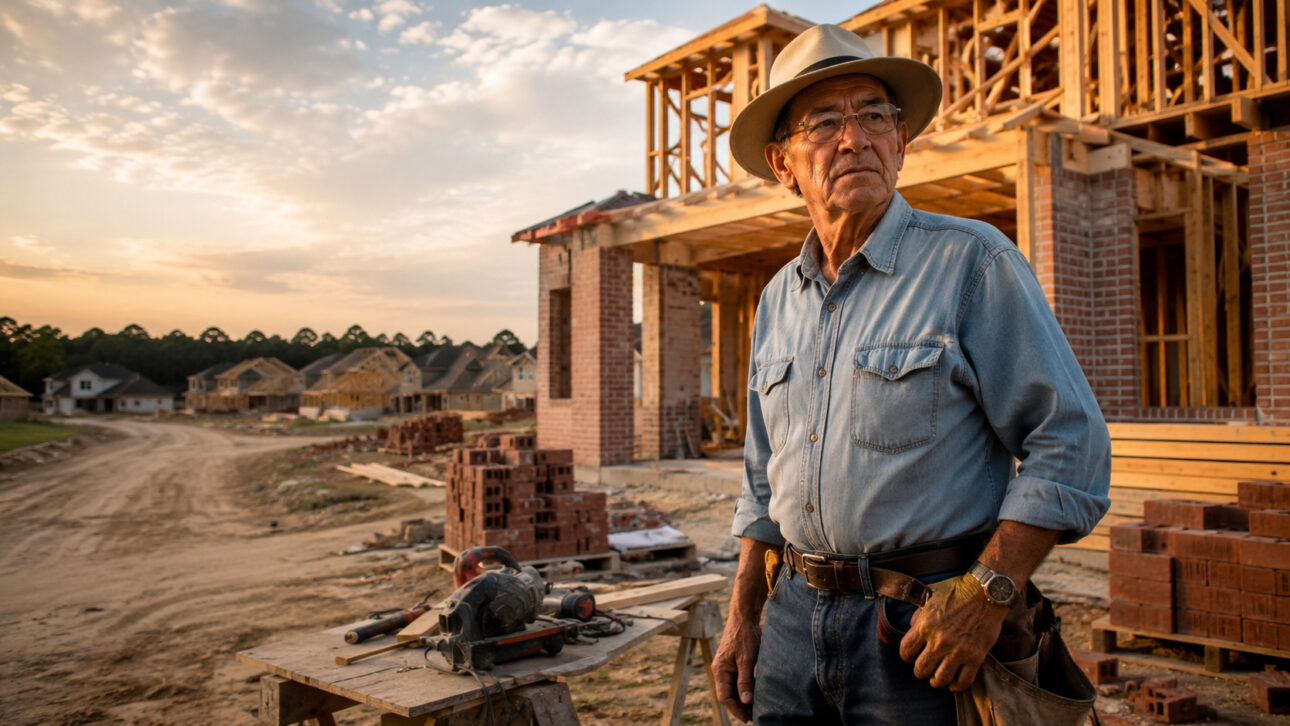
From this experience, he created his own company in 1957. What started as a residential project turned into a business in the housing, land, and urban development sector.
This point is important because it shows how building a house can be just the first step of something bigger. When the builder also starts working with land and neighborhoods, the impact is no longer individual and reaches the city.
The 22,000 lots show that the business went beyond building houses
The company associated with Kickerillo developed more than 22,000 lots. A lot is a piece of land prepared to receive a building, with access and planning to become a property.
This number shows that the business was not limited to delivering ready-made houses. The work also involved preparing areas to receive homes, streets, resident circulation, and urban growth.
In the real estate market, this changes a lot. A well-located set of lots can attract commerce, services, schools, car traffic, and appreciation of the surrounding areas.
The 16,500 houses in Houston help explain the city’s residential expansion
The mark of 16,500 houses places Vincent Kickerillo on a relevant scale for residential construction in Houston. Each house represents a family, an occupied street, and a demand for urban services.

Over the decades, the company operated in planned communities like Kelliwood, Nottingham Country, in Katy, and Lakes of Parkway, near Houston’s energy area. A planned community is a neighborhood designed as a whole, with streets, houses, and organized occupancy.
This type of project influences the city’s design. Instead of growing only through scattered properties, the region starts receiving more structured residential areas, with their own identity and greater weight in the real estate market.
The banking crisis of 1987 hit real estate, credit, and construction companies
The business trajectory also went through the oil-related crisis in the 1980s. In Houston, the sector’s downturn affected real estate, banks, and companies that relied on credit to build and finance projects.
Houston Chronicle, a United States newspaper with local and business coverage, reported that UnitedBank Houston was declared insolvent in April 1987. Insolvent means not having enough money to meet its obligations.
After this period, Kickerillo left the banking side and returned to focusing his efforts on home construction. The change illustrates a simple point for the reader: in the real estate sector, credit and construction go hand in hand, but they can also increase risks when the economy turns.
Planned neighborhoods change land value and residents’ routines
When a company develops thousands of lots and houses, the result appears not only in sales contracts. It also emerges in how the city grows, in which areas receive residents, and in how commerce begins to establish itself.

In Houston, communities like Kelliwood, Nottingham Country, and Lakes of Parkway became associated with the Kickerillo name. These neighborhoods helped consolidate residential areas in expanding regions.
For Brazil, the comparison is simple. When a large development emerges in a city, it can change traffic flow, attract new services, and alter the price of nearby land.
The style of the houses also helped establish the brand in the real estate market
The houses built by the company became associated with traditional bricks, fireplaces, and open floor plans. An open floor plan is when the living room, kitchen, or other areas are more integrated, with fewer walls separating the spaces.
This pattern helped build a visual identity for the properties. In planned neighborhoods, the repetition of certain styles can create a recognizable appearance and increase the perception of organization.
In the real estate market, appearance and location go hand in hand. A well-positioned house in a structured neighborhood tends to have more appeal for buyers seeking stable housing and a defined residential environment.
The case shows how construction is also urban planning
The business history of Vincent Kickerillo shows that construction is not limited to cement, bricks, and labor. When a company delivers thousands of houses and lots, it participates in the city’s expansion.
Aimee Bertrand, executive director and president of the Greater Houston Home Builders Association, a residential construction sector association in the region, highlighted Kickerillo’s impact on home building and community development in Houston.
This recognition reinforces the urban dimension of the case. The main point is not just in an individual trajectory, but in the concrete effect of 22,000 lots and 16,500 houses within one of the largest cities in Texas.
Vincent Kickerillo remained connected to Houston because his company helped transform land into neighborhoods, houses into communities, and residential construction into urban expansion. The banking crisis of 1987 also shows how the real estate market depends on a strong economy, credit, and risk management.
In the end, the case leaves an important question for any growing city: when thousands of houses emerge in the same region, does it organize the urban future or create new challenges for residents, traffic, and public services? Share your opinion and share this analysis.