Portuguese
  Spanish


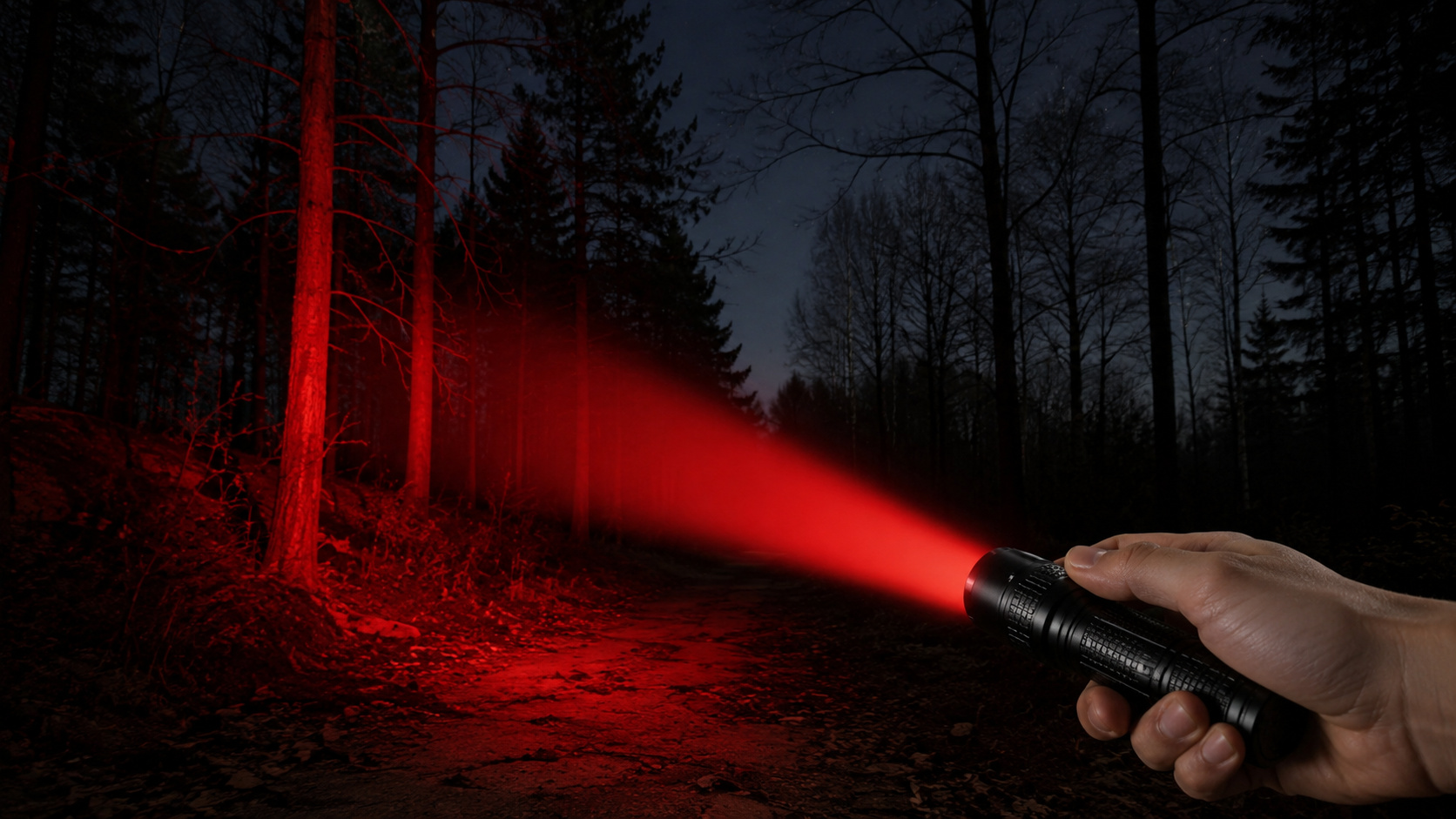

The explanation lies in the physics of light: with the longest wavelength in the visible spectrum, about 700 nanometers, red light reduces glare and preserves the eyes’ adaptation to darkness
You may have seen red light flashlights in action movies, astronomy documentaries, or even tactical equipment — but you may never have wondered why this specific color is chosen instead of the traditional white beam. According to SlashGear, in a report by Sead Fadilpasic, the answer lies in how the human eye reacts to red light at night.
Why red light does not hinder night vision
We are quite accustomed to conventional white light flashlights, used to illuminate dark areas. But few people know that flashlights come in different variations — and one of the most specific is the red light, created mainly to preserve night vision.
Red light has the longest wavelength among all colors in the visible spectrum, about 700 nanometers. This makes it much less aggressive to human eyes and considerably reduces glare compared to traditional white light.
-
He has never read a line of code, but he already knows how to work: the French company UMA presented in Paris the Northstar, its first AI-powered humanoid robot designed for factories and warehouses, capable of copying tasks just by observing an employee in action.

-
A young Kenyan engineer collects plastic waste from the streets and transforms it into robots that translate physics lessons into sign language in real-time, a machine made with old bottles that teaches what was missing to deaf children left out of science.

-
What is the dark substance found in the sand of Ipanema Beach? Civil Police conduct an examination, collect samples of the material, and initiate an investigation to identify the composition, clarify the origin, and verify if there was an environmental crime.
-
The beer that was hidden for 3,000 years has returned to the world: scientists find yeast preserved in Ancient Egyptian vessels and recreate a pharaoh’s drink to discover the lost taste of an ancient civilization.




These characteristics make the red light flashlight an excellent choice for nighttime activities, such as astronomy. According to science, rhodopsin — a photosensitive protein present in the retina, responsible for our vision in low-light environments — is not affected by deep red light. In other words, the eyes are not temporarily dazzled nor need to readjust, as happens when white light is used in the dark.
This is why astronomers use red light flashlights to read star charts or adjust telescopes without compromising their vision already adapted to darkness.
Why police and military use red flashlights
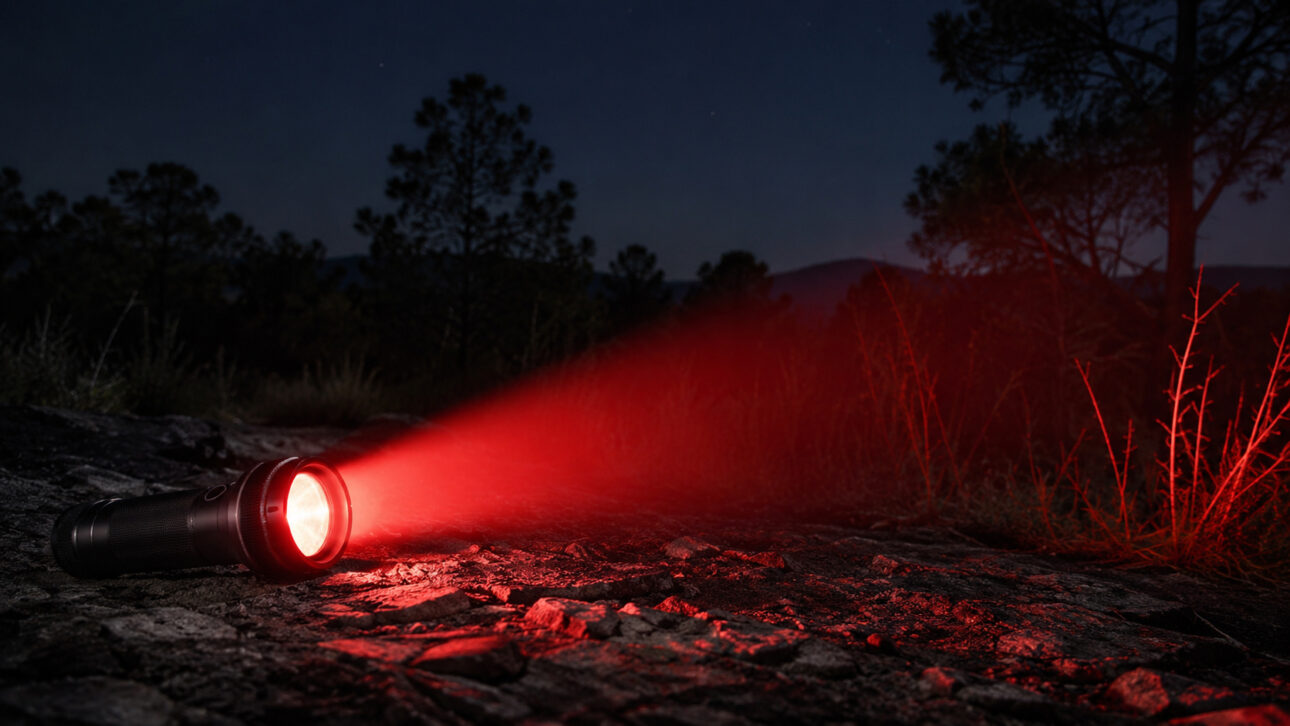
As the red light preserves night vision, the flashlight with this feature has also gained space among public security professionals. At night, for example, police officers can use it to check documents or identifications without temporarily blinding themselves or compromising their own vision.
The red light flashlight can also be used for signaling purposes, as it is less noticeable than a white light from a distance. Military forces employ the feature similarly, in tactical operations that require discretion and stealth.
The advantage of red light in hunting and animal observation
Other common uses of the red flashlight involve hunting and wildlife observation. This is because many mammals do not see colors the same way humans do and, therefore, cannot easily identify the red color.
In practice, this means that using a red flashlight makes animals less likely to be startled or flee from the light. Furthermore, it avoids any interference with the natural activities of the animals, such as their own hunting among themselves.
Therefore, whether under a starry sky, during a night police patrol, in a discreet military operation, or in the woods during a hunt, the red light flashlight serves the same central function: allowing vision in the dark without compromising the natural adaptation of the eyes to darkness.