






 Portuguese
  Spanish


World Cup in the United States, Mexico, and Canada is expected to move billions, but experts warn of risks of greenwashing, sportswashing, and increased CO₂ emissions.
The 2026 World Cup has already entered the center of the environmental debate even before the ball starts rolling. In the midst of Green June, the tournament rekindles questions about FIFA’s climate commitment after the controversy left by Qatar in 2022.
With an expected movement of US$ 8.9 billion, about R$ 46 billion, the competition is moving forward to become the most profitable tournament in history, according to data from S&P Global Market Intelligence.
The sporting brilliance, however, comes with growing concern. Experts and international entities warn of the risk of a new case of greenwashing linked to the biggest football event on the planet.
-
Farmer Revives Arid, Abandoned Land in Brazil’s Bahia into Thriving Forest, Demonstrates How ‘Syntropic Agriculture’ Can Transform Rural Futures

-
Study Reveals 40% of Brazilians Unaware of Circular Economy, Highlighting Challenges in Sustainable Transition and Recycling Expansion
-
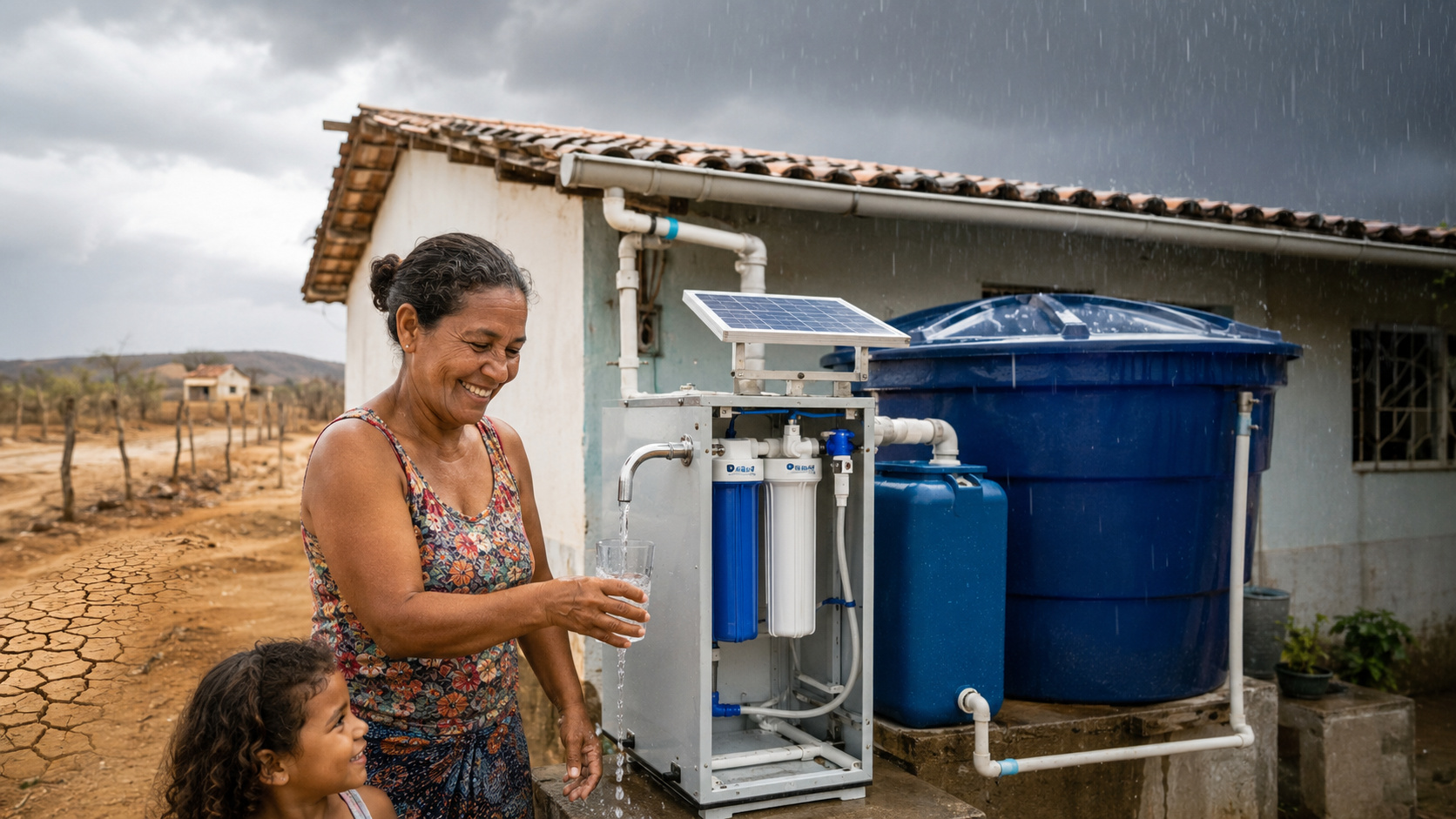
Brazilian Startup Converts Rain into Potable Water Without Chemicals, Surpasses 10 Million Liters, Joins $1.2 Million Project to Bring Simple Technology to Drought-Stricken Areas in Northeast Brazil
-
Brazilian Company Innovates with Treated Water Billing Model, Surpassing 10 Billion Liters and Offering Up to 40% Savings for Large Industries


The discussion also involves the so-called sportswashing, a practice where controversial economic and environmental interests are associated with sports to soften negative impacts in front of the public.
Qatar’s climate legacy still pressures FIFA
The current distrust originates from the accusations made after the Qatar World Cup, held in 2022.
In December of that year, the Swiss Fairness Commission challenged FIFA’s environmental communication about the supposed climate neutrality of the tournament.
According to information from Carbon Market Watch, the entity allegedly created a false and misleading impression by claiming that the competition would not have significant climate impacts.
Organizations from Belgium, France, the United Kingdom, the Netherlands, and Switzerland also questioned the carbon neutrality promise publicized by FIFA.
For Liu Berman, leader of the Reinventing Futures Movement and LB Circular Culture, the new edition places the entity once again in a delicate position.
The realization of the 2026 World Cup in the United States, Mexico, and Canada amplifies the environmental challenges. The scenario becomes even more sensitive because the United States withdrew its participation from the Paris Agreement for the second time.
In this context, the expert raises a central question: is sustainability a real concern or just a response to international agendas?
CO₂ forecast raises environmental alert
Concern grows in light of the estimate of 7.8 million tons of CO₂ released into the atmosphere during the competition.
This number contrasts with FIFA’s environmental pillar for 2026, especially with the goal EN3, which aims to reduce local air pollution caused by stadiums and tournament operations.
The logistics of the World Cup will be one of the most challenging points. The competition will involve travel between three countries, a large concentration of the public, intense use of air transport, and constant movement between arenas.
Airlines, fuels, stadium allocation, and fan travel are expected to further pressure the event’s environmental account.
For experts, avoiding a repeat of the criticisms made of Qatar will be a difficult task for the organizers.

Largest World Cup in history amplifies impacts
The scale of the challenge can be measured by the numbers of the 2026 World Cup itself.
Compared to the 2022 edition, the new World Cup will have 50% more teams, 62.5% more matches, and double the stadiums.
The competition will also be held in three countries, not just one national host.
The duration of the tournament will be about 35% longer, which increases logistical, operational, and environmental challenges.
According to Liu Berman, the climatic effects are not expected to affect only the players. Referees, technical teams, and fans may also feel the impacts of the massive wave of pollutants in the atmosphere.
University of Manchester points to risk of sportswashing
The debate gained momentum with the report “Football and Climate Change: A preview of the 2026 FIFA World Cup” from the University of Manchester.
The document warns that each event or team sponsored by fossil fuel companies strengthens the presence of fossil capital in society.
In this scenario, greenwashing seeks to make an organization appear less harmful to the environment than it really is.
Sportswashing, in turn, integrates economic interests into football so deeply that its presence may go unnoticed, even in the face of evident environmental damage.
For Liu Berman, this warning needs to be observed on a global scale, especially in a geopolitical context where fossil resources remain assets of enormous value.
Transparency Will Be the Great Test of the 2026 World Cup
The 2026 World Cup arrives surrounded by challenges that go far beyond the fields.
FIFA will have to balance historic profit, international logistics, environmental pressure, and demands for transparency.
Experts advocate for real indicators of economic, social, and cultural development in the host countries.
These metrics would be essential to prove whether the announced changes are sufficient, verifiable, and compatible with the scale of the tournament.
The controversial legacy of Qatar remains a warning for the world’s largest football competition.
The magic of international football, therefore, will also depend on the organizers’ ability to tackle climate impacts with concrete actions.
What do you think should be the priority for the 2026 World Cup: expanding the global reach of the tournament or ensuring a more transparent and sustainable environmental operation? Share your opinion!





