Portuguese
  Spanish


Blue carbon is the carbon captured by the ocean, mangroves, seagrasses, and even whales. This natural mechanism helps slow global warming, protects fisheries, biodiversity, and the coastline, and has enormous significance in Brazil, which has one of the largest mangrove stretches in the world, according to official public and scientific sources.
When talking about combating climate change, the first image that usually comes to mind is that of forests. But the planet’s largest climate regulator is the ocean, which absorbs almost 30% of the carbon dioxide (CO2) released into the atmosphere by human activities. This is where blue carbon comes in, the carbon captured by the seas and coastal ecosystems, as explained by the American environmental agency NOAA and the Ministry of the Environment of Brazil.
Mangroves, seagrasses, and marshes function as true natural sinks, capturing and storing carbon for centuries. Unlike forests, these coastal environments store most of this carbon in the soil, where it can remain trapped for thousands of years. Protecting blue carbon, therefore, has become one of the most promising strategies against global warming.
What is blue carbon and why it matters
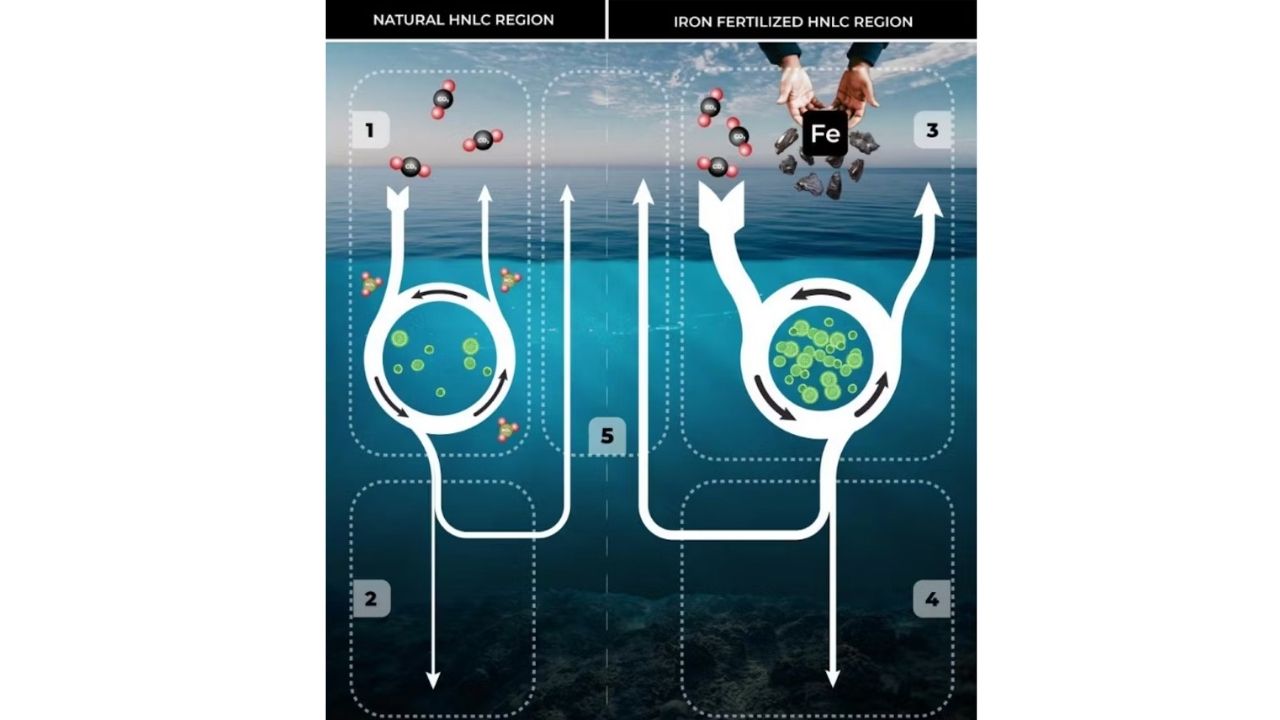
The concept is simpler than it seems. Blue carbon is the name given to the carbon captured by oceans and coastal ecosystems, according to NOAA. Marine plants, mangroves, and marshes “trap” the carbon and keep it stored, functioning as what scientists call a carbon sink.
-
Spanish Startup Develops Europe’s Densest Solid-State Battery at 402 Wh/kg

-
Telescope Launched 80 Billion km from Earth Could Use the Sun as a Giant Lens to Magnify Exoplanets, Potentially Revealing Continents, Oceans, and Signs of Life

-
Australian Researcher Turns Discarded Coffee Grounds into Eco-Friendly Bricks with 80% Less Pollution and Double the Strength Required by Law

-
Scientific Tool Developed in Brazil Aims to Prevent Femicide by Identifying Risk Factors and Strengthening Women’s Protection




The great advantage of these environments is efficiency. Although they occupy a much smaller area than the planet’s forests, they sequester carbon at a much faster rate and store it, mainly underground, for thousands of years. The problem is the other side of the coin: when these ecosystems are destroyed, all this carbon returns to the atmosphere. Therefore, conserving and restoring the coastline is, in practice, defending blue carbon and reducing risks associated with global warming.
The ocean, the largest carbon pump on the planet
The oceanic scale is impressive. The ocean holds 60 times more carbon than the atmosphere and absorbs almost 30% of the CO2 that humanity emits, according to research from CSIRO, the Australian science organization. Each year, about 10 billion tons of carbon are released into the air, and the ocean quickly removes about 3 billion of them, making the climate milder.
At the center of this process is the so-called biological carbon pump. According to CSIRO researchers, phytoplankton, microscopic sea plants, consume, via photosynthesis, as much CO2 as all terrestrial plants combined. When these organisms die, they sink and take the carbon to the depths, where it can remain locked for centuries or millennia. This invisible mechanism, part of blue carbon, regulates the planet’s temperature.
Even whales are part of the equation
The most surprising link in this chain might be the largest animal in the sea. The ocean captures about 31% of all carbon dioxide emissions, and scientists believe that whales contribute to various carbon storage mechanisms, according to NOAA Fisheries. This helps explain why they are also part of blue carbon.
The phenomenon is known as the “whale pump.” As whales move, they push nutrients like nitrogen, phosphorus, and iron from the depths to the surface, stimulating the bloom of phytoplankton, which captures carbon. Globally, marine phytoplankton captures the equivalent of four Amazon forests of carbon dioxide per year and produces half of the oxygen we breathe. Additionally, whales store carbon in their bodies, and when they die, their carcasses sink, taking this carbon to the seabed; estimates cited by the IMF indicate that each large whale sequesters, on average, 33 tons of CO2, removing this carbon from the atmosphere for centuries.
The Brazilian mangrove, a blue carbon treasure
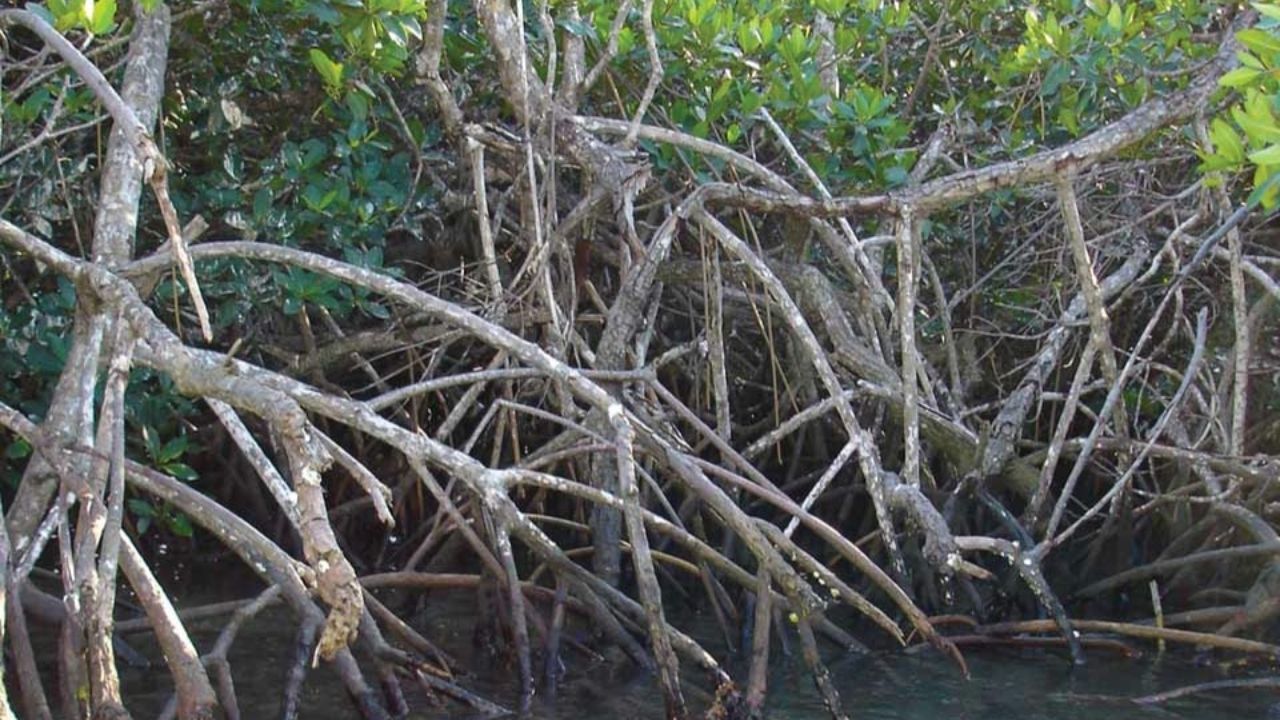
In this global scenario, Brazil plays on home ground. The country has about 1.4 million hectares of mangroves along the coast, from Oiapoque, in Amapá, to Laguna, in Santa Catarina, according to the Ministry of the Environment. The North Coast alone concentrates about 80% of these ecosystems, forming the largest continuous stretch of mangroves in the world.
The significance of this heritage for the climate is enormous. According to the ministry, Brazilian mangroves hold 8.5% of the global carbon stock of this type of ecosystem, and, per area, they store 2.2 to 4.3 times more carbon in the soil than other vegetated biomes in the country, second only to the Amazon in biomass. To protect this blue carbon, Brazil created ProManguezal in 2024 (Decree No. 12.045/2024) and included the program in its climate target (NDC) of the Paris Agreement, adding to the legal protection that mangroves already have as Permanent Preservation Areas.
Food, cities, and people: what’s at stake
Blue carbon goes far beyond the climate. Mangroves function as natural nurseries for fish, crustaceans, and mollusks, supporting artisanal fishing and the food security of hundreds of thousands of Brazilian families, many in Extractive Reserves. Not surprisingly, CSIRO reminds us that the ocean feeds about 10% of the world’s population.
There is also the physical protection of the coastline. Mangroves and reefs reduce wave force, hold sediments, and decrease erosion, acting as a natural shield for coastal cities against storms and rising sea levels. When these environments are degraded by pollution, overfishing, or poorly managed shrimp farming, their ability to capture carbon and protect those living on the coast decreases.
Blue carbon market and challenges
All this natural capacity has also started to become a financial asset. NOAA points out that coastal wetlands can enter the carbon market through the buying and selling of credits, creating economic incentives for restoration and conservation projects. The agency even highlights having helped draft the first U.S. guide that makes marsh restoration eligible for international carbon markets.
The model, however, is not magical. Blue carbon projects tend to be more expensive and complex than those on land and depend on long-term conservation to really work. More than credits, what’s at stake is maintaining ecosystems that provide multiple services at the same time: climate, food, biodiversity, coastal defense, and response to global warming.
A natural defense that Brazil can still strengthen
The blue carbon shows that the fight against global warming doesn’t happen only on solid ground. It heavily depends on mangroves, seagrass beds, reefs, and even whales, in a system that Brazil, with its vast coastline, is in a position to lead, provided it chooses to protect rather than destroy.
Now we want to hear from you. Had you heard about blue carbon before this article? Do you think Brazil should invest more in the protection of mangroves and the coastline, even with so many other urgent issues?
Comment your opinion below, tell us if you are familiar with any mangrove or fishing community, and share this article with those who care about the climate and the oceans.