Portuguese
  Spanish


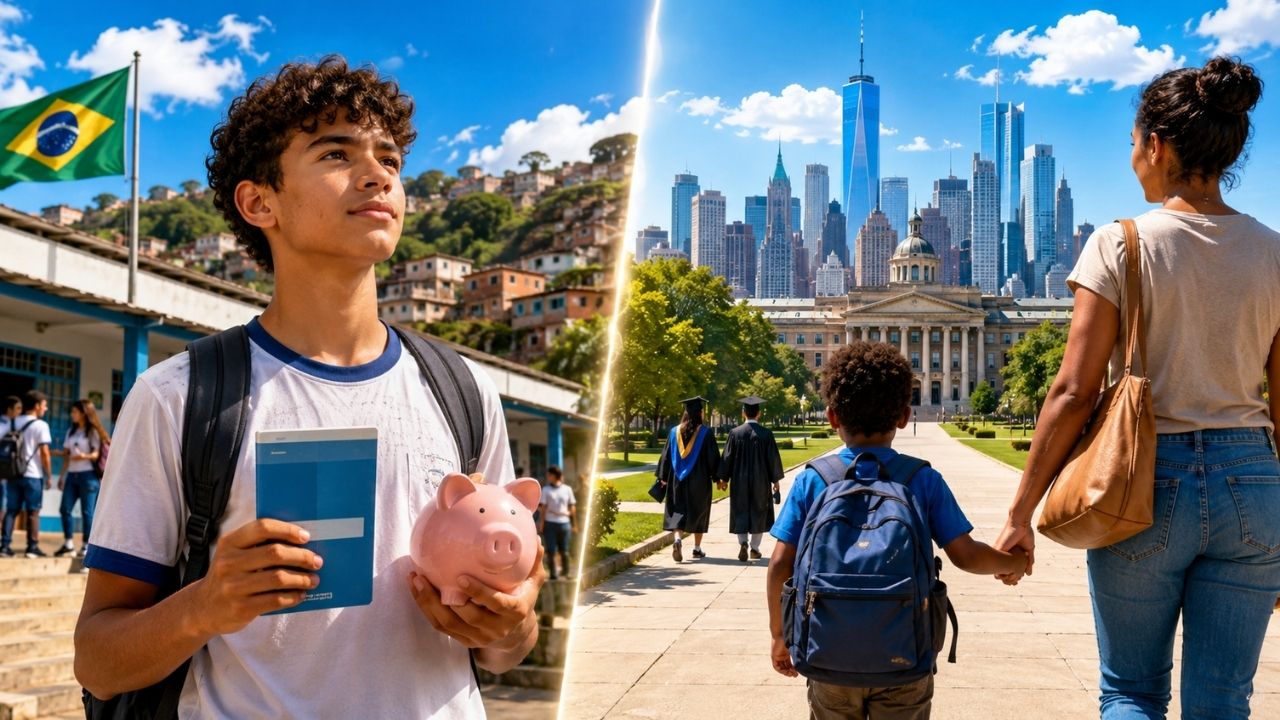

In New York, a proposal from the City Council wants to deposit up to $3,000 (about R$ 15,6 thousand) into savings accounts for college for poor children, still in preschool. The idea, which depends on Mayor Zohran Mamdani, aims to reduce student debt and combat income inequality.
New York is studying an unprecedented way to combat inequality: depositing money into the account of poor children already in preschool so that, years later, they can afford college. The proposal came from the City Council, which on April 1, 2026, published its response to Mayor Zohran Mamdani’s budget, providing from $1,000 to $3,000 (about R$ 5,2 thousand to R$ 15,6 thousand) per student, with the highest amount for the poorest.
The plan expands the existing NYC Kids Rise program and targets those in greatest need: children from low-income families would receive $3,000, and others $1,000, amounts far above the current contribution of just $100. However, the measure still depends on the negotiation of the 2027 municipal budget, which the city hall and Council must finalize by the end of June 2026.
How the deposit for poor children would work
The proposal is among the largest investments in child savings ever suggested in the United States. The contribution would be one-time, but substantial: $3,000 for the poorest students and $1,000 for the others, a huge leap from the $100 deposited today. The money would be saved to fund higher education in the future.
-
iFood Takes 99Food and Keeta to Brazil’s Antitrust Authority Over Aggressive Discounts and Prolonged Losses, Raising Concerns of a New Delivery Market War

-
Brazilian Brothers Transform Dairy Business into Latin America’s Best Cheese, Boosting Revenue from $80,000 to $4 Million

-
He Left Construction, Partnered with His Wife, and Turned a Homemade Gelato Hobby into Brazil’s Largest Chain with 240 Stores and $100 Million Annually
-
Brazil Faces Caregiver Shortage Despite Having 34.1 Million Elderly, Highlighting a Major Challenge for Families


The effect of time is a central part of the plan. According to proponents of the measure, even without new deposits, the $3,000 placed in the account of one of the poor children could transform into about $8,500 (R$ 44,2 thousand) by college age, considering the current return rate of the program. It is money that, according to them, opens doors that are currently closed for low-income families.
The existing NYC Kids Rise program
A novelty relies on a structure already in operation. Called NYC Kids Rise, the program automatically opens accounts for all students in the city’s public pre-schools, including three-quarters of the affiliated schools that joined. Launched as a pilot in the Queens neighborhood in 2017, it has already opened accounts in the names of more than 380,000 children.
The model also has a community component. The NYC Kids Rise accounts have already accumulated more than $85 million (R$ 442 million), and the program allows local businesses, community groups, and neighbors to make donations, distributed among students of the same school. It is a way to involve the entire neighborhood in the future of poor children, not just the public authorities.
Who is behind it and the political impasse
The proposal has a name, surname, and date. It was presented by the New York City Council on April 1, 2026, as part of the official response to the preliminary budget that Mayor Zohran Mamdani had sent on February 17. The author is the Speaker of the Council, Julie Menin, who helped create the savings program over a decade ago when she was the city’s consumer affairs commissioner, and treats the expansion as one of her priorities.
The money, however, is not yet guaranteed. When Mamdani released his executive budget of $124.7 billion on May 12, 2026, the expansion of college accounts was left out. Since then, the city hall and the Council have been negotiating, with the expectation of closing the 2027 budget by the end of June 2026. The Mamdani administration has signaled openness to increasing contributions, and the issue remains in dispute in this final stretch.
Why save from childhood? The burden of student debt
The backdrop is the extremely high cost of college in the United States. College savings accounts, known as 529 plans, have existed for over 40 years, but historically benefited mainly the wealthiest families, who could afford to deposit. New York’s proposal tries to reverse this logic, bringing the benefit to poor children from an early age.
Personal stories show the magnitude of the problem. A Brooklyn resident, a career counselor, reported having accumulated about $48,000 (R$ 249,600) in student debt that could take three decades to pay off, and therefore opened a savings account for her daughter right after birth, linked to the city’s program. For a researcher at the University of Michigan interviewed in the report, such programs change the way children view their own future, by conveying the message that the city and the neighborhood believe in them.
The contrast with Brazil and the Pé-de-Meia


The case of New York engages with a debate that also takes place in Brazil. Here, the federal program Pé-de-Meia uses savings to try to keep young people in high school, focusing on preventing school dropout among low-income students. The logic is similar in spirit, using money to open paths, but the timing and objective are different.
While Brazil acts during adolescence to keep students in school, New York targets much earlier, still in preschool, and further, in college. The city is not alone in this movement: Connecticut invests $3,200 (R$ 16,600) for low-income children at birth, and the American federal government recently created investment accounts for children, with an initial contribution of $1,000. These are different bets on the same idea: giving poor children a financial starting point.
Betting on the future even before literacy
The proposal from New York shows a different way of thinking about social policy: instead of just helping those already in difficulty, creating assets for children who do not even know how to read yet. For advocates, ensuring savings for poor children from preschool is planting today the chance for a life with less debt and more opportunities tomorrow.
Now we want to know your opinion. Do you think Brazil should create a college savings account from childhood, as New York is considering, or is it better to focus the effort on high school, like Pé-de-Meia?
Comment below what you think, tell us how your access to higher education was, and share this article with those who care about education and inequality.