Portuguese
  Spanish


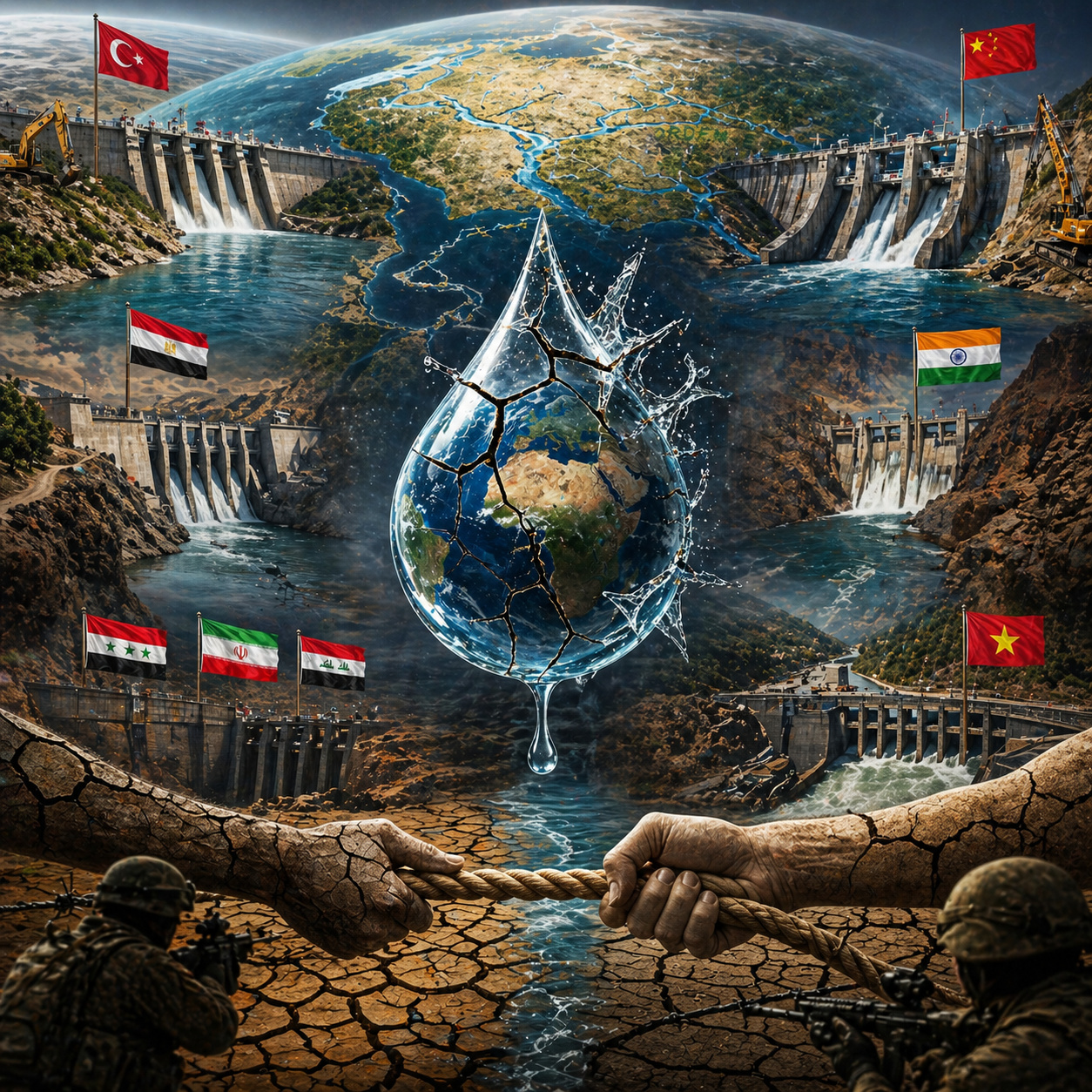

Water conflicts jump from 24 to 420 in 25 years, with infrastructure attacks and disputes over strategic rivers worldwide.
According to the Pacific Institute, in a report published in November 2025, 420 water-related violence events were recorded in 2024. This number represents an increase of almost 20% compared to the previous year and 78% compared to 2022. In 2000, only 24 episodes had been documented worldwide. The data is part of the Water Conflict Chronology, considered the most comprehensive database on water violence, which monitors everything from interstate disputes to local conflicts over access to wells and supply systems.
Attacks on water infrastructure lead conflicts and account for 61% of recorded cases
In 2024, most conflicts were related to direct attacks on water systems. Approximately 61% of episodes involved the destruction or sabotage of water infrastructure, while 34% were motivated by disputes over access or control of resources. Another 5% involved the deliberate use of water as a weapon.
The Middle East concentrated the highest number of occurrences, followed by South Asia and Sub-Saharan Africa.
-
Lenovo Unveils Legion Y700 Tablet with RGB Backlighting, 5G, and SIM Card Support
-
Lenovo Unveils Legion Y700 Tablet with RGB Backlighting, 5G, and SIM Card Support
-
Northern Brazilian City Prepares Task Force to Mitigate El Niño Impacts with Stockpiled Fish, Drone Monitoring, Firefighting, and Water Supply Reinforcement in Remote Areas

-
Brazil to Issue “Panda Bonds” in China, Aiming to Raise Up to 5 Billion Yuan at Lower Interest Rates Than Dollar Debt

Accelerated growth of water conflicts reveals structural change in the relationship between supply and demand
The increase from 24 to 420 episodes in 25 years is not solely explained by improvements in data collection.


According to experts, the growth reflects a structural change in water availability relative to global demand. Population expansion, agricultural intensification, and climate change have increased pressure on limited water resources, creating an environment conducive to conflicts.
Most recorded conflicts do not occur between countries, but within national territories. These are disputes between rural communities, farmers, local groups, and even families over access to water for consumption or irrigation.
This pattern indicates that the water crisis is not only geopolitical but also social and economic.
War between Russia and Ukraine and conflict in the Middle East expand strategic use of water
In 2024, approximately 16% of recorded conflicts were linked to the war between Russia and Ukraine, with attacks on water supply and treatment systems.
Another 12% were associated with the conflict between Israel and Palestine, including the destruction of wells and water infrastructure in areas such as Rafah and Khan Yunis.
These episodes demonstrate the increasing use of water as an instrument of pressure in armed conflicts.
Ethiopian Renaissance Dam intensifies dispute over control of Nile River waters
The inauguration of the Grand Ethiopian Renaissance Dam in September 2025 marked a critical point in the dispute over the Nile River.
With a capacity of 5,150 megawatts and a reservoir of 74 billion cubic meters, the plant is the largest in Africa.
Egypt, which depends on the Nile for about 97% of its water, considers the project a direct threat to its water security.
Conflict between Ethiopia, Egypt, and Sudan involves technical, legal, strategic, and military issues
The dispute over the dam involves multiple dimensions. It includes technical debates on operation during dry periods, legal disputes over historical agreements, geopolitical movements in the region, and military preparation for possible conflict scenarios.
To date, there is no binding agreement between the countries on water use. In the United States, the Colorado River faces a crisis stemming from the agreement signed in 1922.
The treaty was based on an abnormally wet period and allocated more water than the river is capable of supplying under normal conditions.
Recent droughts, including the most severe in 1,200 years between 2020 and 2022, exposed this fragility, resulting in supply cuts.
Dams on the Mekong River put millions of people at water risk in Southeast Asia
The Mekong River, which supplies about 60 million people, faces impacts from the construction of dams in its upper course.

China has built 11 large dams, while countries like Laos are also expanding their hydroelectric capacity.
These interventions alter the river’s natural flow, affecting agriculture, fishing, and water supply in downstream countries.
Turkey’s dam system on the Tigris and Euphrates reduces flow and affects agricultural production in Iraq
In the Tigris and Euphrates river basin, Turkey controls the headwaters and has built an extensive dam system.
The reduced flow directly impacts Syria and Iraq, which face droughts, loss of agricultural productivity, and increased soil salinity. The shrinking of areas like Lake Hammar highlights the effects of this dynamic.
Unlike other strategic resources, water does not have a global agreement with binding legal force.

The UN Convention on the Law of the Non-Navigational Uses of International Watercourses has limited adherence and does not include major powers involved in water disputes. This absence hinders the mediation and resolution of conflicts on an international scale.
Water scarcity advances without global governance and could redefine conflicts in the 21st century
The combination of population growth, climate change, and intensive use of water resources points to a scenario of increasing scarcity.

Without effective global governance mechanisms, conflicts tend to intensify. The accelerated growth of water conflicts indicates a structural change in the international scenario.
In your view, is the dispute over water resources likely to become the main axis of global conflicts in the future?