






 Portuguese
  Spanish


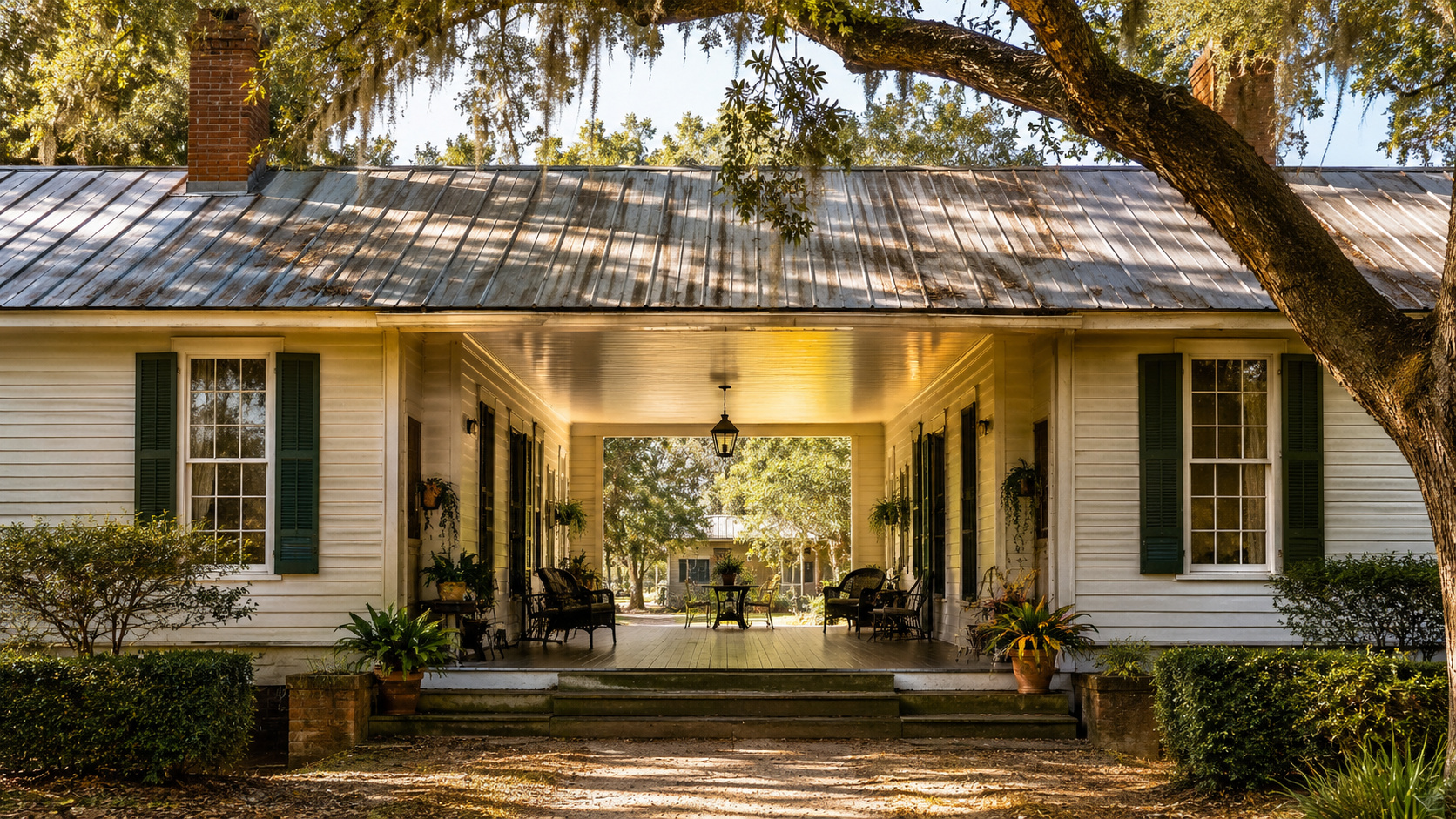

Dogtrot houses show how natural ventilation can transform shade, wind, and an open corridor into a simple response to humid heat, without relying solely on electrical appliances inside the home
While millions spend energy trying to find ventilation in stuffy houses, an ancient architecture from the southern United States used a curious idea: split the house in half to let the wind pass through.
Dogtrot houses have two enclosed blocks under the same roof, separated by an open and covered corridor. This space creates shade in the center of the home, helps air circulate, and alleviates humid heat.
The publication was released by ArchDaily, an architecture portal. The theme has gained traction again because it connects an old solution to a current concern: living better in times of extreme heat.
-
Billionaire says the most valuable skill will help overcome job elimination caused by AI, following Bill Gates’ fears

-
A Dutchman created a ‘box’ that makes trees grow in the desert almost without water and without irrigation: the invention has already brought seedlings to dozens of countries and achieves up to 90% survival where common planting did not exceed 10%.

-
Abandoned warehouse hid a giant collection of rare computers, with over 2,000 artifacts from the 1930s to the 1980s.
-
Scientists warn that melting ice is triggering an alarming chemical transformation in preserved areas, and the first signs are already concerning researchers worldwide.




The open corridor in the middle of the house functions as a passage for the wind
The most striking part of the dogtrot house is the central corridor. It is not a wasted space. It was designed to function as an air passage, a shaded area, and a gathering point.


The wind enters through the central gap, passes through the building, and helps push the hot air out. This movement makes the house less stuffy and improves the feeling inside the rooms.
The covering over this corridor protects against direct sunlight. Therefore, the central space becomes a useful area where people can move, rest, and stay during the hottest hours.
This solution shows a simple logic: before relying on appliances, the very shape of the house helped to cope with the heat.
Dogtrot houses originated in humid heat regions before air conditioning
Dogtrot houses became known in the southern United States, a region marked by strong heat and humidity. In these places, fully enclosed houses could trap hot air and increase the feeling of stuffiness.
The response was to divide the home into two parts. Each block housed enclosed areas, while the central corridor maintained an opening protected by the roof.
This design allowed air to circulate more easily. At the same time, the roof created shade over the center of the house and helped protect the gathering spaces.
The idea was practical and straightforward. The house did not try to completely block the external climate but used the wind and shade to the advantage of those living there.
Why this house split in half has caught architects’ attention again
Extreme heat made architects revisit old solutions. Instead of treating natural ventilation as a detail, many projects have returned to observing how the design of the house can improve comfort.
ArchDaily, architecture portal, detailed that the dogtrot house combines vernacular knowledge and climate response. Vernacular knowledge is the construction know-how created by the practice of a region, based on the climate, materials, and local lifestyle.
The central point is not to copy old houses as if the world hasn’t changed. The strength of this architecture lies in the idea of better using the position of the house, the shade, the openings, and the movement of air.
In times of expensive energy and more frequent heat, this type of solution shows that comfort does not only depend on turning on equipment. It also starts with the design of the dwelling.
What this ancient architecture has to do with Brazilian houses
Brazil has many hot and humid regions. Therefore, the dogtrot house also draws attention here. The image of a dwelling open in the middle is easy to understand and provokes a direct comparison with stuffy houses on hot days.
The idea can inspire verandas, covered passages, internal courtyards, and open areas that favor air circulation. The goal is to allow the wind to enter, pass through the house, and help renew the environment.
There is no exact temperature reduction that can be promised for any construction. Each house depends on the terrain, the position of the sun, the direction of the wind, and how the rooms are used.

Even so, the principle is clear: more shade and more natural ventilation can improve the feeling of comfort in hot regions.
The logic of the dogtrot house shows that comfort begins with the project
Many modern houses were made to depend on appliances. Small windows, little cross ventilation, and an excess of closed walls can, therefore, make environments hotter and stuffier.
The dogtrot house follows the opposite path. It sets the air in motion and transforms the central space into an important part of the dwelling.
This type of design also helps to remind us that thermal comfort is not just about feeling cold. It’s about having a less suffocating house, with better air circulation and areas protected from the sun.
Architecture against heat needs to consider daily life. The resident needs shade, ventilation, protection, and spaces that work during the hottest periods.
An old house that seems increasingly modern
The dogtrot house seems simple, but it solves several problems at once. The open corridor in the center creates shade, encourages wind passage, and expands the use of the house.
This ancient architecture shows that solutions against heat can thus arise from basic design choices. Instead of relying solely on electrical appliances, the dwelling can use the climate to its advantage.
If a house could be designed to breathe better even before turning on any appliances, would you choose this type of solution to face the heat in Brazil? Share your opinion and share with those who are thinking of living more comfortably.





