Portuguese
  Spanish


Venice resumes discussions on its flood defense amidst rising sea levels, increased use of mobile barriers, and the environmental impact caused by successive lagoon closures.
Venice is already discussing a new flood protection strategy five years after the Mose, a system of mobile barriers used to contain the acque alte that historically affect the Italian city, was put into operation.
The structure has prevented flooding since 2020, but the rising sea levels and the need for more frequent activations have led authorities and researchers to evaluate alternatives for the coming decades.
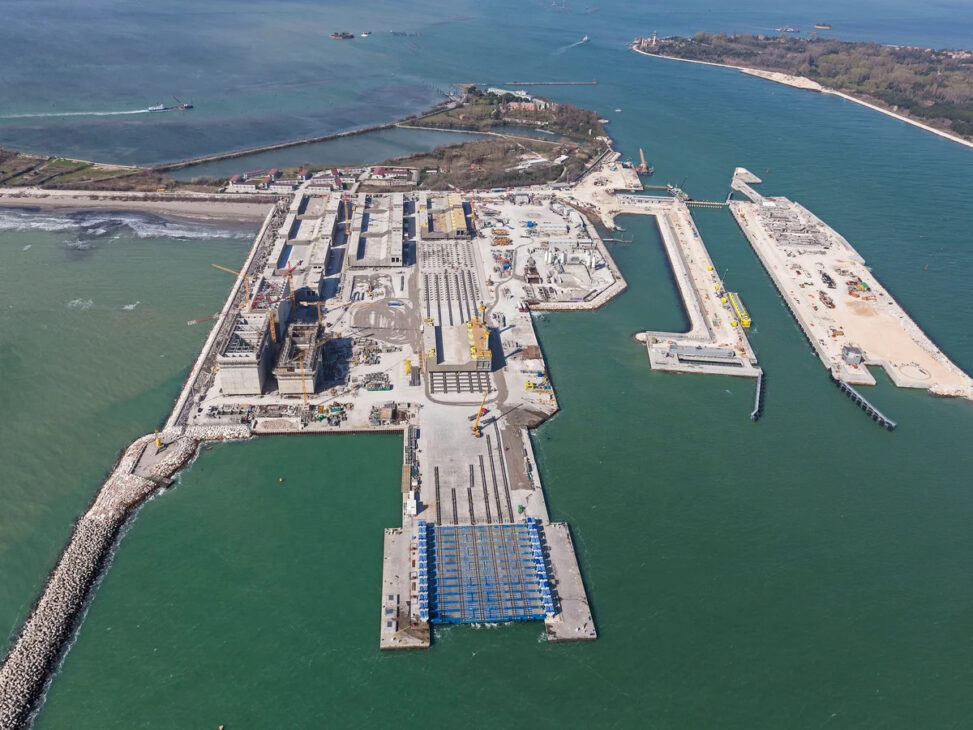
The Mose, an acronym for modulo sperimentale elettromeccanico, operates through barriers installed at the entrances of the Venice lagoon, between the Adriatic Sea and the city.
-
She spent 73 years breathing inside an iron lung, survived the aftereffects of polio, and became the last woman in the United States dependent on the equipment before dying at 78 years old.

-
Brazilian students created a $1 filter using pine bark, cotton, and 3D-printed parts to clean cassava wastewater, reduce the toxicity of a hazardous waste, and transform contaminated water into biofertilizer.

-
Astronaut from Artemis II steps down after mission to the Moon and decision surprises after a record of 406,771 km, a historic 10-day journey, and an unprecedented achievement for Canada.

-
A fossil kept for years in a small museum in Montreal concealed 450-million-year-old soft tissue, a discovery that has only happened once before in history.


When an exceptional tide is forecasted, the gates rise from the seabed and temporarily block the entry of water.
According to the project’s official website, the system consists of four barriers and 78 mobile gates distributed at the port mouths of Lido, Malamocco, and Chioggia.
The discussion about a plan B does not occur because the Mose has stopped working.
The central point, according to experts interviewed by The Guardian, is the cumulative effect of the repeated closure of the barriers on the lagoon.
The more often the system is activated, the greater the disruption of the natural exchange of water, sediments, and oxygen between the lagoon and the Adriatic tends to be.
Records from the Autorità per la Laguna di Venezia indicated 156 operational closures by May 15, 2026, a number above the 154 cited in a The Guardian report published on April 18, 2026.
In 2026 alone, the official balance pointed to 32 activations by that update.
Mose in Venice becomes part of a larger challenge against floods
The immediate efficiency of the Mose is recognized by local authorities and technicians involved in the system’s operation.
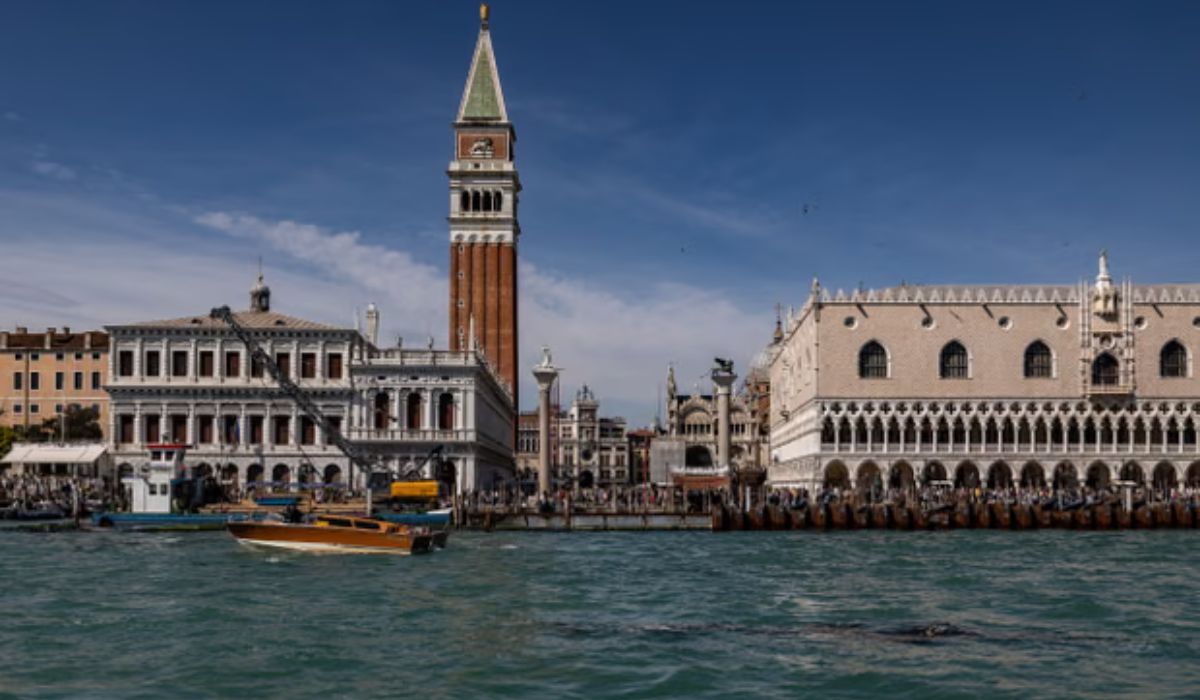
Since it became operational, the structure has reduced the risk of flooding in vulnerable areas of the historic center, including the region of St. Mark’s Square.
Even so, the rising sea levels have altered the conditions considered during the project’s conception.
Under normal conditions, the tide renews the lagoon’s water and helps preserve the ecological balance of the environment.
When the barriers are raised, this flow is interrupted.
Longer or successive closures can favor the proliferation of algae and reduce the oxygenation of the water, impacting fish, marine plants, and other organisms, according to researchers studying Venice’s adaptation to climate change.
Andrea Rinaldo, head of the scientific committee of the newly created Lagoon Authority, told The Guardian that an additional one-meter rise in sea level could force the city to close the barriers, on average, 200 times a year.
In this scenario, according to him, the lagoon would cease to behave as a transitional environment between fresh and saltwater.
“You won’t have a lagoon. You won’t have a city,” said Rinaldo, arguing that the city must accelerate the planning of new solutions.
A study published on April 16, 2026, in the journal Scientific Reports also indicates that the relative rise in sea level progressively reduces the adaptation options for Venice and its lagoon.
The authors state that without sufficient climate mitigation and additional measures, the current open lagoon strategy, supported by Mose, may encounter limits within this century.
Historic floods explain the pressure for new solutions in Venice
The current debate occurs after decades of investments and controversies surrounding Mose.
The system was conceived as a response to the historic flood of November 4, 1966, when the tide reached 194 centimeters, according to the city’s Tide Forecast and Signaling Center.
The project faced delays, environmental questions, cost increases, and corruption investigations before becoming operational in October 2020.
Another important reference for residents is the acqua alta of November 12, 2019.
The Italian Institute for Environmental Protection and Research recorded a level of 189 centimeters at the Punta della Salute Mareographic Zero, in an event surpassed only by the 1966 flood.
The episode was associated with a combination of meteorological factors, including strong winds and a small-scale cyclone over the northern Adriatic and the lagoon.
After Mose became operational, the city’s relationship with high tides changed.
Residents who once lived with sirens, elevated walkways, and waterproof boots now see the historic center remain dry during episodes that, in the past, would have caused flooding.
Giovanni Zarotti, technical director of Mose, told The Guardian that some Venetians already consider the system as protection incorporated into their routine.
“Many don’t even own waders any more. Imagine, if you’re six years old, you’ve never heard the sound of flood sirens,” he said.
This change in perception influences operational decisions.
According to Zarotti, the closure order needs to be made about three hours before the predicted peak of the tide, with a margin of error of approximately 10 centimeters.
If the forecast overestimates the water level, the city might incur an activation that might not have been necessary.
If the estimate falls below the actual level, lower areas become exposed again.
Cost of Mose and impact on maritime traffic enter the debate
Each activation of Mose costs more than € 200,000, according to the report by The Guardian.
The financial impact includes operation, maintenance, and effects on navigation.
The closure of the barriers also affects maritime traffic, especially at the Malamocco entrance, used by vessels heading to the port of Marghera.
During the Venice Carnival of 2026, the barriers were raised 26 times in three weeks, with a cost exceeding € 5 million, according to the British newspaper.
To reduce the impacts, the technical team is evaluating ways to activate the barriers in a staggered manner, alternating entrances instead of closing the entire system at once.
Another possibility under analysis is to raise the activation level to 130 centimeters in certain situations.
This measure, however, would have to consider the risk of small floods in vulnerable areas and the lower tolerance of the population to such occurrences since Mose began to operate regularly.
Researchers analyzing long-term adaptation paths cite alternatives such as keeping the lagoon open with complementary measures, protecting the historic center with dikes, closing the lagoon more permanently, or discussing, in extreme scenarios, planned withdrawal from vulnerable areas.
The study published in Scientific Reports emphasizes that all options involve costs, social impacts, and potential effects on heritage, environment, economy, and daily life.
Plan B for Venice still has no defined format
Venice’s Plan B still has no defined format.
Rinaldo advocates for an international call for ideas that brings together experts from different fields, including science, engineering, economics, history, and arts.
The proposal, according to him, is to treat Venice as a reference case for climate adaptation policies in coastal cities.
This approach broadens the debate beyond infrastructure.
In Rinaldo’s assessment, the city also needs to discuss its economic model, strongly linked to tourism, and the effects of this dependency on housing, services, mobility, and the permanence of residents in the historic center.
Tourist pressure, according to him, represents another risk factor for the preservation of Venice.
The definition of a new strategy will depend on technical, environmental, economic, and political decisions.
While Mose remains the main instrument of protection against high tides, authorities and researchers try to anticipate a scenario where the barriers may need to be activated with a frequency incompatible with the natural dynamics of the lagoon.