





 Portuguese
  English
  Spanish
  4 min of reading
  0 comments


France decided to double the firepower of its new frigates and increased the number of missiles ready to fire from 16 to 32 tubes, a structural change that alters the count of how many targets each ship faces at once in a sea swarmed by drones.
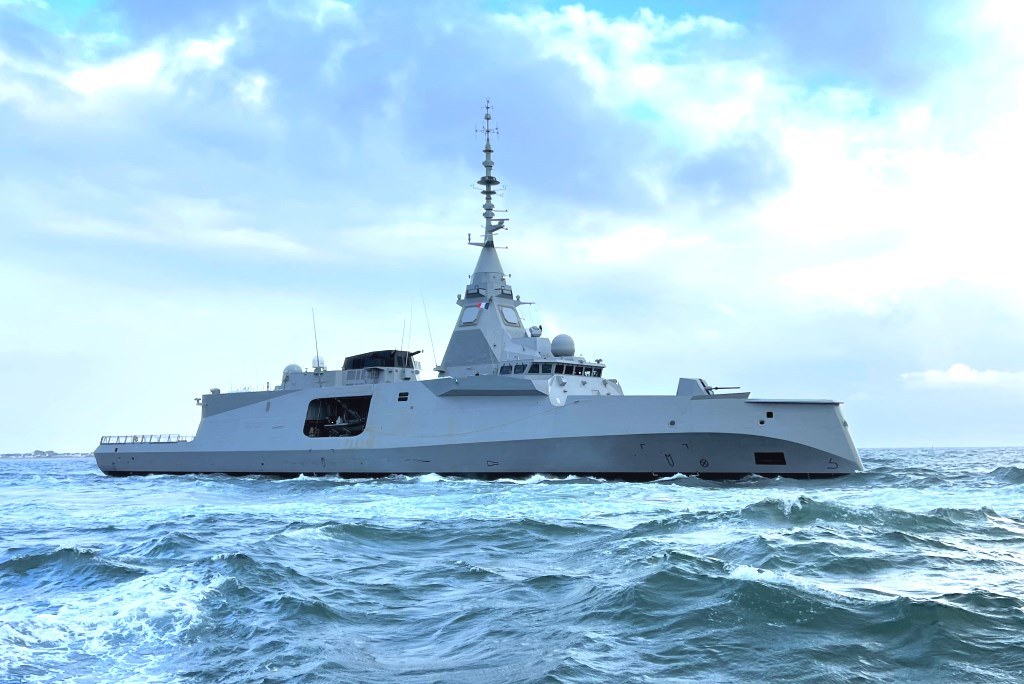
The decision came from the French Navy and applies to the entire new class of frigates known by the acronym FDI, five ships ordered from the national shipyard. Instead of the 16 vertical launchers planned in the original design, each frigate now carries 32 cells of missiles loaded and ready. It’s not a cosmetic adjustment; it’s opening the hull to accommodate double the immediate ammunition.
What catches my attention here is not another beautiful ship leaving the shipyard, but rather the reading that France made of the type of war that lies ahead at sea. When the attack ceases to be a solitary missile and becomes a cloud of cheap drones arriving simultaneously, what’s lacking on board is not sophistication, it’s quantity.
What is a vertical launch cell, without jargon
Imagine the ship’s deck with a set of embedded vertical tubes, each holding a missile pointed at the sky. This arrangement is called vertical launch, and the advantage is being able to fire in any direction in seconds, without needing to rotate a turret or aim any rail. Each tube is a cell, and the number of cells defines how many missiles the ship sends into the air before needing to return to port to reload.
-
Spain sent its most advanced frigate to Cyprus and set up an anti-missile shield in the Mediterranean with an eye on Iran.

-
India places 52 spy satellites in orbit for R$ 16 billion to monitor every meter of its own borders.
-
Poland took control of its own constellation of radar satellites in less than a year and now sees through clouds and darkness.
-
Sweden has launched its first military spy satellite into orbit and joined the space defense club with a plan to deploy a fleet of ten.


Doubling from 16 to 32 means the frigate can withstand a larger barrage of simultaneous threats before running out of response. In anti-aircraft defense, each incoming target may require one or two interceptors. With few tubes, the count ends quickly. With double, the ship buys precious minutes, which at sea is the difference between defending the fleet and becoming a headline.
The modification aligns the French version with the frigates that the same shipyard already builds for export, such as the Greek Navy, which ordered ships from the same family with the reinforced configuration. In other words, France was selling abroad a more armed version than the one it was going to operate itself, and corrected its own house.
A new launcher that spits different munitions
Along with the expansion, the French Navy confirmed it will test on board a modular launcher capable of sending different types of munitions from the same set of tubes. The idea is to provide flexibility: the same ship can launch an anti-aircraft missile now and, the next minute, a munition against a cheap drone without spending an expensive interceptor for it.
This point of cost per shot has become central in modern naval warfare. Shooting down a drone worth a few thousand dollars with a million-dollar missile is a math that doesn’t add up in a long war. That’s why navies are rushing to mix cheap and expensive weapons on the same ship, and the French modular launcher is moving exactly in that direction.
The lesson that came from the Red Sea
This obsession with the number of tubes didn’t arise from theoretical exercise. It came from recent practice in maritime routes where Western warships began to face waves of drones and cheap missiles launched in series against commercial navigation. In more than one episode, commanders reported spending a good part of the missile stockpile in a single night of defense, and the uncomfortable question lingered: what if the attack lasted a week?
The honest answer is that a ship with few launchers runs out of stock and needs to retreat to a port to reload, leaving a gap in fleet defense. Reloading a vertical cell is not an offshore task; it generally requires port infrastructure, a crane, and days stopped. Each additional missile the ship carries from the start is, therefore, more time of useful presence in the risk zone, and this has become a survival metric.
Doubling the capacity also changes the adversary’s calculation. An enemy who knows the frigate can withstand 32 shots before retreating thinks twice before betting on a saturation attack, because it would require many more drones to win by exhaustion. The very existence of the larger stockpile acts as a deterrent, even if no tube is ever used.
The naval race that Europe doesn’t admit out loud
France is not alone. United Kingdom, Italy, Germany, and the Nordic countries have been reinforcing their fleet and firepower at a pace not seen in decades, driven by the war in Eastern Europe and tension in distant maritime routes. The return of the heavy surface ship, which many considered a museum piece in the drone era, is one of the most curious turns in current defense.
For the French naval industry, the reinforcement is also a sales argument. Every improvement that enters the national frigate becomes a showcase for foreign clients, in a market where Greece, Indonesia, and others have already knocked on the door. Defense here goes hand in hand with the trade balance.
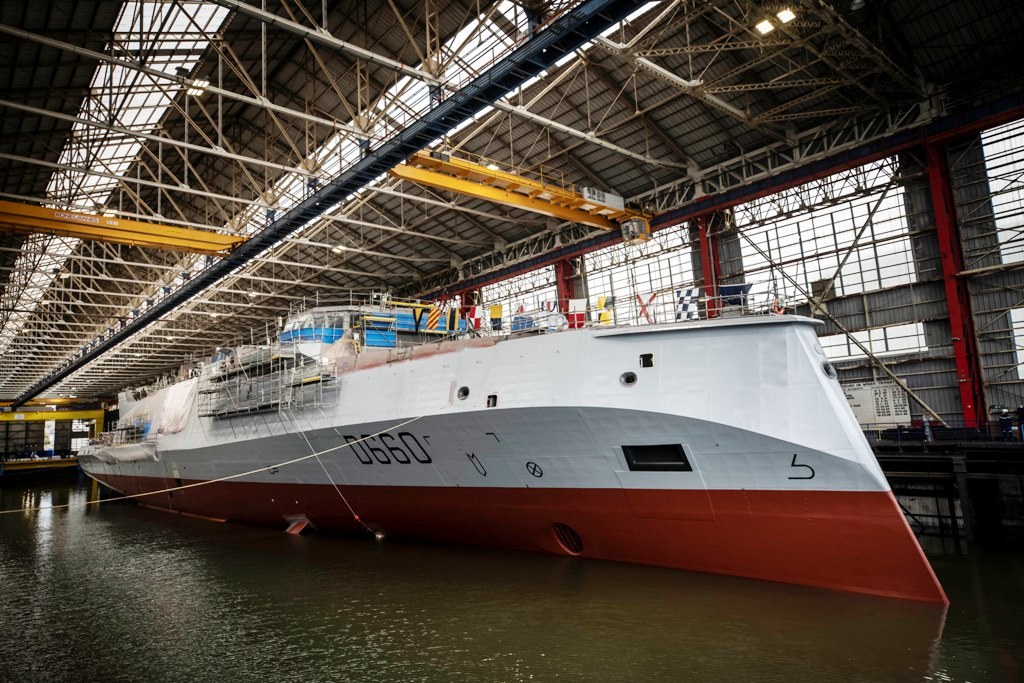
The first frigate of the new class is already sailing, and the following ones receive the reinforced package still on the assembly line. It’s worth remembering that each of these modifications, made with the ship already designed, is costly and delays delivery, and yet France decided it was worth paying the price. I imagine the strategist who designed the original hull with 16 tubes, seeing the world change so quickly that double became the minimum acceptable even before the fleet was ready.
In your view, does the surface warship still rule the sea, or have drones already made this giant too costly a prey?


Be the first to react!